
Daily Eczema Care
Skin Care Routine for Eczema
A simple, consistent routine can support the skin barrier, reduce dryness and help limit eczema flares. The essentials are gentle washing, frequent moisturising and avoiding products that irritate your skin.
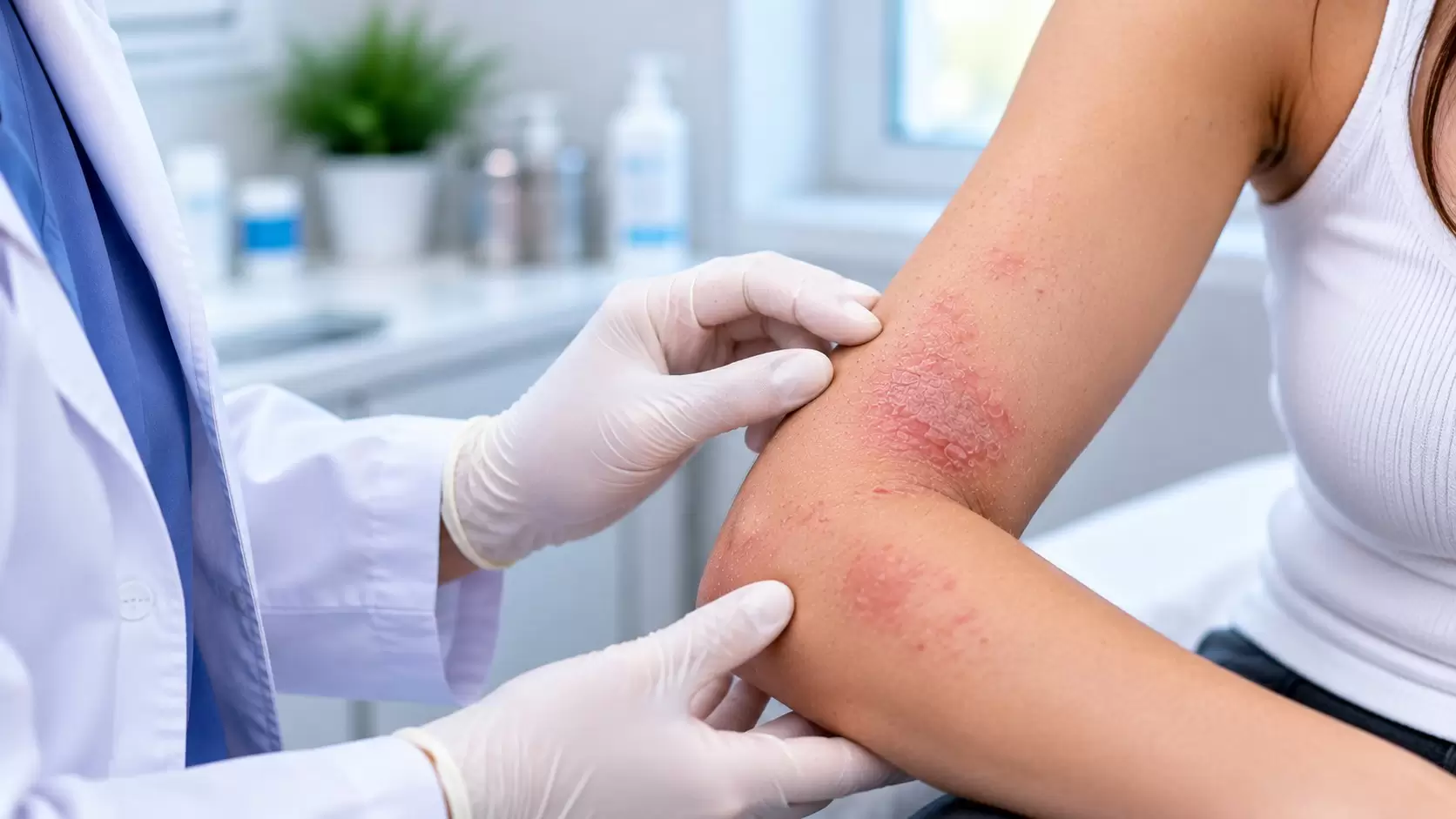
Why daily skin care matters
Atopic dermatitis is associated with an impaired skin barrier, so water escapes more easily and the skin becomes dry and reactive. Regular moisturising helps trap water in the skin, reduce dryness and support barrier function. Dermatology guidelines recommend moisturisers as a core part of atopic dermatitis care.
Skin care does not replace prescribed treatment during an active flare, but it provides the foundation on which eczema medicines work. For the medical options used when skin care alone is not enough, see Eczema Treatment Options.
A practical morning routine
1. Cleanse only as needed
Use a mild fragrance-free cleanser rather than harsh soap. Avoid vigorous scrubbing, loofahs and rough washcloths on eczema-prone areas.
2. Apply prescribed medicine
If your dermatologist has prescribed a topical medicine, use it exactly as instructed on the affected areas.
3. Moisturise
Apply a fragrance-free cream or ointment generously. Reapply later in the day whenever skin feels dry.
4. Dress for sensitive skin
Loose, breathable clothing is generally more comfortable. Rough fabrics, wool directly against the skin and tight clothing can aggravate itching.
How to shower or bathe with eczema
The American Academy of Dermatology recommends short baths or showers—about 5 to 10 minutes—in warm rather than hot water. Long, hot bathing can worsen dryness. Use cleanser only where needed and choose a mild fragrance-free product.
After bathing, gently pat rather than rub the skin. Leave it slightly damp, apply any prescribed topical medicine as directed, then moisturise. Applying moisturiser promptly after bathing helps trap water in the skin.
Choosing an eczema-friendly moisturiser
AAD guidance generally favours a fragrance-free cream or ointment over a thin lotion for eczema-prone skin because thicker products provide more effective occlusion. Petroleum jelly can be a simple fragrance-free option for many people.
The best moisturiser is also one you can tolerate and use consistently. If a product stings, causes a rash or appears to worsen eczema, stop it and discuss alternatives with a dermatologist.
Look for
Fragrance-free creams or ointments, simple formulations and products designed for dry or sensitive skin.
Be cautious with
Fragrance, perfume, essential oils and complex botanical products, which may irritate sensitive skin or cause contact dermatitis.
“Fragrance-free” versus “unscented”
These labels are not interchangeable. The AAD specifically advises choosing products labelled fragrance-free. An “unscented” product may still contain fragrance ingredients used to mask another odour, and those ingredients can trigger eczema in susceptible people.
This principle applies not only to moisturisers but also to cleansers, cosmetics and laundry products.
An evening routine for eczema
Before bed, reassess dry or itchy areas and apply moisturiser again. Use prescribed topical medicines according to the treatment plan. Keeping fingernails short and smooth can reduce skin damage from unconscious scratching during sleep.
Keep the bedroom comfortably cool if overheating makes you itch. Very dry air can also aggravate eczema in some people, although environmental changes should be guided by what actually affects your skin.
If itching repeatedly disrupts sleep despite appropriate treatment, this is a reason to review your eczema with a dermatologist rather than simply adding more skin-care products.
Clothing and laundry tips
AAD skin-care guidance recommends loose-fitting cotton clothing, avoiding wool directly against eczema-prone skin, and using fragrance-free and dye-free laundry detergent. Washing new clothes before wearing them can remove residual dyes and finishing chemicals that may irritate sensitive skin.
Not everyone reacts to the same fabrics or detergents, so focus on exposures that repeatedly worsen your own eczema. See Eczema Triggers.
Skin care during an eczema flare
Continue moisturising during a flare unless your clinician has told you otherwise. Active inflammation usually also needs appropriate anti-inflammatory treatment rather than moisturiser alone.
For selected severe flares, a dermatologist may recommend wet-wrap therapy. This involves applying moisturiser or medication, covering it with a damp layer and then adding a dry outer layer. Because wraps can increase medicine absorption, use medicated wet wraps only according to professional instructions.
What to avoid in an eczema routine
Very hot water
Hot baths and showers can increase dryness and itching.
Scrubbing and exfoliation
Physical scrubs, rough sponges and aggressive exfoliation can damage an already impaired skin barrier.
Frequent product switching
Introducing many new products together makes it difficult to identify which ingredient is irritating the skin.
Unnecessary elimination diets
Do not change the diet solely for eczema unless medically advised. Most atopic dermatitis is not caused by one specific food.
When skin care is not enough
Arrange medical review if eczema remains uncontrolled despite consistent moisturising and appropriate treatment, repeatedly disrupts sleep, becomes widespread, or develops pain, pus, crusting, blisters, rapid worsening or fever.
A persistent rash may also need diagnostic review because psoriasis, fungal infection and contact dermatitis can resemble eczema. Read Eczema vs Psoriasis and Eczema vs Fungal Infection.
For local consultation information, visit Eczema Treatment in Chennai.
Frequently asked questions
How often should I moisturise eczema-prone skin?
Moisturise after bathing and whenever the skin feels dry. Many people need moisturiser at least twice daily, while some require more frequent application.
Should I use lotion, cream or ointment for eczema?
Thicker fragrance-free creams and ointments generally retain moisture better than thin lotions and are commonly recommended for eczema-prone skin.
Should I shower every day if I have eczema?
Bathing frequency can be individual, but short warm baths or showers followed promptly by moisturiser can hydrate eczema-prone skin. Avoid long, hot showers.
Is unscented skin care safe for eczema?
Not necessarily. “Unscented” products can contain masking fragrance. Dermatologists generally recommend products specifically labelled fragrance-free.
Should I exfoliate eczema?
Avoid aggressive physical exfoliation and scrubbing over eczema-prone or inflamed skin because friction can damage the skin barrier and worsen irritation.
Can a skin-care routine replace eczema medicine?
No. Skin care is foundational, but active or moderate-to-severe eczema often requires appropriate anti-inflammatory or other prescribed treatment.
For authoritative skin-care guidance, see the American Academy of Dermatology, DermNet and NHS.
Visit us in OMR
Need help controlling eczema flares?
Book a dermatologist consultation at Ram Skin Clinic in Thoraipakkam, Chennai.
#48, Second Floor, Flat E, Best Towers,Okkiampet, Thoraipakkam, OMR,
Chennai – 600097. Above Domino’s Pizza.