
Acne Scar Treatment
in Chennai.
Acne scars are not all the same. Effective treatment begins by identifying whether the concern is a true depressed or raised scar, post-acne pigmentation, or persistent active acne. A dermatologist can then build a staged treatment plan around scar type, skin type and realistic goals.
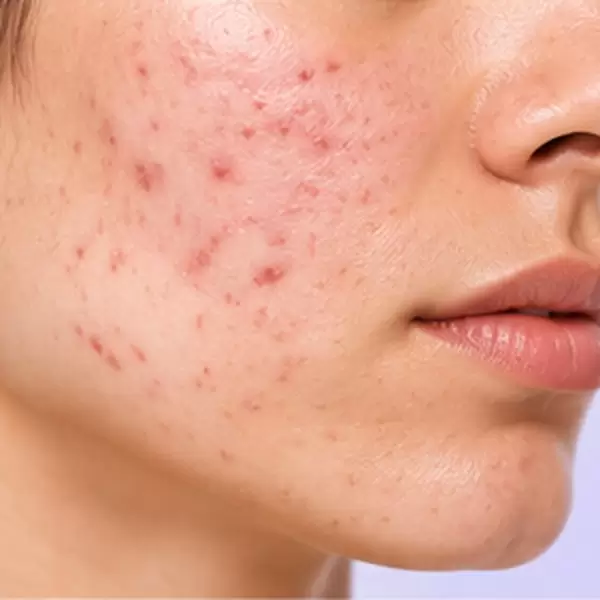
Acne marks and acne scars are different
Flat red or brown marks left after acne are colour changes rather than structural scars. True atrophic acne scars involve loss of tissue and may appear as ice-pick, boxcar or rolling depressions. Raised hypertrophic or keloid scars require a different approach again.
This distinction matters because a treatment that improves pigmentation may have limited effect on a deep structural scar. Read our guide to acne marks vs acne scars.
Treatment options depend on scar type
Microneedling radiofrequency delivers controlled energy through microneedles and may be considered for selected atrophic acne scars.
Dermaroller treatment creates controlled micro-injury to stimulate remodelling in appropriately selected scars.
Chemical peels can be useful for selected post-acne pigmentation and superficial textural concerns but are not a universal solution for deep scars.
Different scar types frequently coexist, so a staged combination approach may be more appropriate than repeating one procedure for every scar.
Control active acne first
Ongoing inflammatory acne can create new scars. Where active breakouts are present, controlling acne is an important part of scar prevention and treatment planning. Visit our Acne Treatment in Chennai page for the main acne treatment pathway.
What happens during scar assessment?
The dermatologist examines scar depth, shape, distribution, skin pigmentation tendency, active acne and any history of keloid formation. Previous procedures and response are also relevant. Treatment can then be prioritised according to which scars are most likely to respond to each technique.
Multiple sessions are commonly required for procedural scar treatment. Complete “removal” cannot be guaranteed; the aim is meaningful improvement in texture and appearance while balancing downtime and risk.
Skin of colour and pigmentation risk
Indian skin can develop post-inflammatory hyperpigmentation after inflammation or procedures. Appropriate treatment intensity, sun protection and aftercare are therefore important. A history of keloids or abnormal scarring should also be discussed before procedures.
Frequently asked questions
Complete removal cannot be promised. Treatment aims to improve scar depth, texture and overall appearance.
There is no single best procedure for every scar. The choice depends on scar type, depth, skin characteristics, active acne and previous treatment.
Not necessarily. Flat brown or red marks are often post-inflammatory colour changes rather than structural scars.
Usually, controlling significant active acne is important because new inflammatory lesions can create additional scars.
Want to improve acne scars?
Book a dermatology consultation at Ram Skin Clinic in OMR for scar assessment and a treatment plan based on scar type, skin type and active acne.
Medical information on this page is general and does not replace an in-person diagnosis. Treatment choice depends on examination and individual clinical factors.