
Treating Dark Spots & Uneven Skin Tone
Pigmentation Treatment Options: Creams, Peels & Procedures Explained
Pigmentation treatment works best when it is matched to the diagnosis. Melasma, post-inflammatory hyperpigmentation, acne marks and sun-related spots can look similar but may need different combinations of skin care, prescription treatment and procedures.
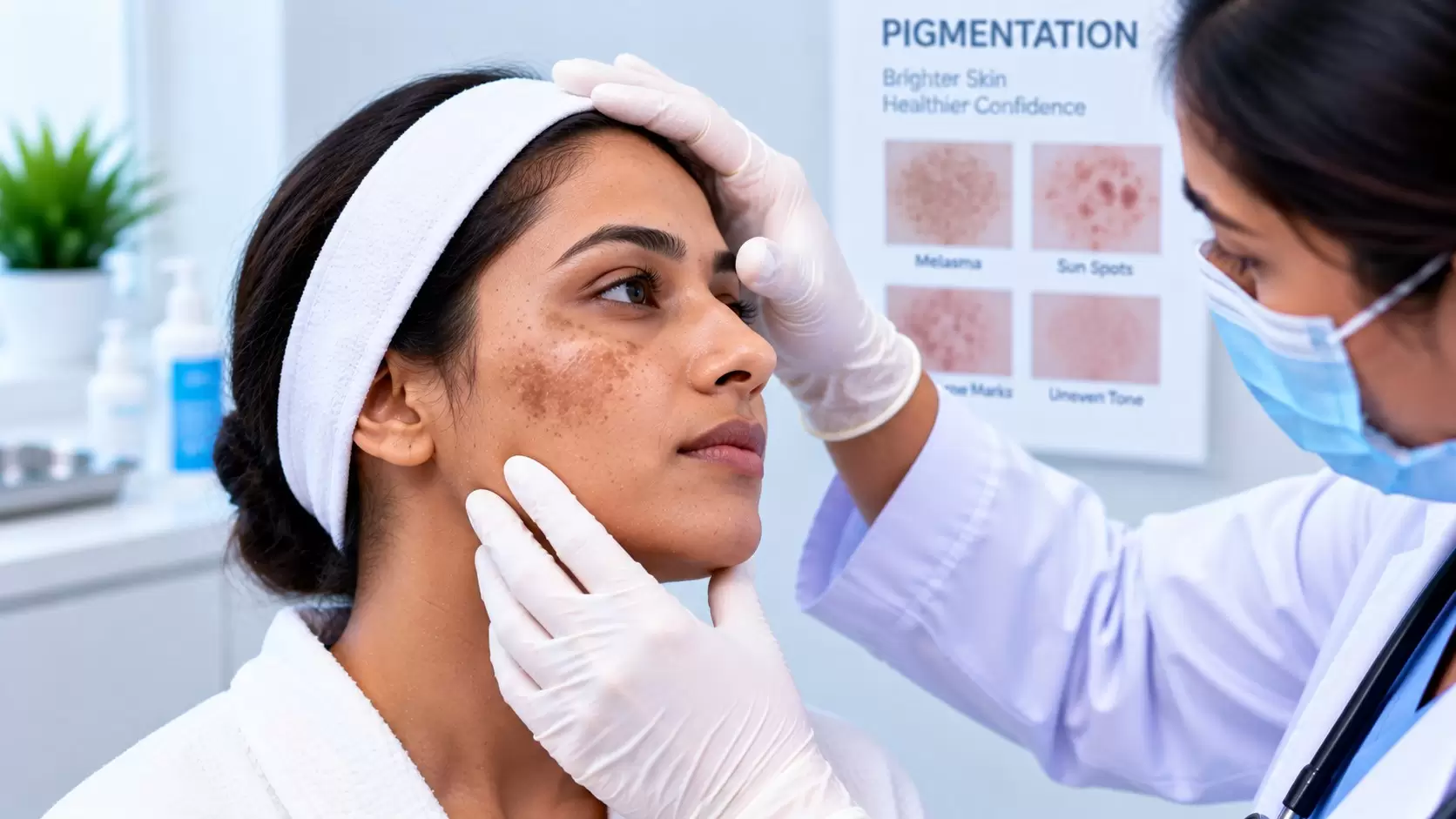
Why the cause matters before choosing a treatment
“Pigmentation” is not one disease. A flat mark after acne is different from melasma, and a changing pigmented lesion should not be treated as a cosmetic dark spot without assessment.
The dermatologist considers the pattern, depth of pigment, skin tone, active inflammation, medicines, light exposure and previous treatments before choosing a plan.
Pigmentation treatment options at a glance
Photoprotection
Broad-spectrum sunscreen, shade and protective clothing reduce continued light-driven darkening and recurrence.
Topical treatment
Hydroquinone, azelaic acid, retinoids and combination treatments can reduce selected epidermal pigmentation.
Chemical peels
Superficial peels can help selected epidermal pigment but require careful technique to avoid additional inflammation.
Procedures
Microneedling, laser and light treatments may be considered in selected cases, particularly when topical treatment alone is insufficient.
1. Sun and visible-light protection
Photoprotection is foundational for many pigment disorders. Ultraviolet exposure can darken melasma and post-inflammatory hyperpigmentation and can undermine otherwise effective treatment.
For melasma, visible light can also contribute. A broad-spectrum SPF 30 or higher is commonly recommended, and tinted sunscreen containing iron oxides can provide additional visible-light protection.
2. Hydroquinone
Hydroquinone reduces pigment production and is an established topical treatment for melasma and post-inflammatory hyperpigmentation. It may be prescribed alone or as part of combination therapy.
It should be used for an appropriate duration and under guidance, particularly with stronger formulations. Irritation can worsen pigmentation, and prolonged inappropriate use carries additional risks.
3. Triple-combination treatment for melasma
Triple-combination cream contains hydroquinone, a retinoid such as tretinoin and a topical corticosteroid. It targets pigment production and skin turnover while the corticosteroid helps reduce treatment-related inflammation.
It is a well-established melasma treatment, but it is a prescription regimen rather than a routine long-term cosmetic cream. Duration and maintenance need to be individualised.
4. Azelaic acid
Azelaic acid can reduce pigmentation and is also used for acne. This makes it particularly useful when active acne and post-acne dark marks occur together.
It can also be used in melasma. Mild burning, stinging or irritation can occur, especially when treatment is started.
5. Retinoids
Topical retinoids increase epidermal turnover and influence melanin distribution. They can help post-inflammatory hyperpigmentation and are commonly incorporated into acne treatment, reducing the formation of new inflammatory lesions that leave dark marks.
Tretinoin can also be used as part of melasma treatment, including triple-combination therapy. Retinoids can irritate the skin, so gradual introduction and appropriate moisturisation matter.
6. Other pigment-modulating topicals
Depending on the condition, dermatologists may use or recommend agents such as kojic acid, vitamin C, cysteamine and other topical ingredients. Evidence, tolerability and suitability vary.
Using multiple strong “brightening” products at the same time is not automatically more effective. If the combination irritates the skin, the resulting inflammation can create more pigmentation.
7. Treat the underlying inflammation
For post-inflammatory hyperpigmentation, pigment treatment alone is incomplete if acne, eczema, dermatitis or another inflammatory disorder is still active.
Every new inflamed lesion can leave another mark. Controlling the underlying condition is therefore one of the most important ways to stop pigmentation from accumulating.
8. Chemical peels
Superficial chemical peels use controlled chemical exfoliation to remove part of the epidermis and can help selected epidermal pigmentation. Glycolic acid and salicylic acid are among agents used in dermatology.
However, a peel is itself a controlled injury. If treatment is too aggressive or aftercare is poor, inflammation can provoke PIH—particularly in darker or pigment-prone skin.
9. Microneedling
Microneedling creates controlled microscopic channels in the skin and may be incorporated into treatment plans for selected melasma patients. It is often used as an adjunct rather than a replacement for photoprotection and topical therapy.
Because any procedure can create inflammation, appropriate technique, patient selection and aftercare remain important when pigmentation is the treatment target.
10. Laser and light treatments
Selected laser and light devices can improve pigmentation in some patients, but results depend strongly on the diagnosis, pigment depth, device, settings and skin type.
Melasma can relapse after laser treatment, and laser or intense pulsed light can provoke post-inflammatory hyperpigmentation. These procedures therefore require particular caution in darker skin tones and in people with a history of PIH.
What treatment is used for melasma?
Melasma usually requires a combination approach. Daily photoprotection is essential, often together with topical treatment such as hydroquinone, azelaic acid, tretinoin-based regimens or triple-combination cream.
Procedures may be added when appropriate, but melasma is prone to recurrence and long-term maintenance is often needed. Read Hyperpigmentation vs Melasma.
What treatment is used for post-acne dark marks?
The first priority is controlling active acne so that new marks stop forming. Photoprotection and topical agents such as azelaic acid or retinoids may then help the remaining PIH.
Hydroquinone or selected procedures can be considered for persistent pigmentation after assessment. If the main problem is indented or raised acne scars rather than flat colour, a different scar-treatment strategy is needed.
For active acne, visit Acne Treatment in Chennai.
How long does pigmentation treatment take?
Pigmentation usually improves gradually rather than overnight. Epidermal pigment may respond over weeks to months, while deeper dermal pigmentation can be slower and more resistant.
Melasma is often a long-term condition with periods of improvement and recurrence. Consistency with photoprotection and maintenance treatment matters as much as the initial treatment phase.
Why pigmentation treatment sometimes fails
Wrong diagnosis
Melasma, PIH and other pigment disorders do not all respond to the same treatment.
Ongoing inflammation
Active acne, dermatitis, rubbing or irritating products continually create new pigment.
Insufficient photoprotection
Repeated UV and visible-light exposure can keep stimulating pigment production.
Over-treatment
Aggressive peels, lasers or too many irritating topicals can cause PIH and make the skin look darker.
When should you see a dermatologist?
Consider assessment when pigmentation is persistent, recurrent, spreading or difficult to identify; when over-the-counter treatments are causing irritation; or before starting prescription lightening agents or procedures.
A changing mole or isolated pigmented lesion should be evaluated rather than treated as routine pigmentation.
For diagnosis and an individual treatment plan, visit Pigmentation Treatment in Chennai.
Frequently asked questions
What is the best treatment for pigmentation?
There is no single best treatment for every type of pigmentation. Treatment depends on the diagnosis, pigment depth, skin tone, triggers and whether inflammation is still active.
Which creams are used for hyperpigmentation?
Depending on the diagnosis, dermatologists may use hydroquinone, azelaic acid, retinoids, triple-combination therapy or other pigment-modulating topical treatments.
Can chemical peels treat pigmentation?
Chemical peels can help selected superficial pigmentation, but they can also cause irritation and post-inflammatory hyperpigmentation, so appropriate patient selection and technique are important.
Can lasers make pigmentation worse?
Yes. Laser and light procedures can help selected patients but can also provoke post-inflammatory hyperpigmentation or melasma relapse, especially in pigment-prone skin.
Why is sunscreen part of pigmentation treatment?
Ultraviolet radiation and, in melasma, visible light can stimulate pigment production. Photoprotection helps prevent darkening and recurrence while other treatments work.
Visit us in OMR
Dark spots or patches not improving? Match the treatment to the diagnosis.
Book a dermatologist consultation at Ram Skin Clinic in Thoraipakkam, Chennai.
#48, Second Floor, Flat E, Best Towers,Okkiampet, Thoraipakkam, OMR,
Chennai – 600097. Above Domino’s Pizza.