
Light, Melanin & Dark Spots
Sun Exposure and Pigmentation: How Light Can Darken the Skin
Sunlight does more than cause tanning and sunburn. Ultraviolet radiation stimulates melanin production, and visible light can also worsen some pigment disorders—particularly melasma and dark spots in darker skin tones.
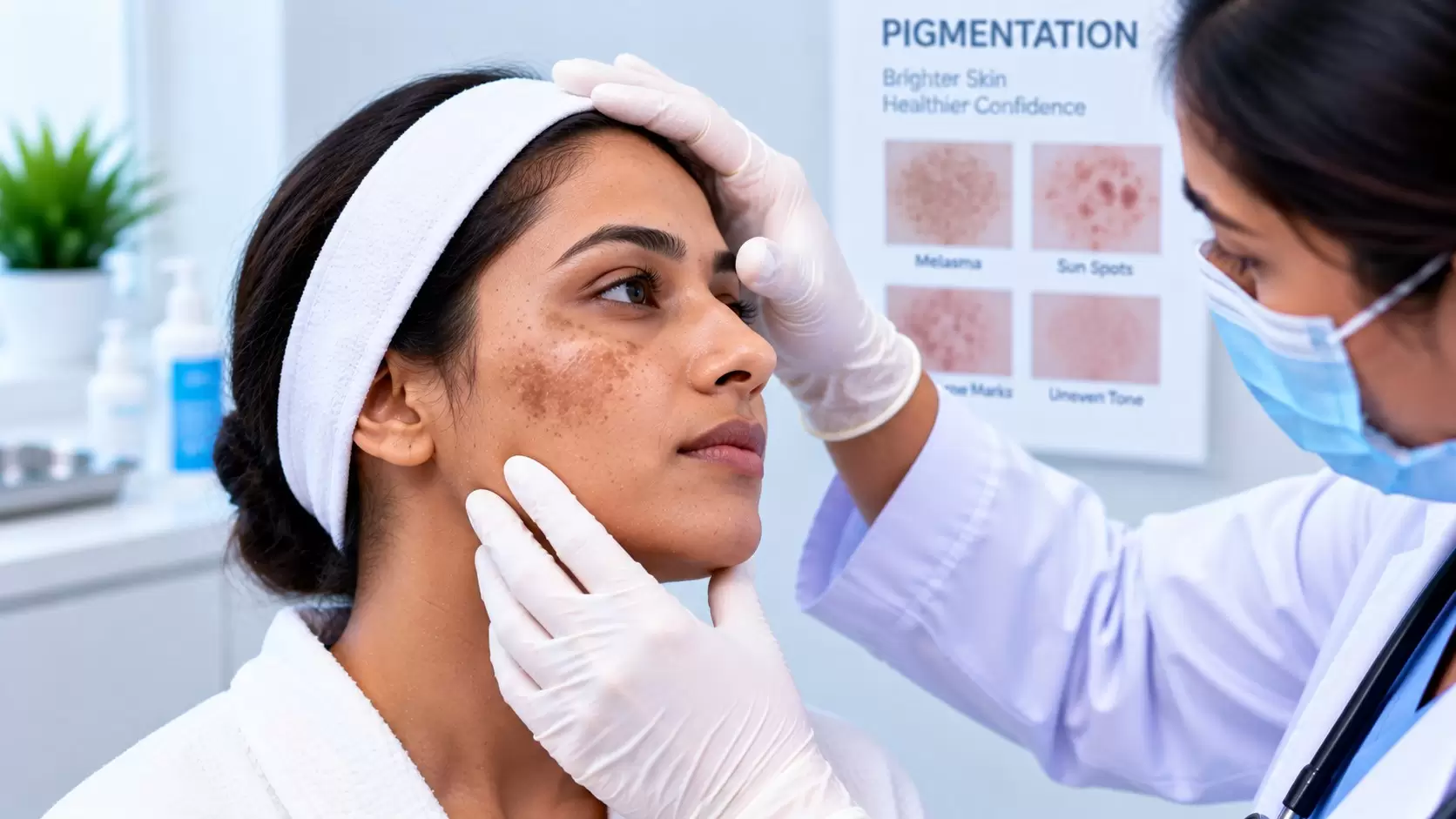
Why does sunlight make skin darker?
Melanin helps protect skin cells from ultraviolet radiation. When skin is exposed to sunlight, melanocytes can increase pigment production, producing tanning and making existing dark areas more noticeable.
This response is especially relevant when treating melasma and post-inflammatory hyperpigmentation because continued light exposure can work against pigment-reducing treatment.
UVA, UVB and visible light: what matters?
UVA
UVA contributes to photoageing and pigmentation and can pass through window glass. It is present throughout daylight hours.
UVB
UVB is the major cause of sunburn and also contributes to skin damage and pigment responses.
Visible light
Visible light can worsen melasma and hyperpigmentation, particularly in people with darker skin tones.
Broad protection
Photoprotection combines sunscreen with shade, hats, clothing and sensible avoidance of intense exposure.
Sun exposure and melasma
Sunlight is a major trigger for melasma. Even when topical treatment is working, repeated light exposure can darken existing patches and contribute to recurrence.
This is why sun protection is considered part of melasma treatment rather than an optional cosmetic step. Read Hyperpigmentation vs Melasma.
Visible light matters in melasma
Visible light can worsen melasma, especially in darker skin tones. Standard untinted sunscreen primarily addresses ultraviolet radiation, while iron oxides in tinted sunscreens can add protection against visible light.
For people managing facial melasma, this can make tinted photoprotection particularly useful.
Sun exposure and post-inflammatory hyperpigmentation
PIH develops after acne, eczema, burns, irritation or other inflammation. Ultraviolet exposure can make these marks darker and more persistent.
Preventing additional inflammation remains essential, but sun protection helps keep existing marks from being repeatedly darkened. See Post-Inflammatory Hyperpigmentation.
Why pigmentation can return after it improves
Melasma is particularly prone to recurrence. Pigment-producing cells can remain responsive to light even after visible patches have faded.
A successful treatment phase therefore needs a maintenance strategy. If sunscreen and other protective measures stop as soon as the skin looks clearer, pigmentation may gradually become noticeable again.
What sunscreen should pigmentation-prone skin use?
The American Academy of Dermatology recommends broad-spectrum, water-resistant sunscreen with SPF 30 or higher. Broad-spectrum protection covers both UVA and UVB radiation.
For melasma and dark spots, a tinted sunscreen containing iron oxides can also help protect against visible light. Choose a formula that suits your skin type so that consistent daily use is realistic.
Why tinted sunscreen can be useful for dark spots
Tinted sunscreens commonly contain iron oxides, which help protect against visible light. They can also reduce the white cast associated with some sunscreens, making them easier to wear on a wider range of skin tones.
For acne-prone skin, look for a non-comedogenic formulation if possible.
How much does reapplication matter?
Sunscreen protection decreases with time, rubbing, swimming and sweating. When outdoors, the AAD recommends reapplication approximately every two hours, and sooner after swimming or sweating according to the product directions.
Reapplication is especially important during prolonged outdoor exposure, travel, sport or other situations where the face remains exposed for hours.
Sunscreen is only one part of photoprotection
Shade, a wide-brimmed hat, sunglasses and sun-protective clothing reduce the amount of radiation reaching the skin. Combining these measures is more reliable than depending on sunscreen alone.
Avoiding tanning beds and sunlamps is also important because artificial ultraviolet exposure can worsen pigment problems and damages skin.
Can pigmentation worsen through a window?
Window glass blocks much of UVB but allows UVA to pass through. For people who spend long periods beside bright windows or driving, this can contribute to cumulative exposure.
Whether additional protection is needed indoors depends on the amount of direct daylight exposure and the pigment condition being treated.
Does sunscreen lighten existing pigmentation?
Sunscreen is not a bleaching treatment. Its value is preventing ultraviolet and, with appropriate tinted products, visible light from continually stimulating or darkening pigmentation.
By reducing ongoing light-driven pigment production, photoprotection allows natural fading and prescribed treatments to work more effectively.
Sun protection after chemical peels and procedures
After procedures that temporarily disrupt or inflame the skin, careful photoprotection is particularly important. New inflammation can create PIH, and ultraviolet exposure can darken it further.
Follow the specific aftercare instructions provided for your procedure rather than restarting strong active ingredients or exfoliation too early.
Common sun-protection mistakes with pigmentation
Using sunscreen only on sunny days
Ultraviolet exposure occurs on cloudy days too, so pigment management usually requires consistent protection.
Applying too little
Insufficient sunscreen provides less protection than the labelled SPF suggests.
Forgetting reapplication
A morning application may not provide adequate protection through prolonged outdoor exposure.
Ignoring irritation
A sunscreen that repeatedly stings or causes dermatitis can itself contribute to inflammation and pigmentation; a better-tolerated formula may be needed.
When sun protection alone is not enough
Photoprotection is foundational, but established melasma, PIH and other pigment disorders may need additional treatment. Options can include prescription topical medicines, carefully selected chemical peels and other dermatologist-directed procedures depending on the diagnosis.
See Causes of Skin Pigmentation and Facial Pigmentation Causes for more on identifying the underlying pattern.
When should you see a dermatologist?
Consider assessment when pigmentation persists despite consistent photoprotection, keeps recurring, is difficult to identify or is being worsened by irritating products.
A changing mole or isolated dark lesion that changes in size, shape, colour or behaviour should be examined rather than treated as routine hyperpigmentation.
For diagnosis and treatment options, visit Pigmentation Treatment in Chennai.
Frequently asked questions
Can sun exposure make pigmentation darker?
Yes. Ultraviolet radiation stimulates pigment production and can darken melasma, post-inflammatory hyperpigmentation and other dark spots.
Can visible light worsen pigmentation?
Yes. Visible light can worsen melasma and hyperpigmentation, particularly in darker skin tones. Tinted sunscreen containing iron oxides can add visible-light protection.
What sunscreen is useful for pigmentation-prone skin?
A broad-spectrum, water-resistant sunscreen with SPF 30 or higher is a core recommendation. For melasma and dark spots, a tinted sunscreen containing iron oxides can also help protect against visible light.
How often should sunscreen be reapplied outdoors?
The American Academy of Dermatology recommends reapplying sunscreen approximately every two hours when outdoors, and sooner after swimming or sweating according to the product directions.
Why does pigmentation return after treatment?
Continued light exposure can reactivate pigment production, especially in melasma. Long-term photoprotection is therefore part of maintenance even after pigmentation improves.
Visit us in OMR
Pigmentation keeps darkening or returning? Build treatment around the right diagnosis and photoprotection.
Book a dermatologist consultation at Ram Skin Clinic in Thoraipakkam, Chennai.
#48, Second Floor, Flat E, Best Towers,Okkiampet, Thoraipakkam, OMR,
Chennai – 600097. Above Domino’s Pizza.