
Understanding Facial Pigmentation
Hyperpigmentation vs Melasma: What Is the Difference?
Hyperpigmentation and melasma are often used as if they mean the same thing, but they are not interchangeable. Hyperpigmentation is a broad description of darker skin; melasma is a specific pigmentary disorder with a characteristic pattern and triggers.
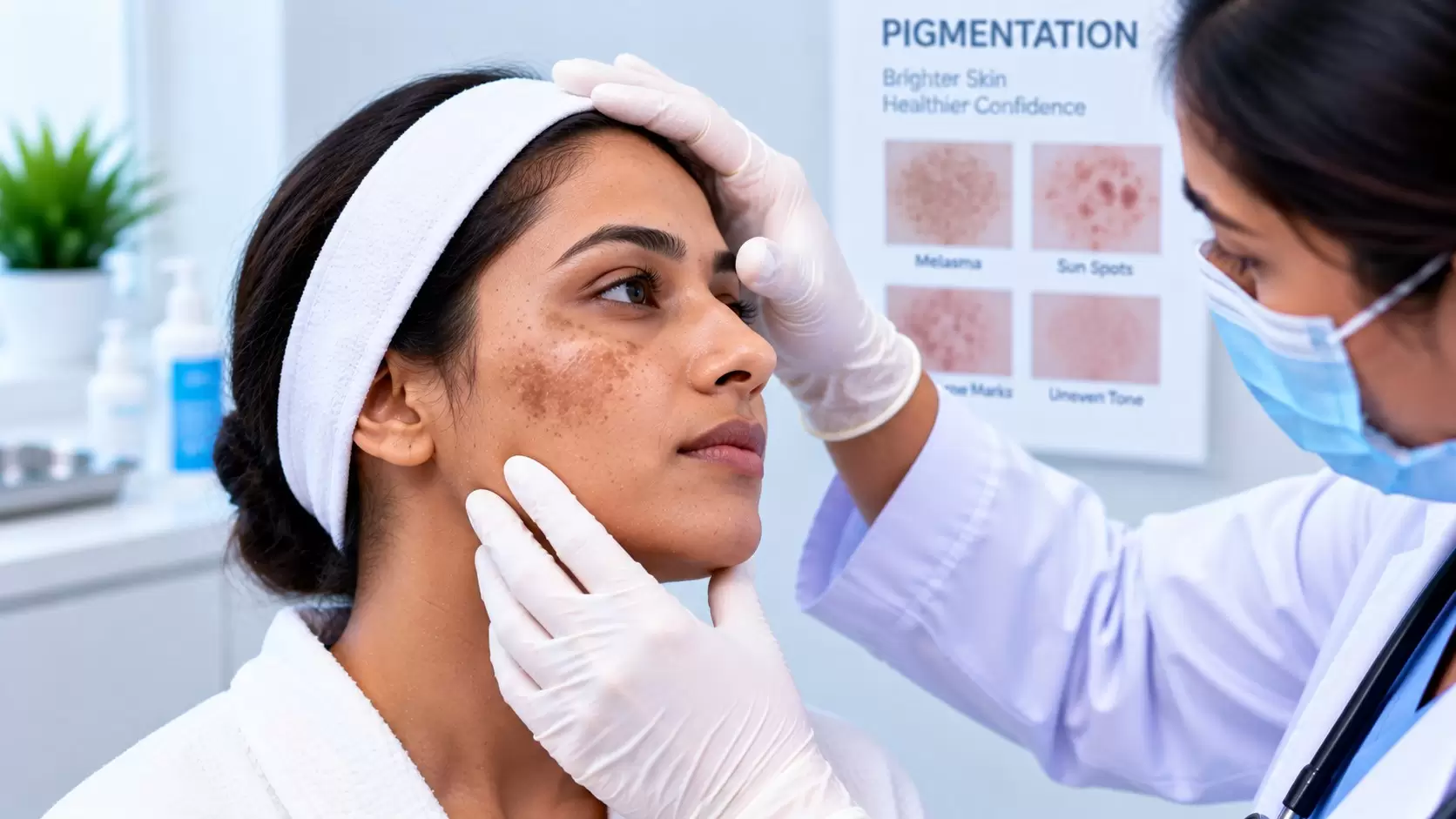
What is hyperpigmentation?
Hyperpigmentation simply means that an area of skin is darker than the surrounding skin. The darker colour usually reflects increased melanin production or deposition.
It is an umbrella term rather than one diagnosis. Melasma, post-inflammatory hyperpigmentation, sun-related lentigines and some medicine-related colour changes can all produce hyperpigmentation.
What is melasma?
Melasma is a common acquired pigmentary disorder that typically produces bilateral, blotchy brownish pigmentation, especially on the face. Common sites include the cheeks, forehead, nose, upper lip and chin.
Melasma is usually not painful or itchy. Its development is complex and can involve genetic susceptibility, ultraviolet and visible light exposure and hormonal influences.
Hyperpigmentation vs melasma: quick comparison
Meaning
Hyperpigmentation: a broad term for darker areas of skin.
Melasma: a specific acquired pigmentary disorder.
Typical pattern
Hyperpigmentation: depends on the cause.
Melasma: commonly symmetrical patches on both sides of the face.
Common triggers
Hyperpigmentation: inflammation, acne, injury, irritation, medicines and light exposure.
Melasma: light exposure, hormones and genetic susceptibility.
Long-term behaviour
Hyperpigmentation: may fade once the trigger stops.
Melasma: often persistent and prone to recurrence.
How melasma usually looks
Melasma often appears as irregular but relatively symmetrical brown, tan or grey-brown patches. It most commonly affects sun-exposed facial areas.
Because several other conditions can create facial pigmentation, appearance alone is not always enough for self-diagnosis. A dermatologist may use close examination, dermoscopy or a Wood’s lamp when useful.
How post-inflammatory hyperpigmentation looks different
Post-inflammatory hyperpigmentation, or PIH, develops where the skin was previously inflamed or injured. The dark mark often follows the shape and location of an acne lesion, eczema patch, burn, insect bite or other injury.
For example, multiple individual brown marks exactly where pimples healed are more suggestive of acne-related PIH than classic melasma.
Why sun and visible light matter in melasma
Sunlight stimulates pigment production and can darken melasma. Visible light can also worsen melasma, particularly in darker skin tones.
Consistent photoprotection is therefore part of treatment, not merely an optional extra. Broad-spectrum SPF 30 or higher is commonly recommended, and tinted sunscreen containing iron oxides can provide additional protection from visible light.
Hormones and melasma
Melasma is strongly associated with hormonal influences. Pregnancy is a recognised trigger, and oral contraceptives or other hormonal medicines can contribute in susceptible people.
Hormones are not the whole explanation. Light exposure and inherited susceptibility interact with hormonal factors, which helps explain why melasma can persist even after the original trigger changes.
What causes other forms of hyperpigmentation?
Acne, eczema, psoriasis, skin injury, burns, irritation from skin or hair products and some medicines can all cause dark marks or patches. The mechanism and distribution vary with the underlying cause.
See Causes of Skin Pigmentation for a broader overview.
Can acne marks be mistaken for melasma?
Yes, especially when multiple dark marks merge into larger areas of uneven colour. A useful clue is history: acne-related PIH develops where inflamed acne lesions occurred, whereas melasma has a characteristic bilateral facial distribution.
Some patients can have both conditions at the same time, which is another reason diagnosis matters before choosing treatment.
Why diagnosis matters before treatment
Treating every dark patch with the same lightening product can fail or cause irritation. PIH improves best when the underlying inflammation is controlled, while melasma management requires sustained photoprotection and often a combination treatment plan.
Harsh products or overly aggressive procedures can create additional inflammation and worsen pigmentation, particularly in medium to dark skin tones.
How hyperpigmentation is treated
Treatment depends on the cause. For PIH, controlling acne, eczema or another inflammatory trigger is essential. Gentle skin care and photoprotection help prevent new darkening.
Dermatologists may use topical ingredients such as azelaic acid, retinoids, hydroquinone or other pigment-modulating treatments depending on the diagnosis and individual skin.
How melasma is treated
Melasma treatment commonly combines daily photoprotection with prescription topical therapy. Hydroquinone, azelaic acid, tretinoin-containing regimens and triple-combination cream are among established options used in appropriate patients.
Chemical peels, microneedling, selected laser or light procedures and other treatments may be considered by a dermatologist when appropriate. Because procedures can also provoke pigmentation, patient selection and technique matter.
Does melasma ever go away on its own?
Melasma can fade when a trigger such as pregnancy or a medicine ends, but it may also persist for years. Even after improvement, recurrence is common if triggering factors—particularly light exposure—are not controlled.
This tendency to recur is one of the major differences between melasma and some temporary forms of post-inflammatory pigmentation.
Skin care when you are prone to pigmentation
Use gentle products and avoid repeatedly applying anything that burns or stings. Irritation can create additional inflammation and make dark spots darker.
Daily sun protection is important. For facial melasma or persistent PIH, ask your dermatologist whether a tinted broad-spectrum sunscreen containing iron oxides would be useful for your skin.
When should you see a dermatologist?
Assessment is useful when facial pigmentation is new, persistent, spreading, recurring or difficult to identify; when over-the-counter products are causing irritation; or before considering stronger prescription treatments or procedures.
A changing mole or isolated dark lesion that changes in size, shape or colour should also be evaluated rather than assumed to be melasma or routine hyperpigmentation.
For diagnosis and treatment options, visit Pigmentation Treatment in Chennai.
Frequently asked questions
Is melasma the same as hyperpigmentation?
Melasma is a specific acquired pigmentary disorder and therefore one cause of hyperpigmentation. Hyperpigmentation is the broader term for skin that becomes darker than the surrounding skin.
How can I tell melasma from post-inflammatory hyperpigmentation?
Melasma typically causes bilateral blotchy facial patches, while post-inflammatory hyperpigmentation usually follows the shape and location of previous acne, rash, injury or irritation. A dermatologist can distinguish overlapping patterns.
Does sunlight worsen melasma?
Yes. Ultraviolet radiation and visible light can worsen melasma, which is why consistent broad-spectrum sun protection and, for many patients, tinted sunscreen containing iron oxides are important.
Can melasma go away permanently?
Melasma can fade, particularly when a trigger ends, but it can persist for years and commonly recurs. Ongoing photoprotection is an important part of long-term management.
Should all facial pigmentation be treated as melasma?
No. Facial pigmentation can have several causes. Accurate diagnosis is important because treatments suitable for one condition may be ineffective or irritating for another.
Visit us in OMR
Melasma or another type of pigmentation? Get the pattern correctly diagnosed.
Book a dermatologist consultation at Ram Skin Clinic in Thoraipakkam, Chennai.
#48, Second Floor, Flat E, Best Towers,Okkiampet, Thoraipakkam, OMR,
Chennai – 600097. Above Domino’s Pizza.