
Childhood Atopic Dermatitis
Eczema in Children
Atopic dermatitis is common in childhood and often begins in infancy or the early years. It causes itchy, dry and inflamed skin, but the location and appearance can change as a child grows.
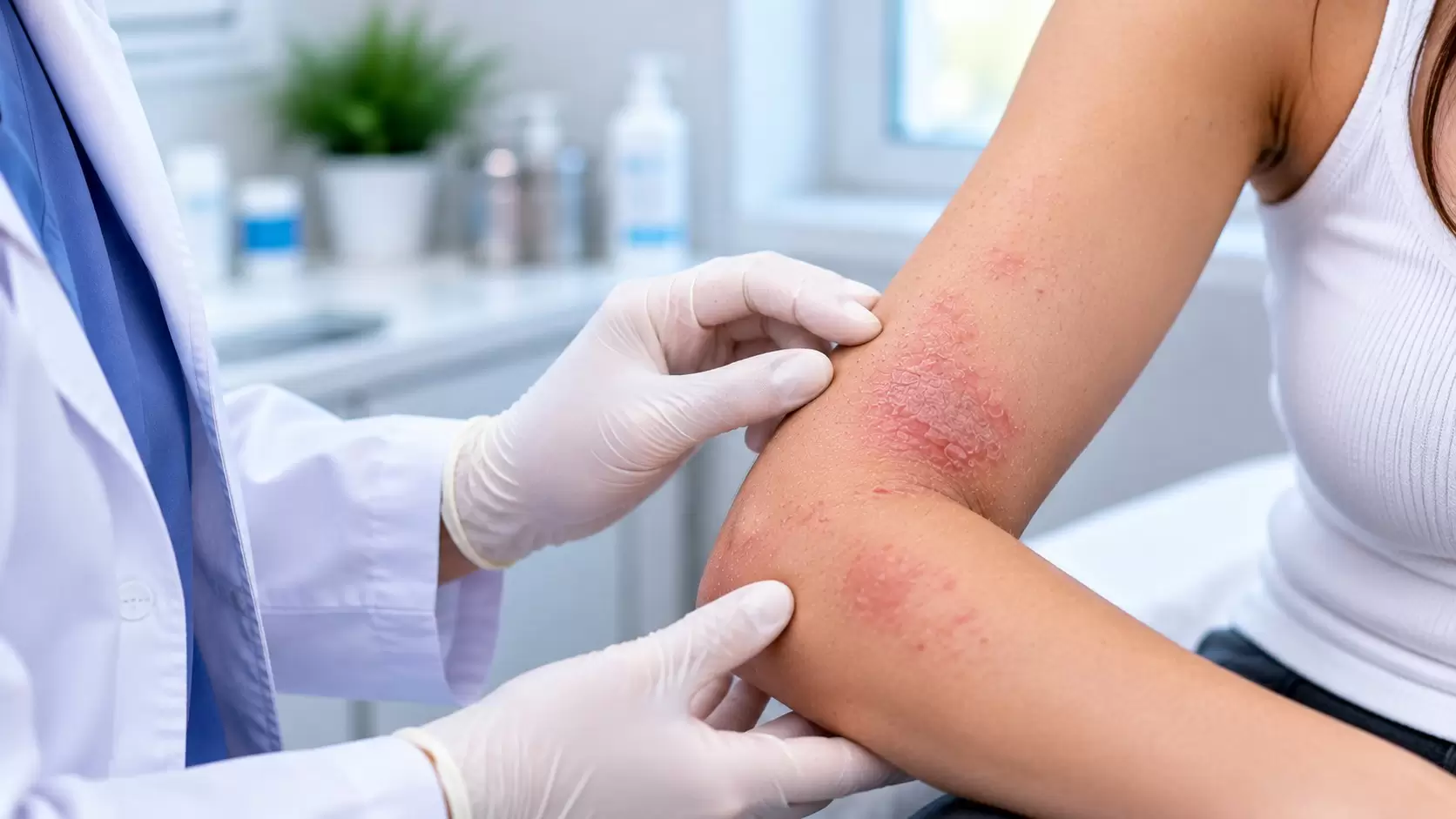
What is childhood eczema?
Atopic dermatitis, often called atopic eczema, is a chronic inflammatory skin condition characterised by itch, dryness and recurrent flares. It is particularly common in children and frequently starts during infancy or early childhood.
The condition is not contagious. It reflects a combination of skin-barrier dysfunction, immune activity, genetic susceptibility and environmental influences rather than an infection or poor hygiene.
For a broader overview, see Eczema Causes, Symptoms & Types.
How eczema changes with age
Babies
Eczema commonly affects the cheeks, face and scalp. The rash may be dry and scaly or become weepy and crusted during active flares.
Toddlers
As children become mobile, eczema may involve the wrists, ankles, elbows and knees. Scratching can make skin thicker over time.
School-age children
The elbow and knee creases are common sites. The neck, wrists, ankles, hands and skin around the eyes can also be involved.
Adolescents
Flexural eczema may persist, while the hands, eyelids, face and neck can become important problem areas. Some children improve substantially as they grow older.
Signs parents may notice
Itching is often the dominant symptom and can begin before a visible rash. Children may scratch, rub against bedding or become restless at night. Skin may look dry, scaly, rough, swollen, cracked, raw, blistered or crusted depending on the stage of the disease.
Inflammation does not look identical on every skin tone. It may appear red or pink on lighter skin and purple, grey, brown, darker or lighter than surrounding skin on darker skin.
See Early Signs of Eczema for additional early clues.
Why eczema can affect sleep and school
Persistent itch can interrupt sleep for both children and caregivers. Poor sleep may affect concentration, mood and school performance. Visible eczema can also affect confidence and social wellbeing.
These quality-of-life effects matter when judging severity. A relatively small area of eczema can still need treatment adjustment if the child is scratching through the night or struggling with daily activities.
Common childhood eczema triggers
Triggers differ between children. Soap, fragranced products, detergents, rough fabrics, heat, sweating, dry weather and skin infections can aggravate eczema in susceptible children. Stress can also contribute to flares in some older children.
A trigger is not necessarily the underlying cause of eczema. Avoid broad restrictions unless a clear pattern exists. Read Eczema Triggers.
Does food cause eczema in children?
Food allergy and atopic dermatitis can coexist, especially in some children with more severe eczema, but eczema should not automatically be attributed to food. The 2026 AAD pediatric guideline found insufficient evidence or no benefit for several dietary interventions aimed at preventing atopic dermatitis.
The NHS advises parents not to change a child’s diet because of eczema unless a doctor recommends it. Unnecessary elimination diets can cause nutritional problems and may complicate proper allergy assessment.
Daily skin care for children with eczema
Regular moisturising remains a core treatment. The 2026 AAD pediatric guideline strongly recommends moisturisers for reducing dry, itchy skin in children with atopic dermatitis. Bathing followed by moisturiser is also part of standard care.
Keep bathing gentle
Use comfortably warm rather than very hot water and avoid vigorous scrubbing of inflamed skin.
Moisturise consistently
Use an eczema-friendly fragrance-free moisturiser regularly, including after bathing.
Reduce scratching damage
Keep fingernails short and smooth. For babies, anti-scratch mittens may reduce skin damage from scratching.
Choose comfortable clothing
Loose, breathable fabrics are often better tolerated than rough wool or tight clothing.
See our detailed Skin Care Routine for Eczema.
How childhood eczema is treated
Treatment is tailored to age, severity, body site and the impact on the child. Alongside moisturisers, topical corticosteroids remain a first-line treatment for many childhood flares. Topical calcineurin inhibitors and several newer non-steroid topical medicines are options for appropriately selected children.
For moderate-to-severe eczema that remains uncontrolled, pediatric guidelines include options such as phototherapy, biologic medicines and selected systemic therapies, with age restrictions and safety considerations guiding the choice.
Systemic corticosteroids are strongly recommended against for routine pediatric atopic dermatitis management in the 2026 AAD guideline, except limited circumstances such as short-term bridge therapy for sudden severe disease.
Read more in Eczema Treatment Options.
Watch for skin infection
Eczema-damaged skin is more vulnerable to infection. Seek medical advice if a child’s eczema becomes painful, warm or swollen, suddenly worsens, leaks fluid, develops pus-filled spots or forms significant crusting.
For more context, see Is Eczema Contagious?.
Will a child grow out of eczema?
Many children improve as they grow older, but the course is individual. DermNet notes that childhood atopic dermatitis often improves during the school years, although some people continue to have eczema or sensitive skin into adolescence and adulthood.
Because the future course cannot be predicted precisely for an individual child, treatment should focus on good current control rather than waiting for eczema to disappear on its own.
When should a child see a dermatologist?
Dermatology review is appropriate when the diagnosis is uncertain, eczema is widespread or recurrent, itching regularly disrupts sleep, prescribed treatment is not controlling symptoms, side effects are a concern, or infection is suspected.
For assessment at Ram Skin Clinic, visit Eczema Treatment in Chennai.
Frequently asked questions
At what age does eczema usually start?
Atopic dermatitis commonly begins in infancy or early childhood, although it can begin at any age.
Where does eczema appear in babies?
The face and scalp are common sites in babies. Distribution changes as children grow, with elbow and knee creases becoming common in older children.
Is childhood eczema contagious?
No. Atopic dermatitis is an inflammatory skin condition and cannot be caught from another child.
Should I remove foods from my child’s diet because of eczema?
Not without medical advice. Food allergy can coexist with eczema, but broad elimination diets are not routinely recommended and can create nutritional problems.
What treatments are used for eczema in children?
Regular moisturisers and age-appropriate topical anti-inflammatory medicines are central treatments. More severe disease may require specialist options such as phototherapy, biologics or other systemic therapies.
Will my child grow out of eczema?
Many children improve with age, but eczema can persist or recur. It is not possible to predict the course precisely for an individual child.
For authoritative guidance, see the 2026 American Academy of Dermatology pediatric guidance, DermNet and NHS.
Visit us in OMR
Concerned about your child’s eczema?
Book a dermatologist consultation at Ram Skin Clinic in Thoraipakkam, Chennai.
#48, Second Floor, Flat E, Best Towers,Okkiampet, Thoraipakkam, OMR,
Chennai – 600097. Above Domino’s Pizza.