
Recognising Eczema Early
Early Signs of Eczema
Eczema can begin with itch and unusually dry or sensitive skin before a more obvious rash develops. Recognising the early pattern can help you protect the skin barrier and seek the right diagnosis sooner.
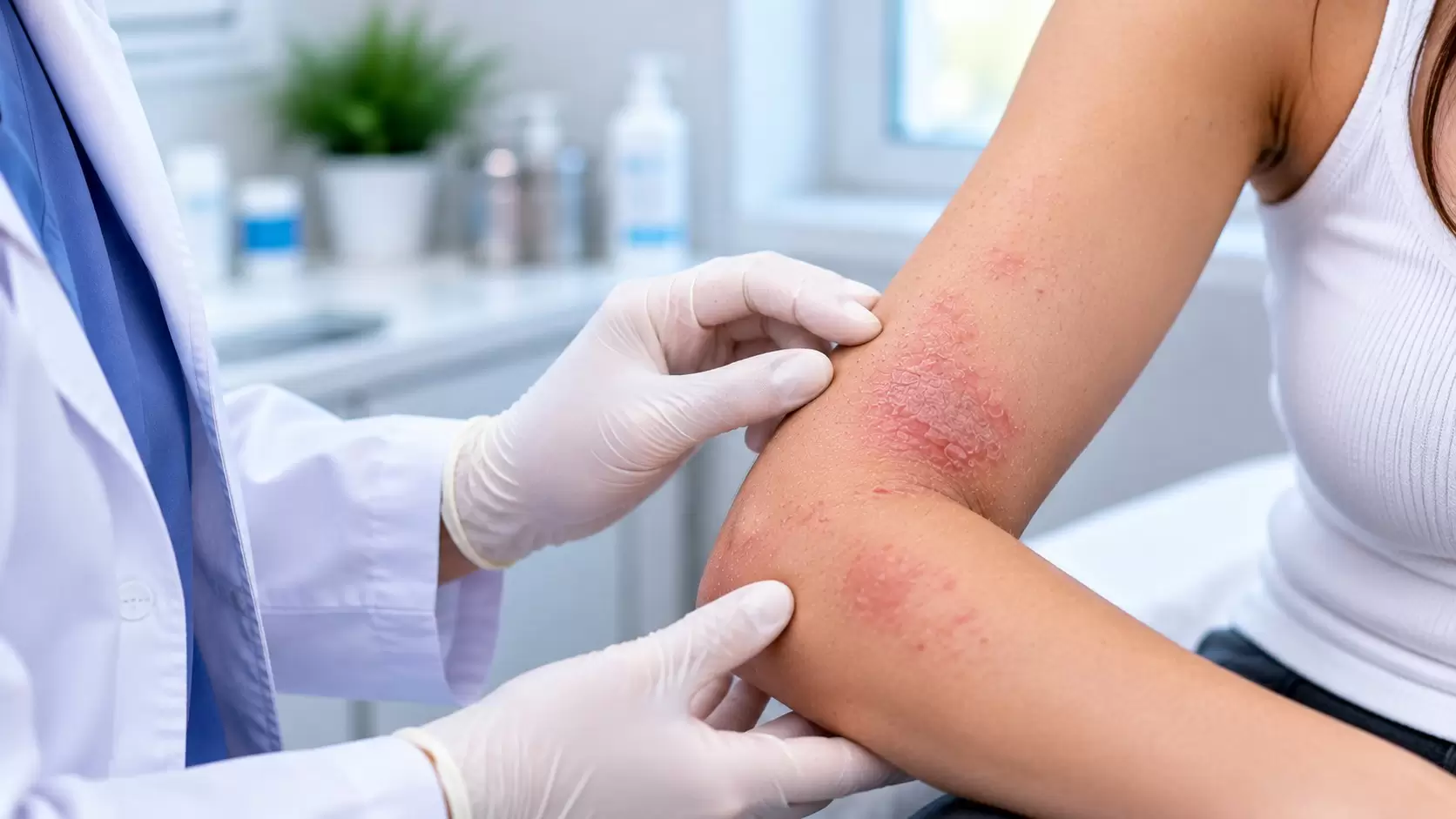
Itching can be the first sign
Atopic dermatitis is sometimes described as an “itch that rashes” because very itchy skin can appear before a clearly visible rash. Scratching then damages the skin and can make inflammation more obvious.
The itch may be persistent or come in episodes and can become severe enough to disturb sleep. In babies who cannot scratch effectively, repeated rubbing against bedding or other surfaces can be a clue.
For a broader introduction to the condition, read Eczema Causes, Symptoms & Types.
Common early changes to look for
Dry, sensitive skin
Skin may feel unusually dry, rough or easily irritated. Generalised dryness is a common feature of atopic dermatitis.
Persistent itching
Itch is one of the defining features and may precede the visible rash. Repeated scratching can make the disease more noticeable.
Rough or scaly patches
Small areas can become dry and scaly before developing into more established inflamed eczema.
Colour change
Inflamed eczema may look red or pink on lighter skin and brown, purple, grey or darker than surrounding skin on darker skin tones.
Small itchy bumps
Some people, particularly those with darker skin tones, develop clusters of small rough or itchy bumps rather than a classically red rash.
Scratch marks
Linear marks, raw areas or broken skin may be evidence that itch has already led to repeated rubbing or scratching.
How eczema changes during a flare
As inflammation increases, the skin can become warm, swollen, more intensely itchy or visibly inflamed. Bumps may leak fluid, and blisters can ooze and crust. Repeated scratching over time can make the skin thick, scaly and leathery—a change called lichenification.
Early eczema in babies and young children
Atopic dermatitis often begins early in life. Babies and young children commonly develop dry, scaly or bumpy skin on the cheeks, forehead or scalp, although other areas can also be affected. Rubbing due to itch can cause raw skin, oozing or crusting.
Sleep disturbance, fussiness and repeated rubbing may accompany the skin changes. Eczema can look different on different skin tones, so absence of bright redness does not rule it out.
Early eczema in older children and teenagers
As children grow, eczema commonly affects the elbows, knees, neck, wrists and ankles. The precise distribution can vary with skin type and individual disease pattern. Itchy, scaly patches or small itchy bumps may be early clues.
Repeated rubbing and scratching can eventually produce thickened skin, so recognising persistent itch and dryness before this happens can be useful.
Can eczema start in adults?
Yes. Although atopic dermatitis commonly starts in childhood, it can begin during puberty or adulthood. Adults may develop eczema on the hands or feet, around the eyes, or in other areas. The skin may be extremely dry, itchy, discoloured or easily irritated.
New adult-onset rashes should not automatically be assumed to be eczema because contact dermatitis, psoriasis, fungal infections and other skin diseases can resemble it.
Eczema or another skin condition?
Eczema shares features with several other rashes. Psoriasis can also produce scaly inflamed plaques, while fungal infections may cause itchy scaly patches. Contact dermatitis can look very similar to atopic dermatitis but is driven by exposure to an irritant or allergen.
A dermatologist considers the distribution, appearance, history and symptoms rather than relying on a single sign. Our Psoriasis vs Eczema guide explains some common differences.
Watch for signs of skin infection
Dry, cracked eczema and scratching can make skin more vulnerable to infection. Yellow or golden crusts can indicate a bacterial infection. Pain, warmth, swelling, pus, rapidly worsening eczema or feeling unwell also deserve prompt medical attention.
When should you see a dermatologist?
Arrange assessment if you or your child develops persistent itching, dry scaly patches or recurrent rashes; if the diagnosis is uncertain; if symptoms interfere with sleep; or if moisturising and basic skin care are not controlling the problem.
Early diagnosis can distinguish atopic eczema from other conditions and allow an appropriate treatment plan before repeated scratching and inflammation cause more persistent skin changes. For consultation information, visit Eczema Treatment in Chennai.
Frequently asked questions
What is usually the first sign of eczema?
Persistent itching and dry, sensitive skin are common early features. In atopic dermatitis, itching may begin before a clearly visible rash.
What does early eczema look like?
It may appear as dry or scaly patches, small rough bumps, scratch marks or inflamed skin. Colour can range from red or pink to brown, purple, grey, lighter or darker than surrounding skin depending on skin tone.
Where does eczema usually start in babies?
Babies commonly develop atopic dermatitis on the cheeks, forehead or scalp, although eczema can occur elsewhere on the body.
Can eczema suddenly start in adulthood?
Yes. Atopic dermatitis can begin in adults, although a new adult rash should be assessed because several other skin conditions can look similar.
Does eczema always start with a rash?
No. Intense itching can precede a visible rash, which is why atopic dermatitis is sometimes described as an itch that rashes.
When is eczema urgent?
Prompt assessment is needed if eczema becomes painful, warm, swollen, blistered, crusted, leaking fluid, rapidly worse, or is accompanied by fever or feeling unwell.
For authoritative patient information, see the American Academy of Dermatology, DermNet and NHS.
Visit us in OMR
Concerned about an itchy rash?
Book a dermatologist consultation at Ram Skin Clinic in Thoraipakkam, Chennai.
#48, Second Floor, Flat E, Best Towers,Okkiampet, Thoraipakkam, OMR,
Chennai – 600097. Above Domino’s Pizza.