
Everyday Psoriasis Care
Living With Psoriasis: Skin Care Tips
A gentle, consistent skin-care routine can reduce dryness, scaling and irritation and may help avoid preventable flare-ups while you continue your prescribed psoriasis treatment.
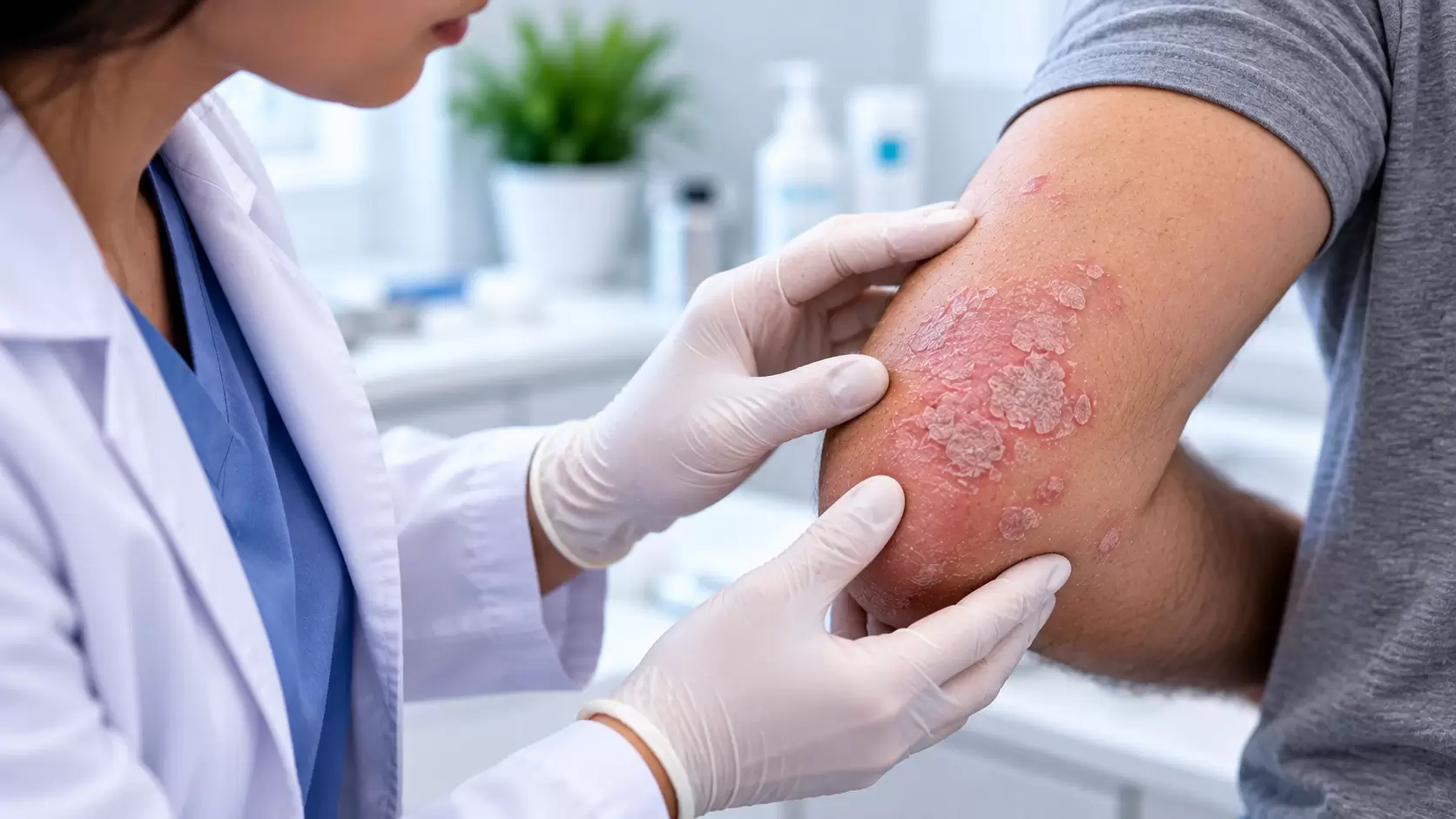
Why daily skin care matters
Psoriasis commonly makes the skin dry, scaly and easily irritated. Everyday habits cannot cure the underlying immune-mediated disease, but reducing dryness and unnecessary irritation can make the skin more comfortable and support medical treatment.
The American Academy of Dermatology recommends psoriasis-friendly skin care, identifying personal triggers and treating psoriasis as needed as part of long-term disease control. If you are newly diagnosed, our guide to Psoriasis Causes, Symptoms & Types explains the condition in more detail.
A practical psoriasis skin-care routine
Use warm, not hot, water
Long or hot baths and showers can dry and irritate psoriasis-prone skin. Keep washing gentle and avoid prolonged exposure to hot water.
Choose a gentle cleanser
Use a mild, moisture-rich cleanser suitable for sensitive skin. Harsh soaps, scrubs and abrasive washing tools can irritate plaques and surrounding skin.
Pat rather than rub
After bathing, blot the skin gently with a towel instead of vigorous rubbing. Leaving the skin slightly damp before moisturising can help retain water.
Moisturise promptly
Apply a fragrance-free moisturiser soon after bathing or hand washing. Thick creams or ointments generally retain moisture better than light lotions when skin is very dry.
Reduce scratching
Scratching can damage the skin and aggravate psoriasis. Moisturiser and a cool damp compress can help soothe itch while prescribed treatment controls the inflammation.
Protect against injury
Cuts, scratches, burns, insect bites and sunburn can trigger new psoriasis in susceptible people through the Koebner phenomenon.
Bathing without drying your skin
The AAD advises limiting showers to about five minutes and baths to around fifteen minutes or less, using warm rather than hot water. Wash gently with your hands instead of scrubbing with loofahs or rough washcloths.
After washing, gently blot the skin and apply a fragrance-free moisturiser while the skin is still slightly damp. This helps seal water into the skin. DermNet likewise recommends regular emollients because they improve dryness, scaling and irritation.
How to manage itching
Itch can be one of the most troublesome psoriasis symptoms. The most effective long-term approach is to control the psoriasis itself. While treatment is taking effect, moisturising regularly and using a cool damp cloth on itchy areas can provide relief.
Try to avoid repeated scratching. Besides causing soreness or bleeding, skin trauma can trigger psoriasis at the injured site in some people. If itching is persistent or interfering with sleep, tell your dermatologist rather than repeatedly adding over-the-counter products that may irritate the skin.
Sun, weather and air conditioning
Some people find their psoriasis improves with sunlight, but sunburn is a skin injury and can provoke a flare. Medical phototherapy uses carefully controlled ultraviolet exposure and is different from intentionally getting excessive sun.
Cold, dry weather can worsen psoriasis for some people. Air conditioning may also dry the skin. Regular moisturising and avoiding direct exposure to very dry air can help maintain skin comfort.
For a broader look at factors that can worsen the condition, see Psoriasis Triggers & Flare-Ups.
Scalp and nail care
Scalp care
Avoid forcefully picking or scraping scale. Part the hair so prescribed scalp medicine reaches the skin, and use medicated shampoos or scale-softening treatment only as directed. Read our scalp psoriasis guide.
Nail care
Keep nails clean and protected from repeated trauma. Avoid biting or picking the nails and surrounding skin, and avoid cutting or aggressively pushing back cuticles. Wear gloves for wet or irritating work when appropriate.
Lifestyle and psoriasis
Skin care is only one part of living with psoriasis. A healthy balanced diet, regular physical activity, stress management, avoiding smoking and limiting excessive alcohol intake support general health and may also help psoriasis management in appropriate patients.
There is no single lifestyle routine that guarantees clear skin. Psoriasis is a medical condition, and people with moderate-to-severe disease may need prescription topical therapy, phototherapy or systemic treatment. See our overview of Psoriasis Treatment Options.
When your routine is not enough
Arrange a dermatologist review if plaques are becoming more extensive, painful or difficult to control; itching is disrupting sleep; sensitive areas are affected; or your usual treatment is no longer effective. Recurring joint pain, swelling or morning stiffness should also be reported because psoriasis can be associated with psoriatic arthritis.
At Ram Skin Clinic, psoriasis care can be adjusted according to disease severity, body site and treatment response. Visit Psoriasis Treatment in Chennai for consultation information.
Frequently asked questions
How often should I moisturise psoriasis?
Moisturise at least after bathing or washing and whenever the skin feels dry. Thick fragrance-free creams or ointments are often useful for very dry or scaly skin.
Is hot water bad for psoriasis?
Hot water can increase dryness and irritation. Dermatologists generally recommend short baths or showers using warm rather than hot water.
Should I scrub psoriasis scales off?
No. Vigorous scrubbing or picking can injure the skin and worsen psoriasis. If thick scale needs to be softened or removed, use the method recommended as part of your treatment plan.
What type of moisturiser is best for psoriasis?
Fragrance-free thick creams or ointments usually retain moisture better than light lotions for very dry psoriasis-prone skin. Choose a product you can use consistently and that does not irritate your skin.
Can scratching spread psoriasis?
Psoriasis is not contagious, but scratching can injure your own skin. In susceptible people, skin injury can trigger a new psoriasis lesion at that site through the Koebner phenomenon.
Can skin care replace psoriasis medicine?
No. Good skin care can reduce dryness and irritation and support treatment, but active psoriasis may require prescription treatment depending on its severity and location.
For authoritative patient guidance, see the American Academy of Dermatology, DermNet and NHS.
Visit us in OMR
Need help controlling psoriasis?
Book a dermatologist consultation at Ram Skin Clinic in Thoraipakkam, Chennai.
#48, Second Floor, Flat E, Best Towers,Okkiampet, Thoraipakkam, OMR,
Chennai – 600097. Above Domino’s Pizza.