
Understanding How Skin Infections Spread
Are Skin Infections Contagious?
Some skin infections spread readily from person to person, while others are usually acquired from the environment or arise when organisms already present on the skin cause disease. How contagious an infection is depends on the organism and the condition.
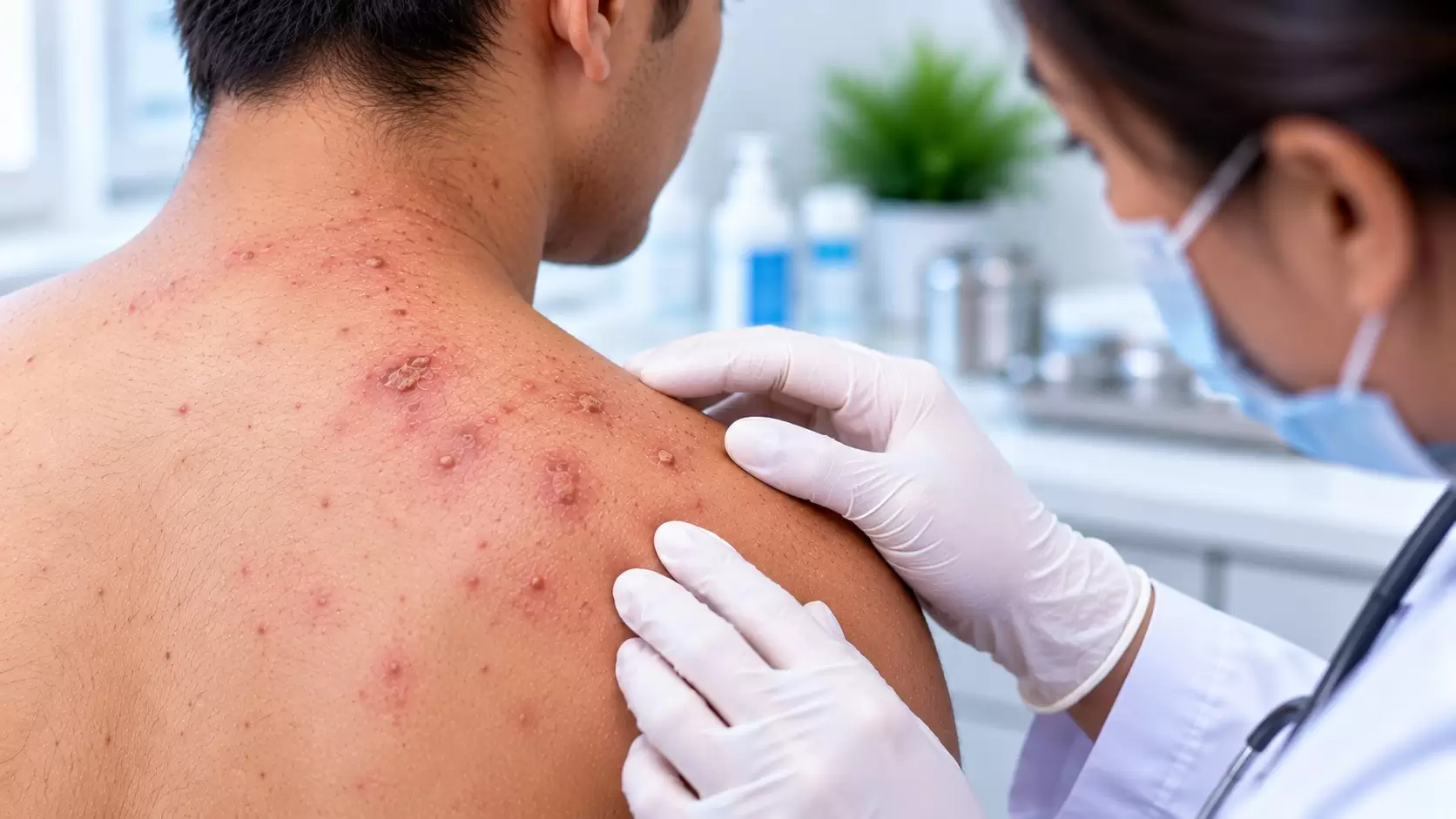
It depends on the type of infection
“Skin infection” is a broad term. Bacteria, fungi, viruses and parasites spread in different ways. Some conditions are highly transmissible with close contact, while others usually require a break in the skin or specific environmental exposure.
For an overview of these groups, see Common Types of Skin Infections.
Common contagious skin infections
Impetigo
A contagious superficial bacterial infection. It can spread through direct contact with sores or contaminated items.
Ringworm
Dermatophyte fungal infections can spread between people, from infected animals, or through contaminated objects and surfaces.
Scabies
Scabies is caused by mites and most often spreads through prolonged direct skin-to-skin contact. Clothing or bedding can sometimes contribute.
Molluscum contagiosum
This viral skin infection can spread by direct contact and through contaminated objects. Scratching can also spread lesions to other areas of the same person.
Herpes simplex
Herpes simplex can spread through direct contact with infected skin or secretions, including when lesions are present.
Warts
Warts are caused by human papillomavirus and can spread by skin contact or contaminated surfaces, particularly when the skin barrier is damaged.
Is cellulitis contagious?
Cellulitis is generally not considered contagious because the infection occurs in deeper layers of the skin and underlying tissue. CDC guidance states that people do not catch cellulitis from someone who has it.
The bacteria that can cause cellulitis may nevertheless spread in other contexts, so normal wound hygiene and handwashing remain important.
Is folliculitis contagious?
Folliculitis has many causes, including bacteria, yeast, shaving, friction and occlusion, so there is no single answer. Some infectious causes may spread under certain circumstances, while non-infectious folliculitis is not contagious.
For more detail, read Folliculitis Causes & Symptoms.
How fungal infections spread
Dermatophyte infections such as ringworm and athlete’s foot can spread through direct skin contact, infected animals, and contaminated objects or surfaces. Shared changing rooms and wet communal areas can facilitate exposure.
Not every fungal or yeast condition spreads easily between people. The organism, body site and individual risk factors matter. See Bacterial vs Fungal Skin Infection.
Can infections spread through towels and razors?
Yes, some organisms can be transferred on personal items that contact infected skin. Towels, washcloths, razors and grooming tools should not be shared when an active contagious skin condition is suspected.
Can you spread an infection to another part of your body?
Yes. This is called autoinoculation. Scratching, picking or shaving over some infections can transfer organisms to nearby skin or create new breaks in the skin barrier.
Keeping nails short, avoiding picking and following appropriate treatment can help reduce self-spread.
How to reduce the risk of passing infection on
Wash your hands
Clean hands before and after touching wounds, dressings or infected skin.
Cover draining lesions
Keep wounds and draining areas covered with clean, dry dressings when appropriate.
Avoid sharing personal items
Do not share towels, razors, clothing or grooming equipment that contacts affected skin.
Follow treatment instructions
Correct diagnosis and treatment can shorten illness and, for some infections, reduce the period of contagiousness.
See our full guide: How to Prevent Skin Infections.
When can children return to school or activities?
Return-to-school and sports recommendations depend on the diagnosis, treatment and local policy. For example, impetigo has specific exclusion guidance because it is contagious, while cellulitis itself is not transmitted person to person.
Ask the treating clinician when a child has a confirmed contagious infection, particularly if lesions cannot be reliably covered or the activity involves close skin contact.
When should household contacts be concerned?
Household evaluation or coordinated treatment may be relevant for some infections, especially scabies and certain recurrent bacterial infections. It is not necessary for every skin infection.
If several family members develop similar itchy rashes, boils or other lesions, mention this during the medical consultation because it can provide an important diagnostic clue.
When to see a dermatologist
Seek assessment when the diagnosis is uncertain, several household members are affected, the rash is spreading, infections keep returning, or treatment has not worked as expected.
For diagnosis and treatment, visit Skin Infection Treatment in Chennai.
Frequently asked questions
Are all skin infections contagious?
No. Some spread between people, while others arise from organisms already on the skin, environmental exposure or entry through damaged skin.
Is cellulitis contagious?
Cellulitis itself is generally not contagious and is not caught from another person, although bacteria capable of causing skin infections can spread in other circumstances.
Is ringworm contagious?
Yes. Ringworm can spread through direct contact with infected people or animals and through contaminated objects or surfaces.
Can skin infections spread through towels?
Some can. Avoid sharing towels, razors, washcloths and other personal items when a contagious infection is suspected.
Can scratching spread a skin infection?
Yes. Scratching can move organisms to nearby skin and can damage the skin barrier, increasing the chance of secondary infection.
How do I know when I am no longer contagious?
That depends on the specific infection and treatment. A dermatologist or treating clinician can advise based on the diagnosis, response to treatment and type of contact involved.
This article follows current CDC and dermatologist-reviewed DermNet guidance on bacterial, fungal, viral and parasitic skin infections and their transmission.
Visit us in OMR
Unsure if your rash is contagious?
Book a dermatologist consultation at Ram Skin Clinic in Thoraipakkam, Chennai.
#48, Second Floor, Flat E, Best Towers,Okkiampet, Thoraipakkam, OMR,
Chennai – 600097. Above Domino’s Pizza.