
Understanding the Cause
Bacterial vs Fungal Skin Infection
Bacterial and fungal skin infections can both cause redness, itching, scaling or inflammation, but they come from different organisms and require different treatments. The pattern may provide clues, but examination and testing are sometimes needed.
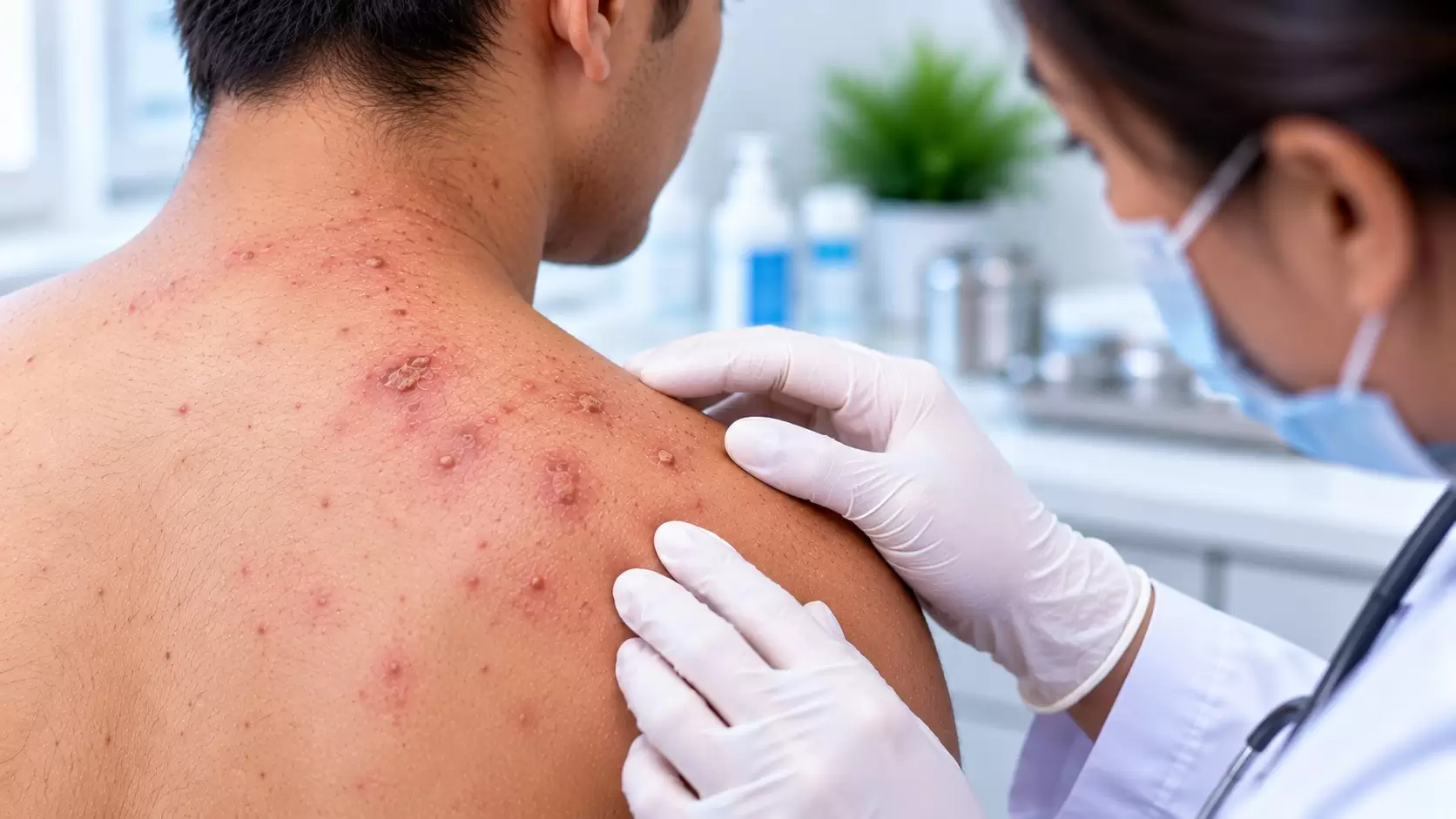
Why the difference matters
Bacterial and fungal infections are biologically different. DermNet notes that common bacterial skin infections are frequently caused by Staphylococcus or Streptococcus species, while superficial fungal infections include dermatophytes that infect the outer skin, hair and nails.
Because the organisms differ, treatment differs too: antibiotics target susceptible bacteria, while antifungal medicines target fungi. Using the wrong medicine can delay improvement and obscure the diagnosis.
For an overview of the major infection groups, read Common Types of Skin Infections.
Bacterial vs fungal infection: key differences
| Feature | Bacterial infection | Fungal infection |
|---|---|---|
| Common organisms | Staphylococcus, Streptococcus and others | Dermatophytes, Candida, Malassezia and others |
| Typical appearance | May cause redness/discolouration, warmth, swelling, tenderness, pustules or drainage | Often itchy and scaly; dermatophyte infection may have a more active or advancing edge |
| Common examples | Impetigo, folliculitis, boils, abscesses, cellulitis | Ringworm, athlete’s foot, jock itch, fungal scalp/nail infection, candidiasis |
| Diagnosis | Clinical exam; bacterial swab/culture when indicated | Clinical exam; skin scraping with microscopy/culture when indicated |
| Treatment | Depends on severity; may involve antiseptic measures or antibiotics | Topical or oral antifungal treatment depending on site and severity |
These are general patterns rather than a self-diagnostic checklist. Eczema, psoriasis and other inflammatory conditions can mimic infection.
Signs that can suggest a bacterial infection
DermNet describes bacterial skin infections as having varied presentations but commonly involving erythema, pain, warmth and swelling. Pus, drainage and enlarged lymph nodes can also occur depending on the infection.
Impetigo
A superficial bacterial infection that commonly causes crusted sores and is contagious.
Folliculitis
Inflammation or infection around hair follicles that can cause follicular pustules. See Folliculitis Causes & Symptoms.
Boils and abscesses
Deeper infection can produce painful, pus-filled lumps and may require drainage.
Cellulitis
A deeper infection that may cause an expanding warm, swollen and painful area and can require prompt medical treatment.
Signs that can suggest a fungal infection
Dermatophyte infections affect keratinised tissue—the outer skin, hair and nails. Ringworm of the body commonly presents as an enlarging scaly plaque, often with a more active edge. Fungal infections in skin folds or between toes may look different.
Ringworm
Tinea corporis often forms an itchy, scaly patch that enlarges outward. It does not always form a perfect ring.
Athlete’s foot
Tinea pedis often causes itching, scaling, peeling or fissuring, particularly between the toes or on the soles.
Jock itch
Tinea cruris typically affects the groin and adjacent inner thighs with an itchy, scaly eruption.
Candida in skin folds
Cutaneous candidiasis can cause moist inflammation and fissuring with smaller satellite papules or pustules around the main rash.
Can a fungal infection become bacterially infected?
Yes. Scratching, fissures and damage to the skin barrier can allow secondary bacterial infection. DermNet’s fungal-testing guidance notes that pustules may be swabbed when secondary bacterial infection is suspected.
This can create a mixed clinical picture with scaling or fungal features plus increasing pain, drainage, crusting or spreading inflammation.
Why appearance alone can be misleading
Contact dermatitis, eczema, psoriasis, viral eruptions and inflammatory disorders can resemble infection. DermNet specifically lists fungal skin infection among the differential diagnoses for bacterial infection, and inflammatory conditions such as contact dermatitis and pustular psoriasis can also mimic it.
Conversely, tinea can be mistaken for dermatitis. When topical steroids are applied to an unrecognised dermatophyte infection, the appearance may become less typical—a condition known as tinea incognito.
How dermatologists confirm bacterial infection
Many bacterial infections are diagnosed clinically. When laboratory confirmation is useful, a swab from a pustule, blister, wound or other affected site can be sent for microscopy, culture and antibiotic sensitivity testing.
DermNet describes bacterial culture with sensitivity testing as the standard laboratory method for identifying the bacterial species and helping select an appropriate antibiotic when testing is required.
How dermatologists confirm fungal infection
Dermatophyte infection can be confirmed by collecting skin scrapings—ideally from the active edge of a scaly lesion—for microscopy and fungal culture. Hair, nail clippings or other samples may be used depending on the affected site.
DermNet also lists biopsy with special fungal stains and molecular tests among possible diagnostic methods in selected situations.
Why antibiotics do not treat fungal infections
Antibiotics are designed to act against bacteria, not fungi. MedlinePlus notes that fungal skin infections are treated with antifungal medicines applied to the affected area, while oral antifungals are available for more serious or selected infections.
Unnecessary antibiotic use also contributes to antibiotic resistance. Treatment should therefore match the likely or confirmed organism.
Why steroid creams can complicate fungal rashes
A topical steroid can reduce redness and inflammation without eliminating a dermatophyte. This may temporarily make the rash look better while allowing the fungal infection to persist and change appearance.
DermNet calls this steroid-modified presentation tinea incognito. It can become less well-defined and less obviously scaly, making diagnosis more difficult.
When should you see a dermatologist?
Arrange assessment if you cannot tell whether a rash is bacterial or fungal, it is recurrent, spreading, painful, draining, involves the scalp or nails, or does not improve with appropriate treatment. Testing is especially useful when the appearance is atypical or previous treatment has failed.
For diagnosis and treatment, visit Skin Infection Treatment in Chennai.
Frequently asked questions
How can I tell a bacterial skin infection from a fungal infection?
Bacterial infections more often cause warmth, tenderness, swelling, pus or spreading inflammation, while superficial fungal infections commonly cause itchy, scaly patches. However, the appearances overlap and testing may be needed.
Can fungal infections have pus?
Some fungal or yeast-related conditions can produce pustules, and a fungal rash can also develop secondary bacterial infection. Pus does not by itself prove that a rash is bacterial.
Will antibiotics cure ringworm?
No. Ringworm is caused by dermatophyte fungi and requires antifungal treatment rather than antibiotics.
Can steroid cream make ringworm worse?
Steroid treatment can suppress inflammation without treating the fungus, altering the appearance and allowing infection to persist. This is known as tinea incognito.
How is a fungal skin infection tested?
A dermatologist may collect skin scrapings, hair or nail material for microscopy and fungal culture. The sample depends on the affected site.
When is a bacterial skin infection urgent?
Rapid progression, severe pain, significant swelling, fever, chills, blistering or dark skin changes, confusion or marked illness require prompt medical assessment.
This article is based on current dermatologist-reviewed DermNet guidance and MedlinePlus information on skin and fungal infections.
Visit us in OMR
Bacterial or fungal? Get the right diagnosis.
Book a dermatologist consultation at Ram Skin Clinic in Thoraipakkam, Chennai.
#48, Second Floor, Flat E, Best Towers,Okkiampet, Thoraipakkam, OMR,
Chennai – 600097. Above Domino’s Pizza.