
Dermatology Procedures · Patient Guide
What Happens During and After a Skin Biopsy?
A skin biopsy is usually a short dermatology procedure performed with local anaesthetic. A small sample is removed, the wound is treated or closed if needed, and the tissue is sent for microscopic examination.
The dermatologist cleans and numbs the area, removes the required skin sample, controls bleeding and applies a dressing. Some punch or excisional biopsies need stitches. Afterward, careful wound care helps healing while the laboratory examines the sample.
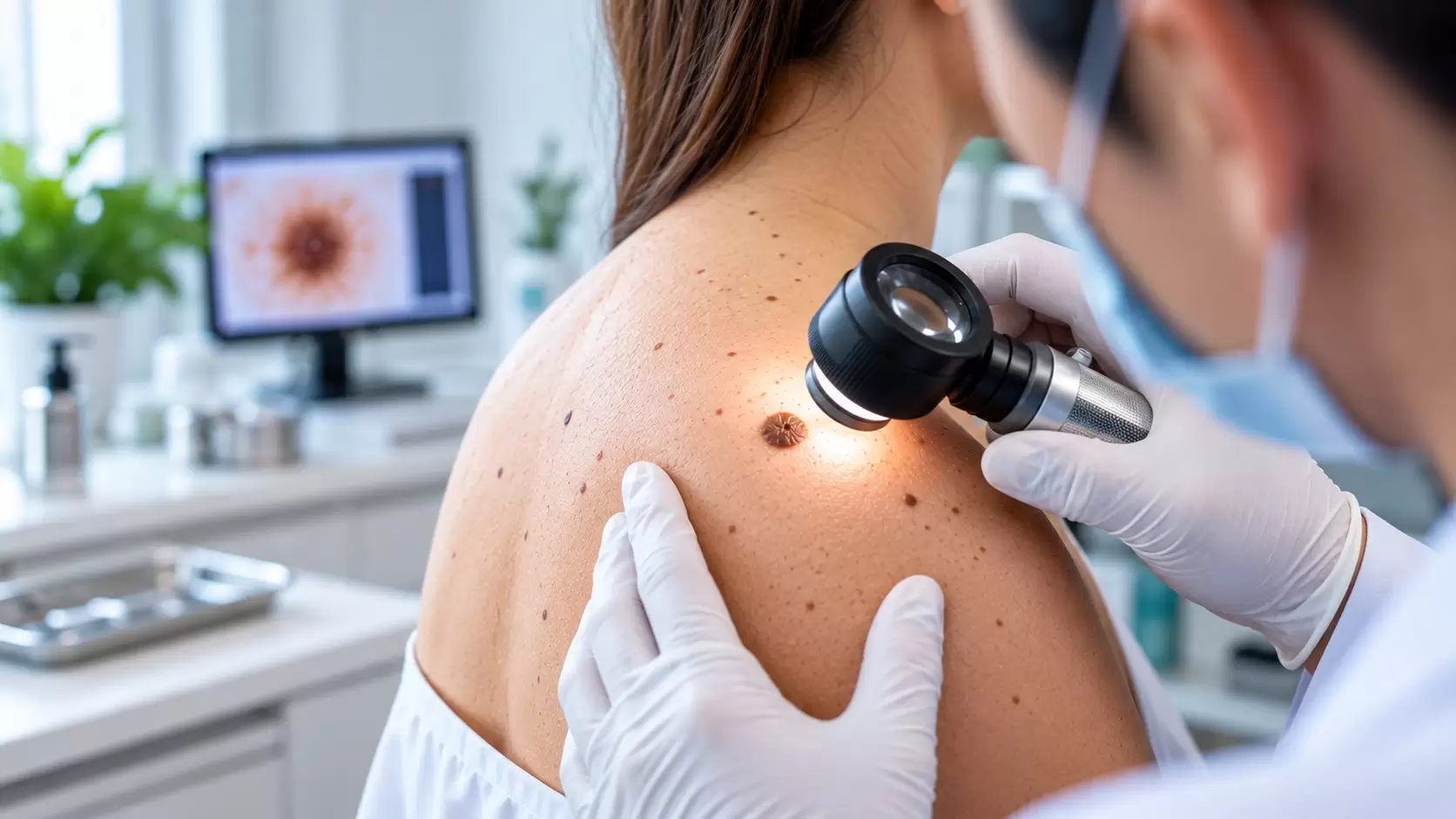
Before the sample is taken
How does a skin biopsy begin?
A dermatologist first examines the area and decides which biopsy technique is likely to provide the most useful diagnostic sample. The site is generally cleaned with an antiseptic and local anaesthetic is used to numb the skin. The injection can briefly sting, but the aim is for the biopsy itself to be performed while the area is numb.
The exact technique depends on the condition, its depth, location and the information needed from the tissue. If you want an overview of the available methods, read Types of Skin Biopsy: Punch, Shave and Excision. For the clinic’s diagnostic service, see Skin Biopsy in Chennai.
During the procedure
What happens when the sample is removed?
Once the skin is numb, the dermatologist removes the required sample. A shave biopsy takes tissue from the more superficial part of the skin. A punch biopsy uses a circular instrument to obtain a cylindrical sample that includes deeper layers. An excisional biopsy removes the entire lesion or area of concern when that approach is appropriate.
1. Sample collection
The selected biopsy technique is used to obtain enough representative tissue for examination.
2. Bleeding control
Pressure or another haemostatic method is used to stop bleeding from the biopsy site.
3. Wound closure
Some wounds heal without stitches; deeper punch or excisional biopsy sites may be sutured.
The tissue is then prepared for laboratory examination. A doctor trained in pathology or dermatopathology evaluates the sample under a microscope. This microscopic examination can reveal diagnostic information that cannot always be determined from visual examination alone.
Immediately afterward
What happens after the biopsy?
The dermatologist treats the wound and applies a dressing. Mild tenderness and a small amount of bleeding can occur afterward. The instructions you receive depend on the biopsy method, body site, wound size and whether stitches were used.
General wound-care principles include keeping the site clean, following the clinic’s dressing instructions and avoiding unnecessary stretching or trauma to the wound. The American Academy of Dermatology advises cleansing as directed, using petroleum jelly to keep the wound moist and keeping it covered for the period recommended by the dermatologist.
If you are preparing for an upcoming procedure, see How to Prepare for a Skin Biopsy. You can also read the American Academy of Dermatology’s skin biopsy wound-care guidance.
Healing at home
Skin biopsy aftercare
Follow the specific instructions given by your dermatologist because different wounds require different care. In many cases, aftercare involves gentle cleansing, petroleum jelly and a clean dressing. If stitches are present, you will be told when they should be removed.
Keep it clean
Wash your hands before wound care and clean the biopsy site according to the instructions you were given.
Protect the wound
Use the recommended dressing and avoid picking, rubbing or stretching the healing site.
Watch for changes
Increasing pain, warmth, swelling, pus, fever or bleeding that does not stop should prompt medical advice.
MedlinePlus notes that the biopsy area can remain tender for a few days and that wound-care instructions vary depending on whether the wound is open, stitched, grafted or otherwise closed. For additional patient information, see MedlinePlus: Skin Biopsy.
Results
What happens to the biopsy sample?
The removed tissue is sent to a laboratory for processing and microscopic examination. The pathology report describes the findings in the submitted sample. Depending on why the biopsy was performed, the report may help diagnose or distinguish inflammatory skin disease, infection, a benign growth, precancerous change, skin cancer or another condition.
A biopsy result should be interpreted together with the clinical examination. Sometimes the report provides a clear diagnosis; in other situations the dermatologist may correlate the pathology with symptoms, examination findings, previous treatment and additional tests.
Our next guide in this series explains this in more detail: Understanding Skin Biopsy Results. For the broader introduction, read What Is a Skin Biopsy and Why Is It Done?.
When to contact your doctor
Warning signs after a skin biopsy
Contact your dermatologist or healthcare provider if you have concerns about healing. Seek advice for increasing redness, swelling, warmth or pain, pus or unusual drainage, fever, a wound that opens, or bleeding that continues despite firm direct pressure.
Scarring is possible after any procedure that breaks the skin. The final appearance depends on the biopsy type and size, body site, individual healing characteristics and aftercare. Once healed, sun protection can also help reduce noticeable colour change around the scar.
Frequently asked questions
Skin biopsy procedure & aftercare FAQs
Is a skin biopsy painful?
Local anaesthetic is normally used to numb the area. The anaesthetic injection can sting briefly. Some tenderness can occur after the numbness wears off.
Will I need stitches after a skin biopsy?
Not always. Whether stitches are needed depends on the biopsy technique, depth, size and location. Punch and excisional biopsies are more likely to require closure than superficial shave biopsies.
How long does a skin biopsy wound take to heal?
Healing time varies with the biopsy type, wound size, location and individual healing. Follow the wound-care and stitch-removal instructions provided for your particular procedure.
Can a skin biopsy bleed afterward?
A small amount of bleeding can occur. Firm direct pressure is commonly recommended for bleeding. If bleeding persists despite sustained pressure, contact your healthcare provider.
When will I receive my biopsy results?
Timing varies according to the laboratory, type of specimen and whether additional testing is required. Your dermatologist should tell you how and when results will be communicated.
Where can I discuss skin biopsy in Chennai?
Ram Skin Clinic in Thoraipakkam, OMR offers dermatology assessment and diagnostic skin biopsy when clinically appropriate. See our Skin Biopsy in Chennai page or book a consultation.
Visit us in OMR
Let’s talk about
your skin concerns.
Book a consultation at Ram Skin Clinic in Thoraipakkam, Chennai.
#48, Second Floor, Flat E, Best Towers,Okkiampet, Thoraipakkam, OMR,
Chennai – 600097. Above Domino’s Pizza.