
Iontophoresis & Hyperhidrosis
Iontophoresis vs Other Hyperhidrosis Treatments
Excessive sweating can be treated in several ways. The most suitable option depends on where you sweat, how severe it is, whether there is an underlying cause and how you respond to earlier treatment.
Treatment choices
Why hyperhidrosis treatment is individualised
There is no single treatment that is best for every person with hyperhidrosis. The American Academy of Dermatology explains that treatment is tailored to the type of hyperhidrosis, the symptoms, the body areas affected and the patient’s preferences. Secondary hyperhidrosis may also require assessment and treatment of an underlying medical condition or medication-related cause.
At Ram Skin Clinic, the starting point is therefore the diagnosis rather than simply choosing a sweat-reduction procedure. Read more about Hyperhidrosis Treatment in Chennai.
Iontophoresis
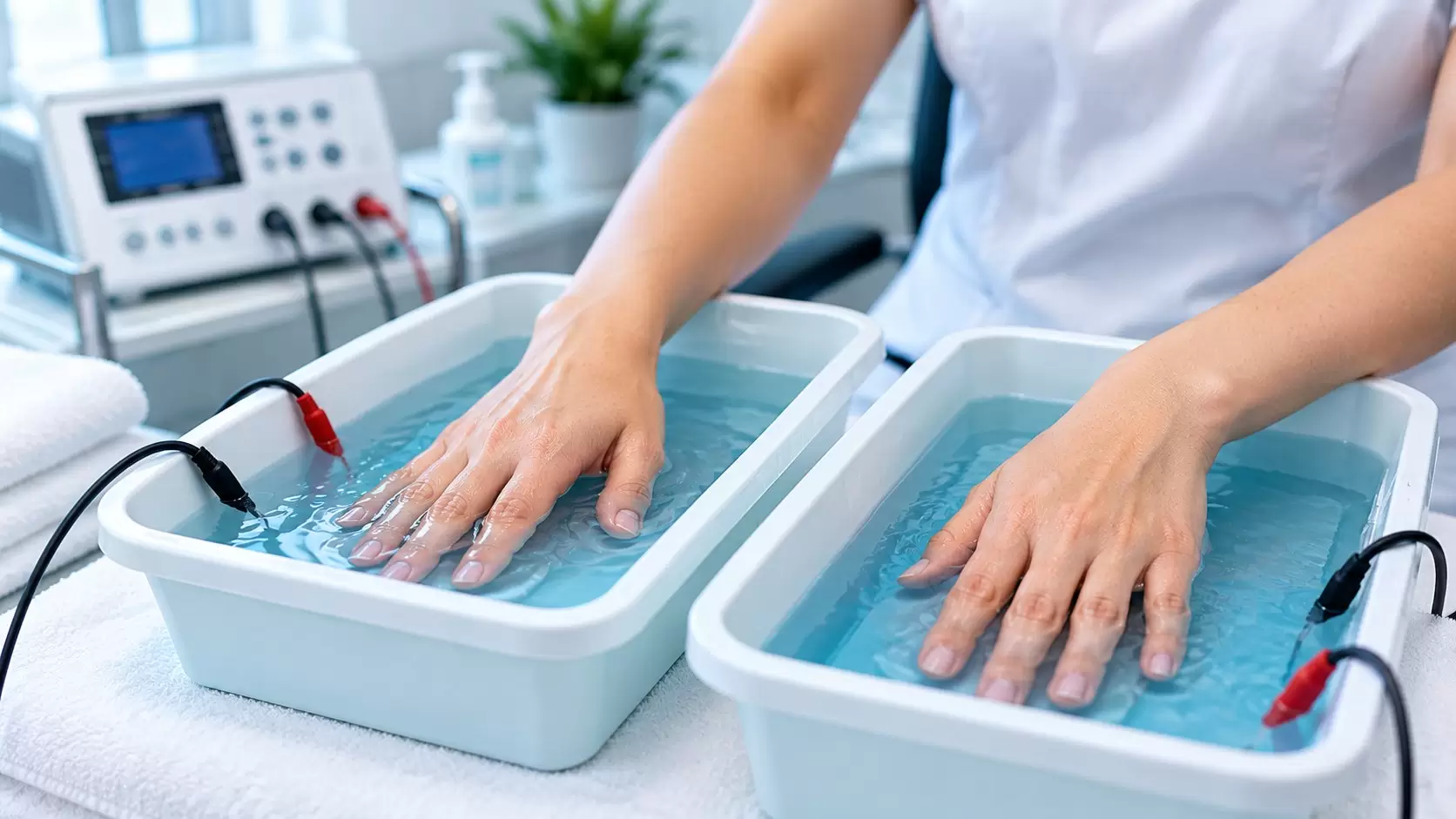
Most established for focal sweating of the palms and soles. Hands or feet are placed in water while a mild electrical current is passed through it. Initial treatment is repeated and maintenance is usually needed.
Antiperspirants
Topical antiperspirants are commonly an early treatment option. Prescription-strength products may be needed when non-prescription antiperspirants do not adequately control sweating.
Botulinum toxin
Botulinum toxin injections temporarily reduce sweating in the treated area. They are used particularly for underarm hyperhidrosis and may also be used by dermatologists at other focal sites.
Hands and feet
Iontophoresis vs antiperspirants
Antiperspirants reduce sweating by temporarily obstructing sweat flow and are often among the first treatments considered. They are convenient and can be used on several body areas, although stronger formulations can irritate the skin.
Iontophoresis involves more time and equipment, but it is particularly suited to palmar and plantar hyperhidrosis. The AAD describes 20–30 minute sessions during the initial phase, followed by less frequent maintenance once sweating is controlled. The exact schedule varies by device and response.
Procedure comparison
Iontophoresis vs botulinum toxin injections
Both approaches can reduce focal excessive sweating, but they are delivered differently. Iontophoresis is non-injectable and generally requires a series of sessions plus maintenance. Botulinum toxin is injected into the skin and temporarily reduces sweating in the treated area.
The AAD reports that botulinum toxin can be used for excessive sweating of the underarms, hands, feet and face, with the duration of benefit varying by site. Injection-related discomfort, bruising and temporary muscle weakness are among possible side effects. Iontophoresis can cause tingling, burning, dryness or irritation and, if used incorrectly, a mild burn.
For iontophoresis precautions, see Iontophoresis Side Effects and Safety.
Medication options
Iontophoresis vs oral and topical medicines
Some prescription medicines reduce sweating by interfering with signals that stimulate sweat production. Topical medicines may be useful for particular body areas, while oral anticholinergic medicines act throughout the body and may be considered when sweating affects several areas or when local treatment is insufficient.
Systemic treatment also means systemic side effects can occur. The AAD and DermNet describe effects such as dry mouth, blurred vision, constipation and other anticholinergic effects with oral medicines. The balance between benefit and adverse effects should therefore be assessed individually by the treating clinician.
By comparison, iontophoresis is a local treatment, especially useful for hands and feet. Learn how a session works in What to Expect During Iontophoresis.
Other procedures
What about longer-lasting procedures or surgery?
For selected cases, other options exist. The AAD describes microwave thermolysis for underarm hyperhidrosis, which uses heat to destroy sweat glands. DermNet also discusses procedures that remove or disrupt axillary sweat glands.
Sympathectomy is a surgical approach that interrupts sympathetic nerves and is generally reserved for severe cases because compensatory sweating and other complications can occur. It is fundamentally different from iontophoresis, which is non-surgical and does not permanently destroy sweat glands.
Choosing treatment
Which hyperhidrosis treatment may suit you?
The choice depends on whether sweating is primary or secondary, the areas involved, severity, skin sensitivity, medical history, previous treatment response and how much ongoing treatment you are comfortable with. More than one treatment may sometimes be used as part of an individual plan.
For hands and feet, iontophoresis can be an important option because treatment is local and can be maintained over time. Read What Is Iontophoresis? and Iontophoresis for Sweaty Hands and Feet for more detail.
Authoritative patient information is available from the American Academy of Dermatology and DermNet.
Common questions
Hyperhidrosis treatment FAQ
Is iontophoresis better than antiperspirant?
Neither is universally better. Antiperspirants are often used first, while iontophoresis is particularly useful for persistent excessive sweating of the hands and feet. The appropriate option depends on the individual.
Is iontophoresis better than botulinum toxin for sweaty hands?
They are different treatments with different practical considerations, side effects and maintenance requirements. A dermatologist can help determine which approach is appropriate for the severity and location of sweating.
Does iontophoresis permanently stop sweating?
No. Iontophoresis reduces sweating but maintenance sessions are commonly required to preserve the effect.
Can treatments for hyperhidrosis be combined?
Yes, treatment plans may use more than one approach when appropriate. The AAD notes that treatment is individualised according to symptoms, body site and response.
When should excessive sweating be medically assessed?
Assessment is particularly important when sweating is new, generalised, occurs during sleep, is associated with other symptoms, or may be related to a medication or medical condition.
Visit us in OMR
Let’s talk about
your skin concerns.
Book a consultation at Ram Skin Clinic in Thoraipakkam, Chennai.
#48, Second Floor, Flat E, Best Towers,Okkiampet, Thoraipakkam, OMR,
Chennai – 600097. Above Domino’s Pizza.