
Iontophoresis & Hyperhidrosis
Iontophoresis Side Effects and Safety
Iontophoresis is commonly used to reduce excessive sweating of the hands and feet. It is generally well tolerated when used correctly, but temporary skin irritation and tingling can occur, and the treatment is not suitable for everyone.
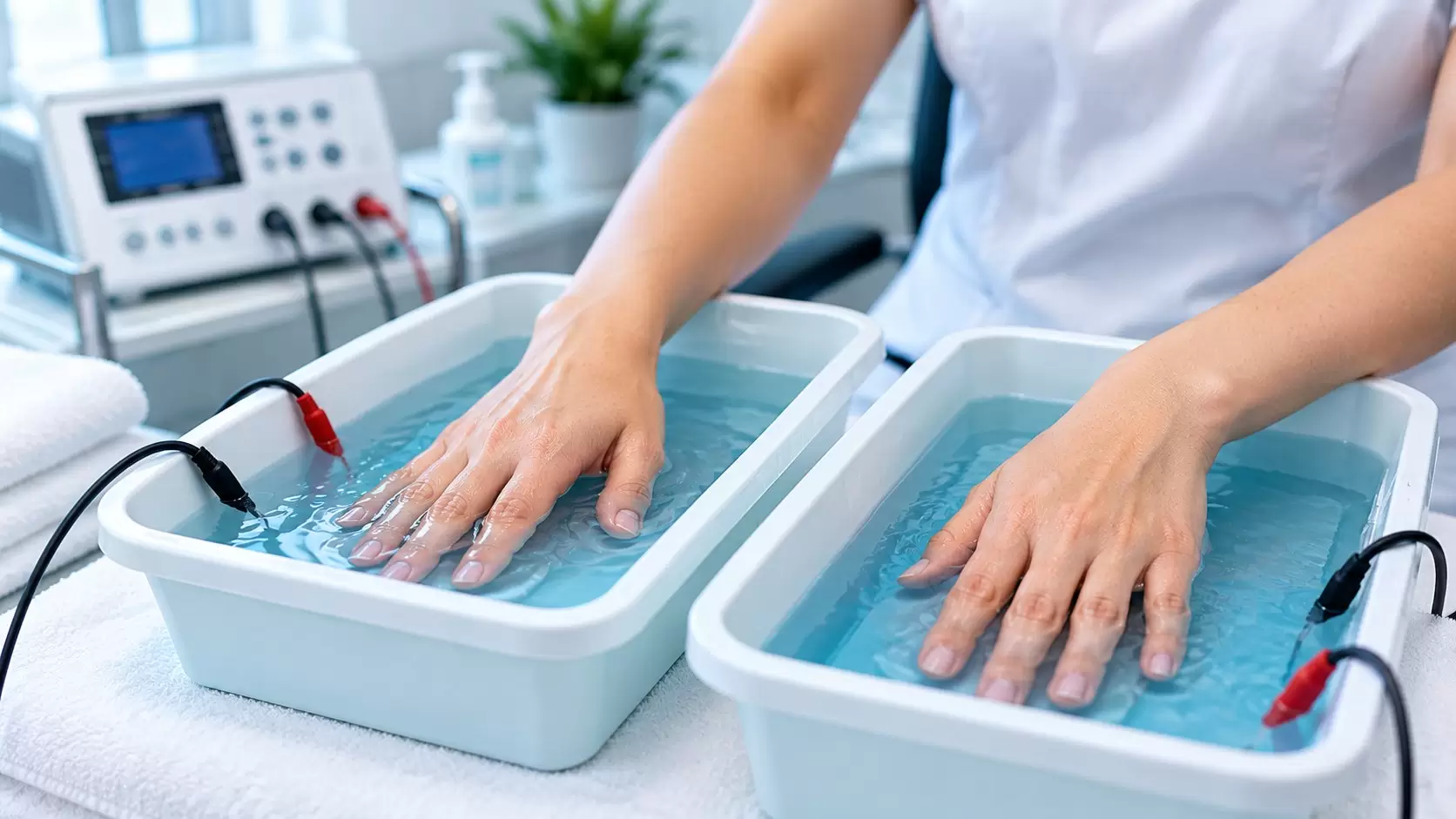
Common reactions
What are the common side effects of iontophoresis?
Most side effects are local to the treated skin. The American Academy of Dermatology notes that mild burning or tingling can occur during treatment and that incorrect use may cause a mild burn. DermNet also lists redness, small blisters, dry or cracked skin and dermatitis among possible adverse effects.
Tingling or burning
A pins-and-needles or mild burning sensation may occur while current passes through the water and skin. Treatment intensity should follow the device instructions and clinical guidance.
Dryness and redness
The treated skin can temporarily become dry, red or irritated. Moisturising may help with dryness, depending on individual skin condition and clinician advice.
Local irritation
Small blisters or irritant dermatitis can occasionally occur. Cuts or broken skin may sting more during treatment.
Who should be cautious?
When may iontophoresis not be suitable?
Suitability should be assessed before treatment. DermNet lists pregnancy, a pacemaker or certain heart conditions, metal implants and epilepsy or a history of seizures among contraindications. It also advises delaying treatment when a recent wound, skin graft or scar is present in the area being treated.
Because devices and individual medical circumstances differ, this information should not replace an assessment by your dermatologist or the instructions supplied with your iontophoresis device.
If your sweating has started suddenly, affects most of the body, occurs during sleep or is associated with another medical problem or medication, the underlying cause should be assessed before simply treating the sweating. Learn more about Hyperhidrosis Treatment in Chennai.
Safer treatment
How can treatment be made more comfortable?
Correct technique matters. Start with the current setting and schedule recommended for the device and your treatment plan rather than increasing intensity simply to try to obtain faster results. Small cuts can be uncomfortable when exposed to current; DermNet describes applying petroleum jelly to small cuts and around the water line to reduce local discomfort.
Follow the manufacturer’s instructions for electrode placement and never make unapproved modifications to an iontophoresis machine. If irritation becomes persistent, painful, blistering or more severe than expected, stop and obtain medical advice before resuming treatment.
For a step-by-step description, see What to Expect During Iontophoresis Treatment. You can also read Iontophoresis for Sweaty Hands and Feet and What Is Iontophoresis?.
Evidence-based information
Is iontophoresis generally safe?
For appropriately selected patients using the treatment correctly, iontophoresis is generally considered a safe option for focal hyperhidrosis. It is non-surgical and does not permanently destroy sweat glands. However, it requires repeated sessions and ongoing maintenance for many people, and response varies.
For additional patient guidance, see the American Academy of Dermatology hyperhidrosis treatment guide and DermNet’s iontophoresis overview.
Common questions
Iontophoresis safety FAQ
Can iontophoresis burn the skin?
A mild burn can occur if the machine is used incorrectly. Follow the device instructions, use an appropriate current and seek advice if significant pain or skin injury occurs.
Is tingling during iontophoresis normal?
A mild tingling or pins-and-needles sensation is commonly reported. Strong pain or an unexpectedly intense burning sensation should not simply be ignored.
Can iontophoresis be used over cuts?
Broken skin can sting during treatment. DermNet recommends delaying treatment for certain recent wounds, grafts or scars and describes petroleum jelly as a way to protect small cuts in some situations.
Can everyone use iontophoresis?
No. Contraindications and precautions include certain implanted devices and medical conditions, pregnancy and some skin injuries. Suitability should be checked before treatment.
Does iontophoresis permanently damage sweat glands?
Iontophoresis is used to reduce sweating temporarily rather than permanently destroy the sweat glands. Maintenance treatment is commonly required.
Visit us in OMR
Let’s talk about
your skin concerns.
Book a consultation at Ram Skin Clinic in Thoraipakkam, Chennai.
#48, Second Floor, Flat E, Best Towers,Okkiampet, Thoraipakkam, OMR,
Chennai – 600097. Above Domino’s Pizza.