
Iontophoresis Guide
What to Expect During Iontophoresis Treatment
Knowing how an iontophoresis session works can make treatment for excessive sweating feel much more straightforward. Here is a practical guide to preparation, the treatment itself, sensations you may notice and what happens afterward.
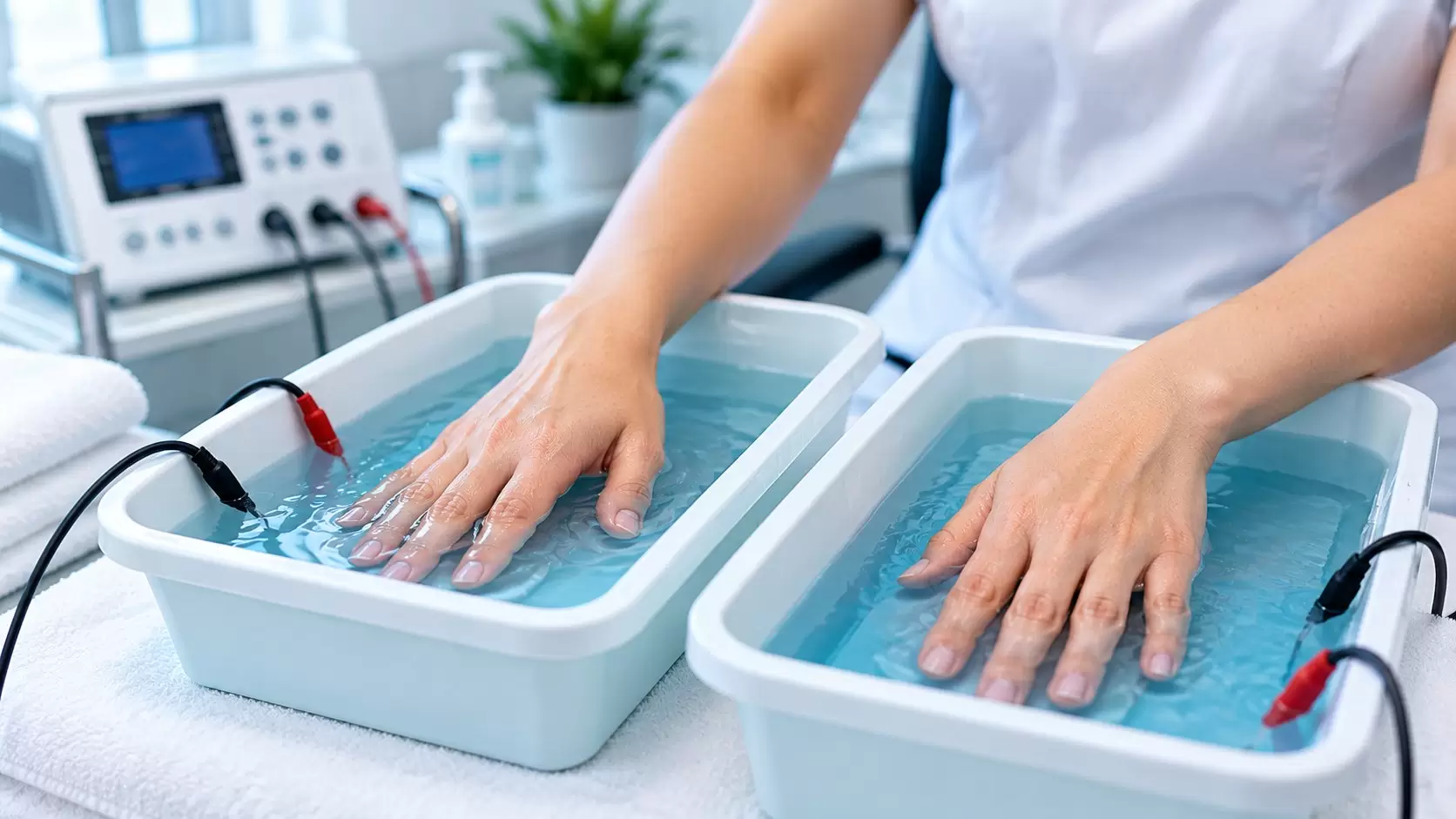
Before treatment
Preparing for an iontophoresis session
Iontophoresis is most commonly used for focal hyperhidrosis affecting the palms and soles. Before starting, a dermatologist should first determine whether your excessive sweating is primary hyperhidrosis or whether another medical condition or medication could be contributing to it. You can learn more on our Hyperhidrosis Treatment in Chennai page.
Tell your dermatologist about your medical history and implanted devices before treatment. Iontophoresis may not be suitable for everyone. DermNet lists pregnancy, a pacemaker or certain heart conditions, metal implants and a history of seizures among important contraindications. Recent wounds or damaged skin in the treatment area may also make treatment uncomfortable.
Step by step
What happens during treatment?
1. Hands or feet are positioned
The hands or feet are placed in shallow trays containing tap water and electrodes. The device setup varies, so manufacturer instructions must be followed.
2. Current is increased gradually
A low electrical current is introduced through the water. The intensity is adjusted to a level that is effective while remaining tolerable.
3. Treatment continues
The American Academy of Dermatology describes initial sessions of approximately 20–30 minutes for hands and feet. Treatment schedules are individualized.
If you want a broader explanation of the therapy, read What Is Iontophoresis? and How Does Iontophoresis Work for Excessive Sweating?.
Sensation
What does iontophoresis feel like?
Many people notice a mild tingling, pins-and-needles or burning sensation while the current is running. Mild redness, dryness or irritation can also occur. These effects are usually temporary, but the current should not simply be increased through significant discomfort.
Direct contact with the electrodes should be avoided. Incorrect use can cause a mild burn, which is one reason device instructions and professional guidance matter, especially when treatment is being started.
Treatment course
How many sessions might you need?
Iontophoresis is generally not a one-session treatment. The American Academy of Dermatology notes that initial treatment may be performed daily or once every two to five days, with noticeably reduced sweating often occurring after approximately five to ten treatments. DermNet describes an initial schedule of every one to three days until the desired effect is reached.
Once sweating is controlled, sessions are usually spaced out. Many people use maintenance treatment approximately weekly or every other week, although the schedule varies according to response. Read our focused guide to Iontophoresis for Sweaty Hands and Feet.
After treatment
What happens after a session?
You can generally resume normal activities after iontophoresis. Some people experience temporary redness, dry or cracked skin, tingling or irritation. A moisturiser may help with dryness, but persistent or significant skin reactions should be discussed with your dermatologist.
The goal is progressive control of excessive sweating rather than an immediate permanent cure. Hyperhidrosis is a chronic condition, so maintenance therapy may be required to sustain improvement.
For a clinician-guided assessment in Chennai, see our main Iontophoresis Treatment in Chennai page.
Frequently asked questions
Iontophoresis treatment FAQs
How long does an iontophoresis session take?
For hyperhidrosis of the hands or feet, sessions commonly last around 20–30 minutes, although the exact protocol depends on the device and treatment plan.
Does iontophoresis hurt?
It can cause tingling, pins-and-needles or mild burning. Significant pain should not be ignored; the treatment settings and skin should be reviewed.
Will sweating stop after one treatment?
Usually not. An initial series of repeated sessions is typically needed before sweating is noticeably reduced, followed by maintenance treatment.
Can iontophoresis be done at home?
Home devices are available for suitable patients. A dermatologist can help confirm the diagnosis, assess whether iontophoresis is appropriate and advise on safe use.
Where can I read reliable medical information about iontophoresis?
See the American Academy of Dermatology hyperhidrosis treatment guide and DermNet’s iontophoresis overview.
Visit us in OMR
Let’s talk about
your skin concerns.
Book a consultation at Ram Skin Clinic in Thoraipakkam, Chennai.
#48, Second Floor, Flat E, Best Towers,Okkiampet, Thoraipakkam, OMR,
Chennai – 600097. Above Domino’s Pizza.