
Hyperhidrosis Guide · Ram Skin Clinic
Iontophoresis for Sweaty Hands and Feet
Excessive sweating of the palms and soles can interfere with writing, using devices, footwear, work and everyday social activities. Iontophoresis is one treatment dermatologists may consider for this type of focal hyperhidrosis.
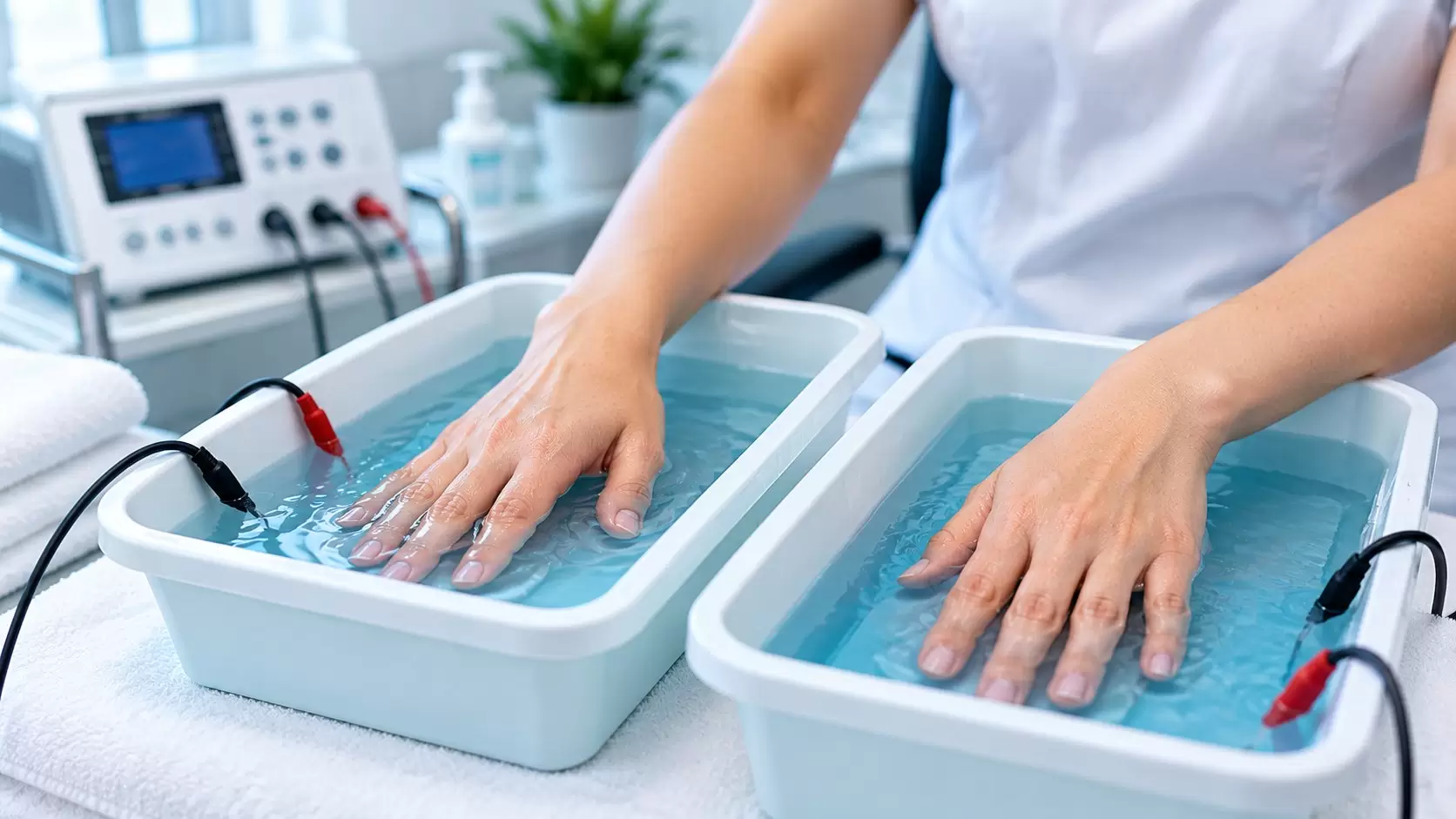
Palmar & plantar hyperhidrosis
Why do the hands and feet sweat excessively?
Hyperhidrosis means excessive or difficult-to-control sweating. Localised hyperhidrosis commonly affects the palms, soles, underarms or face. Primary hyperhidrosis often affects both sides symmetrically and may begin in childhood or adolescence. Sweaty palms can make writing, handshakes and electronic devices difficult, while sweaty soles can contribute to damp footwear, odour, irritation and some skin infections.
Not every case of excessive sweating is primary hyperhidrosis. New, generalised, asymmetrical or night-time sweating may require evaluation for medications or an underlying medical condition. A dermatologist can assess the pattern before recommending treatment.
Treatment process
How is iontophoresis used for sweaty palms and soles?
Hands
For palmar hyperhidrosis, the hands are placed in shallow trays containing tap water. A device delivers a controlled electrical current through the water and across the skin surface. The intensity is adjusted according to comfort and the device protocol.
Feet
For plantar hyperhidrosis, the feet are treated in a similar way using trays designed to keep the soles in contact with the water. Treatment parameters and frequency are individualised according to response and tolerance.
DermNet describes initial sessions of approximately 20–30 minutes every one to three days until the desired effect is achieved, followed by less frequent maintenance. The American Academy of Dermatology notes that many patients initially treat for 20–30 minutes daily or every two to five days and may notice less sweating after approximately five to ten treatments. Individual protocols vary, so treatment should follow professional and device-specific instructions.
For a broader explanation of the technology, read What Is Iontophoresis? and How Does Iontophoresis Work for Excessive Sweating?.
Results & maintenance
Is iontophoresis permanent?
Iontophoresis is generally used as an ongoing control treatment rather than a permanent cure. Once sweating has improved, sessions are typically spaced out to a maintenance schedule. The frequency varies: some people need treatment weekly, while others can maintain control with less frequent sessions.
Response also varies between individuals and between body sites. DermNet notes that evidence is stronger for palmar hyperhidrosis and that iontophoresis is commonly used for both palms and soles. If response is inadequate, a dermatologist may reassess the diagnosis, technique, device settings or other treatment options.
What does a session feel like?
A mild tingling, pins-and-needles or burning sensation can occur. Temporary redness, dryness, small blisters or irritant dermatitis are possible. Small cuts can sting during treatment, so skin condition should be checked before a session. Incorrect use may also cause a mild burn.
People with certain implanted electrical or metal devices, some heart conditions, seizure history, pregnancy, or recent wounds in the treatment area may not be suitable candidates. Suitability should be discussed with a clinician rather than starting treatment solely from online instructions.
Treatment choice
When should you see a dermatologist?
Consider dermatology assessment when sweating is persistent, affects work or daily activities, causes recurrent skin problems, begins suddenly, occurs during sleep, or involves large areas of the body. Evaluation helps distinguish primary focal hyperhidrosis from sweating that may be secondary to another condition or medication.
At Ram Skin Clinic, treatment can be selected according to the location and severity of sweating, medical history and previous treatments. See our dedicated Iontophoresis Treatment in Chennai page for clinic-specific information.
Authoritative references
For additional patient information, see the American Academy of Dermatology hyperhidrosis treatment guide and DermNet’s iontophoresis overview.
Frequently asked questions
Iontophoresis for hands & feet: FAQs
Does iontophoresis work for both sweaty hands and sweaty feet?
It is commonly used for palmar and plantar hyperhidrosis. Individual response varies, so a dermatologist can help determine whether it is appropriate for your sweating pattern.
How many iontophoresis sessions are needed?
An initial series of frequent sessions is usually required. The AAD notes that noticeably reduced sweating may occur after roughly five to ten treatments for some patients, after which maintenance treatment is generally needed.
Can sweaty hands and feet come back after iontophoresis?
Yes. The effect is usually maintained with repeat sessions. If treatment is stopped, excessive sweating may gradually return.
Is iontophoresis painful?
Most people describe tingling or mild discomfort rather than significant pain. Cuts, irritated skin or excessive current can make treatment uncomfortable.
Can I use iontophoresis at home?
Home devices are available, but it is important to confirm that iontophoresis is appropriate for you and to follow the device instructions and clinical guidance carefully.
Visit us in OMR
Let’s talk about
your sweating concerns.
Book a consultation at Ram Skin Clinic in Thoraipakkam, Chennai.
#48, Second Floor, Flat E, Best Towers,Okkiampet, Thoraipakkam, OMR,
Chennai – 600097. Above Domino’s Pizza.