
Understanding Wart Recurrence
Why Warts Keep Coming Back
A wart can disappear after treatment and later return in the same area or nearby. This does not automatically mean anything was done incorrectly.
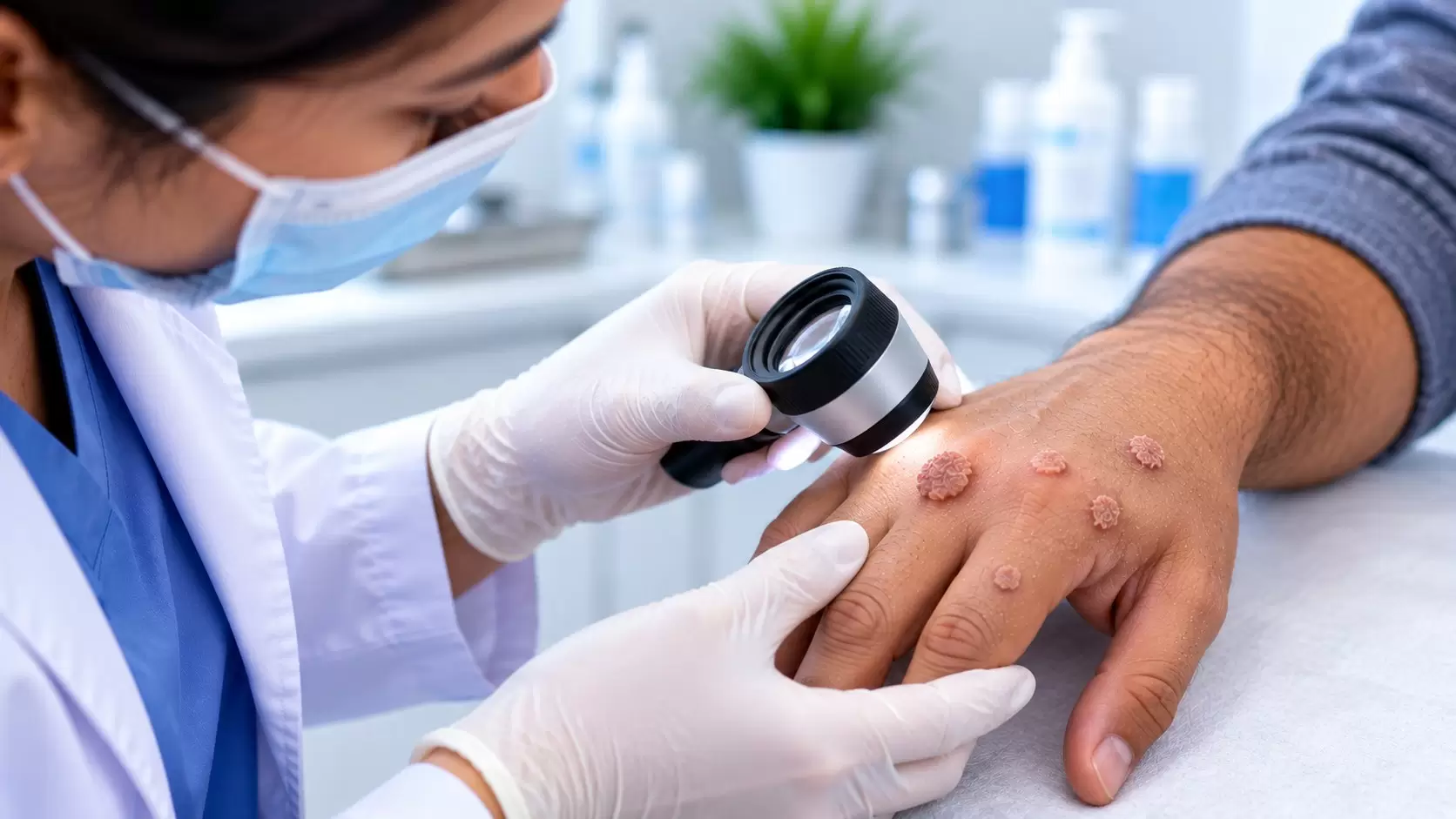
Why can a wart return after removal?
Cutaneous warts are caused by human papillomavirus (HPV). Treatments such as salicylic acid, cryotherapy, curettage or other procedures target wart tissue, but no treatment guarantees that every infected cell in the surrounding skin has been eliminated.
DermNet notes that HPV infects the basal layer of the epidermis and that warts can recur when virus remains. The American Academy of Dermatology also notes that some patients require repeated treatment sessions for stubborn warts.
Common reasons warts keep recurring
HPV remains in nearby skin
The visible growth may clear while subclinical HPV persists in adjacent skin, allowing another wart to develop.
Incomplete immune clearance
Your immune system plays an important role in controlling HPV. Until effective immunity develops, a wart may persist or recur.
Self-spread
Picking, scratching, biting or shaving over warts can transfer HPV to nearby skin and create new lesions.
Repeated exposure
Contact with HPV through affected skin or contaminated items can contribute to additional warts.
Does recurrence mean the treatment did not work?
Not necessarily. Warts can be difficult to eradicate, and several treatments work by gradually destroying infected tissue or stimulating an immune response. For example, cryotherapy commonly requires more than one session.
A wart that becomes smaller or clears and later reappears may represent persistent viral infection rather than a completely new condition.
Can picking or shaving cause more warts?
Yes. HPV can spread from one area of your skin to another, a process called autoinoculation. Scratching or picking a wart can transfer virus-containing material. Shaving across affected skin can create tiny injuries and distribute the virus along the shaved area.
Read Are Warts Contagious? for more ways HPV spreads and practical prevention measures.
Does the immune system affect wart recurrence?
Yes. Warts are more likely to be persistent or extensive in people whose immune systems are suppressed. DermNet specifically identifies immunosuppression as a factor associated with persistent and recurrent cutaneous warts.
This does not mean that everyone with a recurring wart has an immune problem. Warts can be stubborn even in otherwise healthy people.
Why do plantar warts come back?
Plantar warts grow on pressure-bearing skin of the feet and may be covered by thickened skin. Their depth and location can make treatment slower. HPV may also persist around the treated site, allowing recurrence.
Because plantar warts can resemble corns, persistent foot lesions should also be correctly diagnosed. See Warts vs Corns.
How can you reduce the chance of new warts?
Complete the treatment plan
Follow the recommended schedule rather than stopping as soon as the wart begins to look smaller.
Avoid picking
Do not scratch, bite or deliberately cut warts, as trauma can encourage self-spread.
Do not share tools
Avoid sharing nail files, razors or grooming tools that have contacted a wart.
Protect communal exposure sites
Footwear in shared showers and changing areas can help reduce exposure associated with plantar warts.
What if a wart keeps returning despite treatment?
Dermatologists have several approaches for resistant warts. Depending on the individual case, options may include repeated cryotherapy, salicylic acid, electrosurgery, laser therapy, selected intralesional treatments or immunotherapy. More intensive treatment is not automatically better; treatment selection depends on the lesion and patient.
Repeatedly cutting or burning a wart at home is not a substitute for assessment and can cause infection or scarring.
When should recurrent warts be checked?
Arrange dermatologist assessment if warts repeatedly return after appropriate treatment, are increasing in number, spread rapidly, become painful or bleed, occur on the face or around nails, or if you are uncertain that the growth is actually a wart.
People with diabetes or reduced immunity should seek medical advice before self-treating persistent lesions.
For evaluation and treatment options, visit Warts Treatment in Chennai.
Frequently asked questions
Why do warts come back after treatment?
Treatment can remove visible wart tissue while HPV remains in nearby skin. A wart may recur until the immune system controls the infection.
Does a recurring wart mean treatment failed?
Not necessarily. Warts can require multiple treatment sessions, and recurrence is a recognised feature of cutaneous HPV infection.
Can picking a wart make more warts appear?
Yes. Picking or scratching can spread HPV to other areas of your skin.
Are recurrent warts more common with weak immunity?
Persistent or extensive warts are more common in immunosuppressed people, although otherwise healthy people can also have stubborn warts.
When should recurrent warts be checked by a dermatologist?
Seek assessment if warts repeatedly return, spread, bleed, change, are painful, occur in large numbers or the diagnosis is uncertain.
Medical guidance checked against current American Academy of Dermatology and DermNet guidance.
Visit us in OMR
Warts keep coming back? Get them assessed.
Book a dermatologist consultation at Ram Skin Clinic in Thoraipakkam, Chennai.
#48, Second Floor, Flat E, Best Towers,Okkiampet, Thoraipakkam, OMR,
Chennai – 600097. Above Domino’s Pizza.