Wart or Corn?
Warts vs Corns: How to Tell the Difference
Warts and corns can both appear as thickened, painful areas on the feet, but they have different causes and need different approaches.
Why warts and corns are often confused
Both plantar warts and corns can create a hard, thickened area of skin and both may become painful while walking. Location alone therefore does not always identify the problem.
The important distinction is the cause: warts are caused by HPV, while corns are a protective response to repeated pressure or friction.
Wart vs corn: key differences
Cause
Wart: HPV infection of the skin.
Corn: repeated mechanical pressure or friction.
Skin lines
Wart: normal skin lines are commonly interrupted.
Corn: skin lines tend to continue through the thickened area.
Black or red dots
Wart: pinpoint dots may represent small thrombosed or patent capillaries.
Corn: these wart-type capillary dots are absent.
Typical location
Wart: can occur at different sites on the sole.
Corn: usually develops where pressure or friction is concentrated.
Pressure tenderness
Wart: may be more tender when squeezed from the sides.
Corn: is commonly more painful with direct pressure.
Contagious?
Wart: yes, because HPV can spread.
Corn: no; it is not an infection.
What does a plantar wart look like?
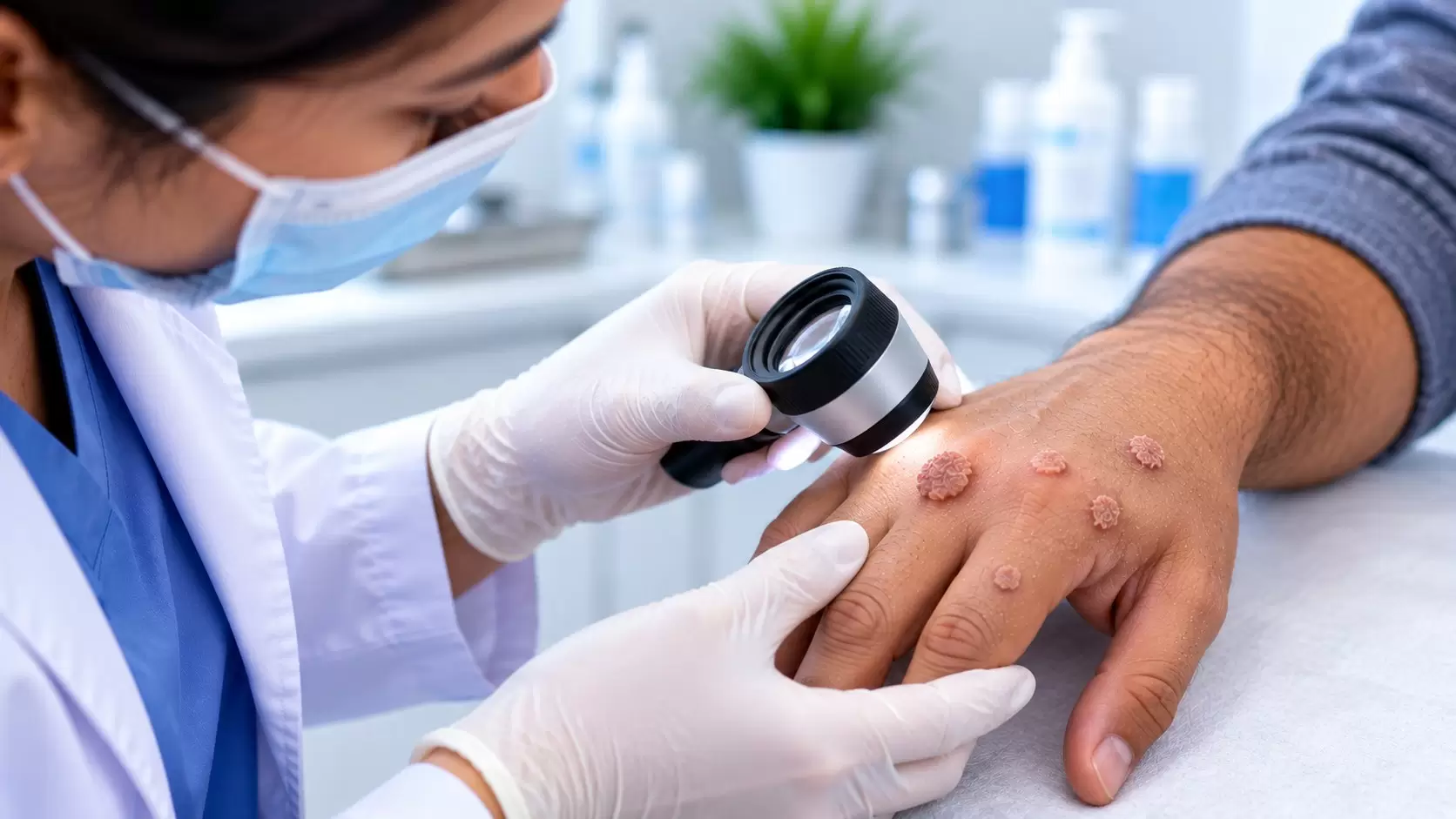
A plantar wart can look like a rough or thickened growth on the sole. The pressure of standing may push the lesion inward beneath a layer of hard skin. Dermatologists look for clues such as interruption of the normal dermatoglyphic skin lines and pinpoint capillaries.
Warts may be solitary or occur in groups. Learn more in Types of Warts.
What does a corn look like?
A corn is a localised area of thickened skin produced by pressure. Hard corns are often firm and may have a translucent central core. Soft corns can develop between compressed toes, where moisture makes the surface softer.
Footwear that creates repeated pressure, toe shape and other mechanical factors can contribute to corn formation.
Does pain tell you whether it is a wart or corn?
It can provide a clue but is not definitive. Plantar warts are classically more tender when pressure is applied from the sides, whereas corns tend to hurt with direct downward pressure.
Why the correct diagnosis matters
Warts and corns are treated differently. Wart management aims to clear HPV-infected tissue and may include salicylic acid, cryotherapy or other dermatologist-directed treatments. Corn management focuses on reducing the pressure or friction responsible for the thickened skin.
If you treat the wrong condition, the lesion may persist and unnecessary treatment can irritate healthy skin.
Can you cut off a wart or corn at home?
Avoid cutting either lesion yourself. Cutting too deeply can cause bleeding and infection. This is particularly important for people with diabetes, poor circulation or reduced sensation in the feet.
If you are uncertain whether a lesion is a wart, corn or another growth, dermatologist assessment is safer than repeatedly applying wart or corn-removal products.
When should you see a dermatologist?
Arrange an assessment when the diagnosis is unclear, the lesion is very painful, bleeding or changing, multiple lesions are developing, or treatment has not worked. Medical review is also important when you have diabetes, reduced immunity, poor circulation or impaired sensation.
A dermatologist can usually diagnose a wart clinically and may use dermoscopy. Occasionally, a biopsy is needed when another condition cannot be confidently excluded.
For evaluation and treatment, see Warts Treatment in Chennai.
Frequently asked questions
How can you tell a wart from a corn?
Plantar warts often interrupt normal skin lines and may show pinpoint black or red dots, while corns usually occur at pressure sites and have a central hard core.
Are corns contagious?
No. Corns develop from repeated pressure or friction rather than infection.
Are plantar warts contagious?
Yes. Plantar warts are caused by HPV. Read Are Warts Contagious? for prevention advice.
Which hurts more when pressed: a wart or corn?
A plantar wart often hurts more with side-to-side pressure, while a corn is typically more tender with direct pressure. This is only a clinical clue.
Should I use corn remover if I am not sure?
No. Get an uncertain lesion assessed before using destructive treatments, especially if you have diabetes, poor circulation or reduced sensation.
Medical guidance checked against current American Academy of Dermatology and DermNet guidance.
Visit us in OMR
Not sure if it is a wart or corn? Get it assessed.
Book a dermatologist consultation at Ram Skin Clinic in Thoraipakkam, Chennai.
#48, Second Floor, Flat E, Best Towers,Okkiampet, Thoraipakkam, OMR,
Chennai – 600097. Above Domino’s Pizza.