
Why Dark Spots Return
Recurrent Pigmentation: Why Dark Spots Keep Coming Back
Pigmentation may improve with treatment and then gradually return. This does not always mean the treatment failed. Melasma is naturally recurrent, while post-inflammatory pigmentation can reappear whenever acne, dermatitis, irritation or another trigger creates fresh inflammation.
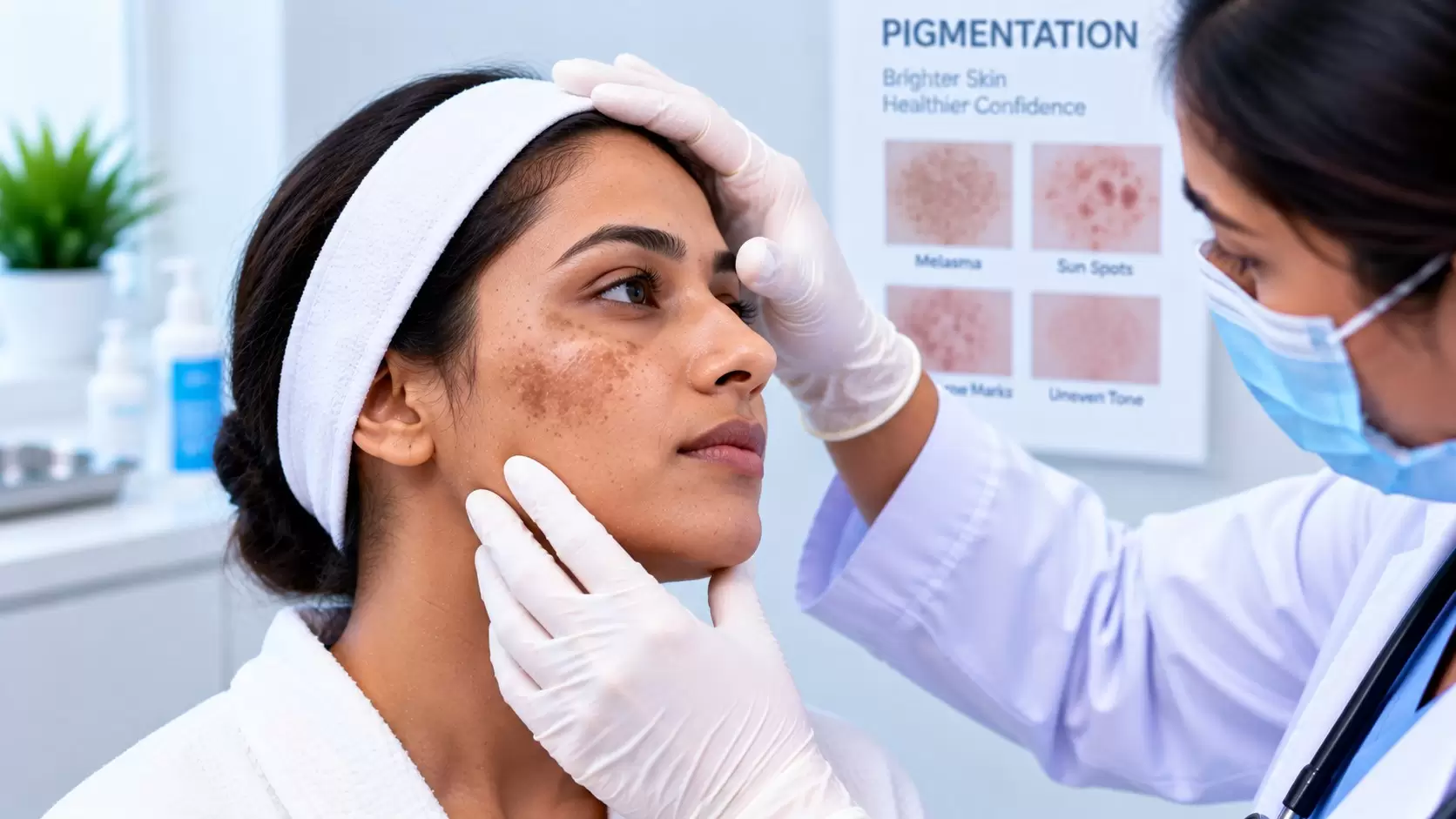
Why can pigmentation return after it fades?
Hyperpigmentation is often the visible result of another process rather than an isolated problem. If the process that stimulates pigment continues, new darkening can develop even after earlier spots improve.
The most common examples are melasma triggered by light exposure and post-inflammatory hyperpigmentation caused by repeated acne, eczema, irritation or skin injury.
Common reasons pigmentation keeps coming back
Melasma
Melasma can persist for years and commonly recurs because pigment-producing cells remain responsive to light and other triggers.
Light exposure
Ultraviolet radiation and visible light can stimulate pigment and darken melasma and existing dark spots.
Ongoing inflammation
New acne, eczema, dermatitis or injury can continually create fresh post-inflammatory hyperpigmentation.
Skin irritation
Harsh products, over-exfoliation and unsuitable procedures can inflame the skin and create additional pigment.
Melasma is often a recurrent condition
Melasma can fade with treatment, but it is frequently persistent and prone to recurrence. Sunlight is a major trigger, and visible light can also worsen melasma, especially in darker skin tones.
Hormonal influences and genetic susceptibility can contribute as well. This means successful treatment often shifts into maintenance rather than simply stopping once patches fade.
Sun exposure can reactivate pigment
Ultraviolet exposure stimulates melanin production. A few weeks of inconsistent photoprotection can make previously improved pigmentation more noticeable again.
Broad-spectrum SPF 30 or higher, shade and protective clothing help reduce this stimulus. For melasma and persistent dark spots, tinted sunscreen containing iron oxides can add protection against visible light.
Ongoing acne creates new dark marks
Post-acne pigmentation may seem recurrent when older marks are fading but fresh pimples keep producing new ones. Each inflamed acne lesion can stimulate additional melanin.
In this situation, focusing only on lightening products misses the main driver. Controlling active acne is essential to stop the cycle.
For persistent breakouts, visit Acne Treatment in Chennai.
Eczema and dermatitis can repeatedly trigger PIH
Inflammatory skin conditions can leave darker colour after each flare. Scratching and rubbing add trauma and may intensify the pigmentation.
If dermatitis remains active, new marks can appear despite using pigment treatments. Controlling inflammation and supporting the skin barrier come first.
Skin-care irritation can create the problem you are trying to treat
The AAD notes that products that burn or sting can irritate the skin and darken dark spots. Strong exfoliation, combining too many active ingredients and using unsuitable lightening products can all contribute.
If pigmentation worsens while the skin is red, peeling or sensitive, simplify the routine and identify the irritating product rather than adding more treatments.
Stopping treatment too early
Visible improvement does not necessarily mean the tendency to pigment has disappeared. Melasma in particular often requires ongoing photoprotection and a dermatologist-directed maintenance strategy.
The maintenance plan may differ from the more intensive treatment used initially. The goal is to preserve improvement while reducing unnecessary long-term exposure to stronger medicines.
Why a chemical peel or laser can sometimes be followed by darkening
Procedures work by creating controlled changes in the skin. If they produce excessive inflammation, post-inflammatory hyperpigmentation can follow, especially in pigment-prone skin.
Melasma can also relapse after laser or light treatment. Appropriate diagnosis, skin preparation, treatment settings and aftercare are therefore important.
Is it the old pigmentation returning or new pigmentation?
Both are possible. Melasma can reactivate in the same facial pattern, while acne or dermatitis may create entirely new PIH at new sites.
Photographs taken in consistent lighting can sometimes help track the pattern. A dermatologist can also determine whether the apparent recurrence represents the same disorder or a different pigment problem.
How to reduce recurrent pigmentation
Control the trigger
Treat acne, eczema or another inflammatory condition so new pigment is not continually produced.
Protect from light
Use broad-spectrum sunscreen consistently and consider tinted iron-oxide sunscreen for melasma and dark spots.
Keep skin care gentle
Avoid products and combinations that repeatedly burn, sting or inflame the skin.
Use maintenance treatment
Follow the dermatologist’s long-term plan instead of abruptly stopping every measure once the skin improves.
How long can dark spots take to fade?
Once the trigger has stopped, superficial dark spots may still take months to fade. The AAD notes that a spot only a few shades darker than the natural skin colour may take about 6 to 12 months, while deeper pigmentation can take years.
If new spots continue forming during that time, the overall appearance may seem unchanged even though individual marks are slowly clearing.
When should recurrent pigmentation be reassessed?
See a dermatologist when pigmentation repeatedly returns despite consistent photoprotection and treatment, is spreading, has an unusual distribution or is difficult to distinguish from another condition.
Reassessment is also useful before escalating to stronger lightening medicines, chemical peels, microneedling or laser procedures.
For an individual treatment and maintenance plan, visit Pigmentation Treatment in Chennai.
Frequently asked questions
Why does pigmentation keep coming back?
Pigmentation can recur when the underlying trigger remains active. Common reasons include melasma, repeated sun or visible-light exposure, ongoing acne or dermatitis, irritation and stopping maintenance measures too early.
Does melasma commonly return after treatment?
Yes. Melasma can be persistent and recurrent. Long-term photoprotection and an appropriate maintenance plan can help reduce recurrence.
Can skin-care irritation cause pigmentation to return?
Yes. Products that burn, sting or cause dermatitis create inflammation that can trigger new post-inflammatory hyperpigmentation.
Can sunscreen help prevent recurrent pigmentation?
Yes. Broad-spectrum SPF 30 or higher helps limit ultraviolet-driven darkening. For melasma and dark spots, tinted sunscreen containing iron oxides can also help protect against visible light.
When should recurrent pigmentation be assessed by a dermatologist?
Assessment is useful when pigmentation repeatedly returns despite consistent care, is spreading or changing, is difficult to diagnose, or when stronger prescription treatment or procedures are being considered.
Visit us in OMR
Pigmentation keeps returning? Find and control the trigger.
Book a dermatologist consultation at Ram Skin Clinic in Thoraipakkam, Chennai.
#48, Second Floor, Flat E, Best Towers,Okkiampet, Thoraipakkam, OMR,
Chennai – 600097. Above Domino’s Pizza.