
Acne Scar Treatment Comparison
MNRF vs Microneedling for Acne Scars: What Is the Difference?
Both treatments use fine needles to create controlled micro-injury, but MNRF adds radiofrequency energy within the skin. That difference changes how energy is delivered and how a dermatologist may tailor treatment for acne scars.
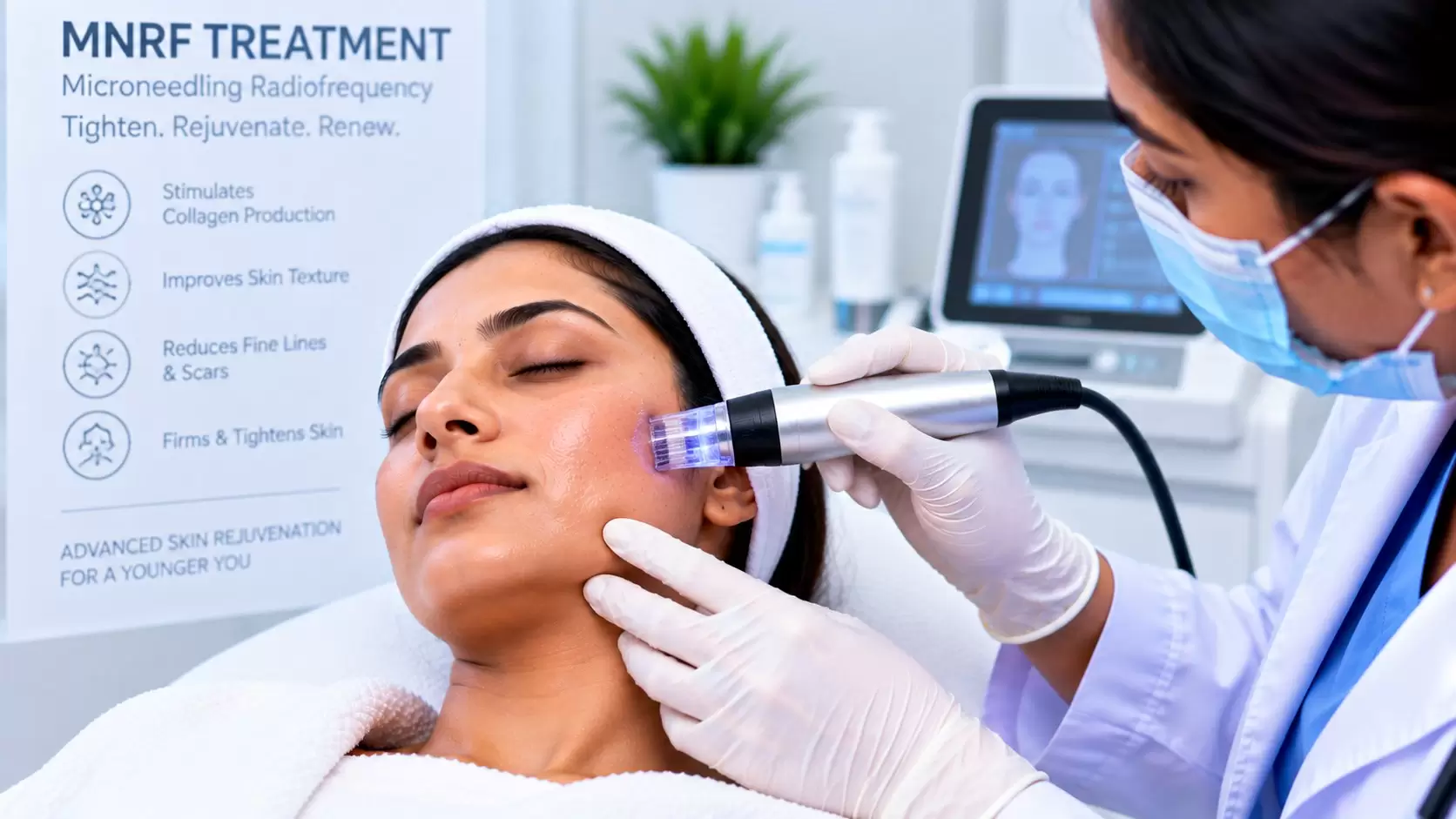
The main difference: radiofrequency energy
Microneedling and MNRF both intentionally create microscopic needle channels in the skin. In conventional microneedling, the controlled mechanical injury itself stimulates a wound-healing response. MNRF adds radiofrequency energy delivered through the needle system at selected tissue depths.
The extra thermal component is the defining difference. It does not mean MNRF is automatically the correct choice for every scar.
MNRF vs microneedling: at a glance
| Feature | Microneedling | MNRF |
|---|---|---|
| Needles | Yes | Yes |
| Radiofrequency energy | No | Yes |
| Main mechanism | Controlled mechanical micro-injury | Mechanical micro-injury plus controlled RF heating |
| Depth | Adjustable needle depth depending on device | Adjustable needle depth with RF delivered within targeted tissue |
| Typical acne-scar role | Selected atrophic scars and texture | Selected atrophic scars requiring dermal remodelling |
| Sessions | Usually a series | Usually a series |
How standard microneedling works
A microneedling device or medical dermaroller creates repeated controlled punctures in the skin. These micro-injuries initiate repair signalling and collagen remodelling.
Needle depth matters. Medical scar treatment uses a different objective from superficial cosmetic needling, and the technique should be selected according to the scar and anatomical area.
How MNRF works
MNRF places needles into the skin and then delivers radiofrequency energy within the targeted tissue. The treatment therefore combines mechanical injury with a controlled thermal effect.
Depth, energy and passes can be adjusted according to the device and clinical objective. Read What Is MNRF Treatment? for a full explanation.
Which is better for acne scars?
There is no single procedure that is best for every acne scar. Scar morphology is more useful than choosing treatment based only on the name of a device.
Rolling scars
Needling-based remodelling may help, but tethered scars can require subcision to release deeper fibrous attachments.
Boxcar scars
Selected shallow and moderate boxcar scars may respond to either approach depending on depth and treatment plan.
Ice-pick scars
Deep narrow scars often require more focal techniques and may respond less predictably to either procedure alone.
Mixed scars
Combination treatment is often more logical because different scar structures may coexist on the same face.
For more detail, see MNRF for Acne Scars.
Does radiofrequency mean better results?
Adding RF changes the biological treatment delivered to the dermis, but “more technology” does not automatically mean a better outcome for every patient. Published studies support both microneedling and fractional RF microneedling for selected acne scars, while treatment protocols and comparative results vary.
What about results and treatment sessions?
Both treatments generally require time and repeated sessions because collagen remodelling is gradual. Immediate redness or swelling is not the final result.
There is no universal number of sessions. Scar severity, device settings, treatment interval, response and whether subcision or another procedure is added all influence the plan.
Which has more downtime?
Downtime depends heavily on treatment intensity. Both can cause redness, swelling, tenderness and temporary surface changes. MNRF may also produce small crusts or grid-like marks depending on the device and parameters.
A mild session and an aggressive session using the same technology can have very different recovery profiles, so device name alone cannot predict downtime.
Which is safer for darker Indian skin?
Both procedures are used in darker skin types, but any treatment that creates inflammation can trigger post-inflammatory hyperpigmentation. MNRF delivers much of its energy below the epidermal surface, which can be useful when appropriately performed, but pigmentation risk is not zero.
Conservative settings, sun protection, careful aftercare and avoiding unnecessary overtreatment are important for pigment-prone skin.
Can either treatment remove scars completely?
No responsible acne-scar plan should promise perfectly scar-free skin. The goal is improvement in depth, edges, texture and overall visibility.
Some scars respond strongly, some partially, and others require a different procedure. Standardised photographs are useful for assessing meaningful improvement over time.
What about acne marks and pigmentation?
Brown acne marks are not the same as depressed scars. A patient whose main problem is post-inflammatory pigmentation may need a different treatment strategy from someone with structural atrophic scarring.
Read Acne Marks vs Acne Scars before assuming that a needling procedure is required.
Why combination treatment is often important
A dermatologist may use different techniques for different scar components. Subcision can target tethering, focal procedures can address selected deep scars, and microneedling or MNRF can be used for broader remodelling where appropriate.
Active acne should also be controlled to reduce the risk of creating new scars while existing scars are being treated.
How does a dermatologist choose?
The decision may consider scar type and depth, active acne, tendency to pigmentation, previous procedures, medical history, downtime, budget and realistic goals.
At Ram Skin Clinic, the treatment should follow scar assessment rather than starting with a device preference. Visit MNRF Treatment in Chennai for clinic-specific information.
Frequently asked questions
Is MNRF the same as microneedling?
No. Both use needles, but MNRF additionally delivers radiofrequency energy within the skin.
Is MNRF better than microneedling for acne scars?
Neither is universally better. The appropriate procedure depends on scar type, depth, skin characteristics and the overall treatment plan.
Which has more downtime, MNRF or microneedling?
Recovery depends on treatment intensity and settings. Both can cause temporary redness, swelling and sensitivity, while MNRF can also produce small crusts or grid-like marks.
Can MNRF and microneedling be used on Indian skin?
Both can be used in darker skin types, but post-inflammatory pigmentation is possible. Appropriate settings, sun protection and aftercare are important.
Can either procedure completely remove acne scars?
No. Treatment aims for improvement rather than guaranteed complete removal, and some scar types require additional procedures.
Acne scar treatment in OMR, Chennai
MNRF or microneedling? Let the scar type guide the treatment.
Book a dermatologist consultation at Ram Skin Clinic in Thoraipakkam, Chennai.
#48, Second Floor, Flat E, Best Towers,Okkiampet, Thoraipakkam, OMR,
Chennai – 600097. Above Domino’s Pizza.