
Managing Lichen Planus
Lichen Planus Treatment Options
Treatment for lichen planus depends on where it occurs, how severe it is and whether inflammation threatens permanent damage to hair follicles, nails or mucosal tissue.
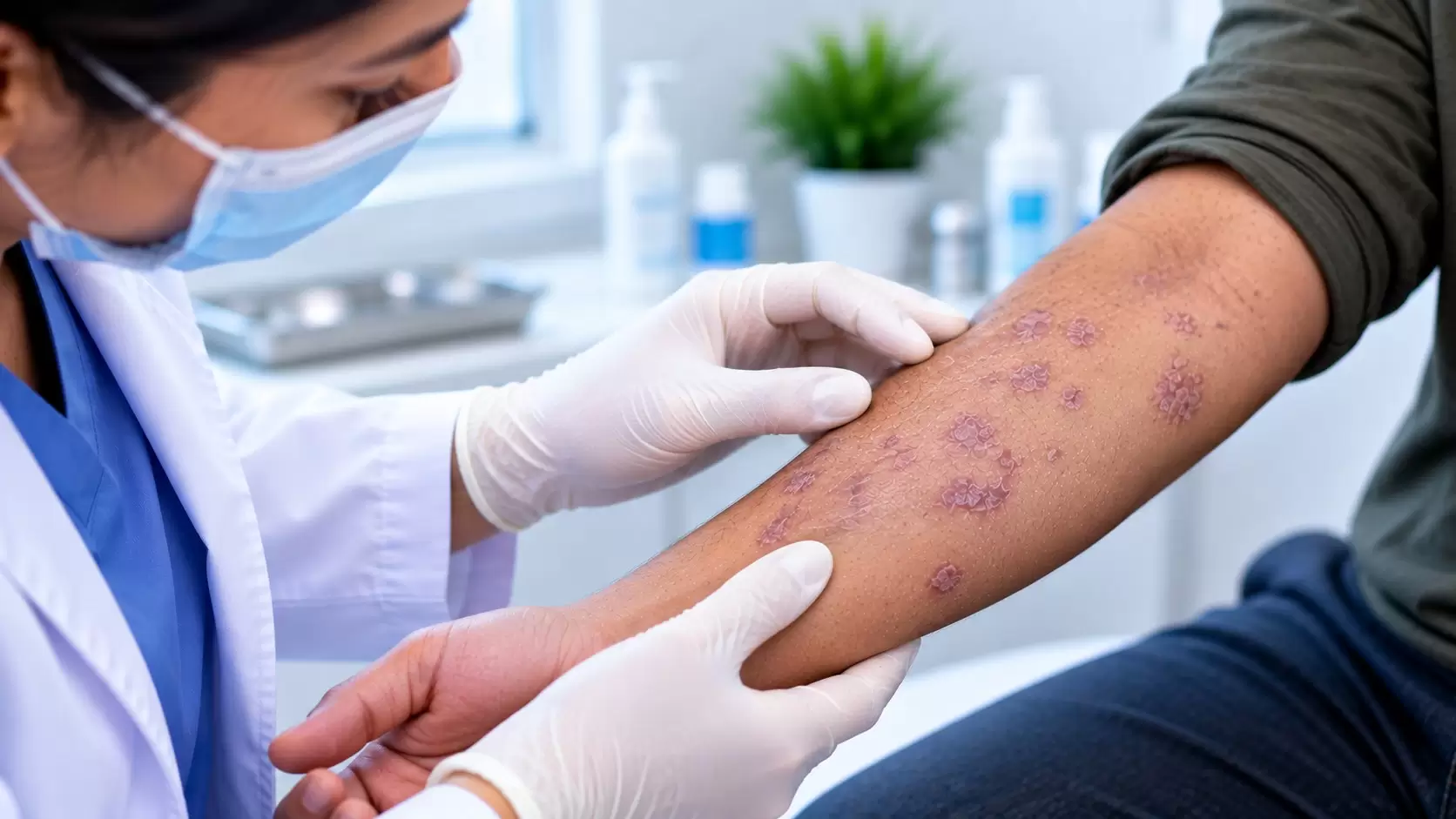
Does every case need treatment?
Not always. Some cutaneous lichen planus can settle spontaneously, and mild symptom-free disease may sometimes be monitored. Treatment is more important when itching or pain affects quality of life, disease is widespread, mucosal surfaces are involved, or inflammation risks permanent scarring.
The appropriate plan depends on the clinical form. See Types of Lichen Planus for the major patterns.
Common lichen planus treatments
Topical corticosteroids
Potent topical corticosteroids are commonly used for localised skin disease and are also formulated for oral or genital disease when appropriate.
Intralesional corticosteroids
Corticosteroid injections may be considered for selected thick, resistant lesions or localised scalp disease.
Phototherapy
Narrowband UVB or other dermatologist-directed phototherapy can be considered for widespread cutaneous disease.
Systemic medicines
Severe, extensive or resistant disease may require short-course oral corticosteroids or other immune-modulating medicines under medical supervision.
Topical corticosteroids for skin disease
Topical corticosteroids reduce inflammation and itching and are a standard treatment for localised cutaneous lichen planus. The strength, formulation, treatment duration and body site matter because prolonged or inappropriate use can cause side effects such as skin thinning.
Thick hypertrophic plaques may need a different approach from thin lesions or disease on delicate skin.
Phototherapy for widespread lichen planus
When many areas of skin are affected and topical treatment becomes impractical, dermatologist-supervised phototherapy may be considered. Narrowband UVB is one established option for generalised cutaneous lichen planus.
Phototherapy is delivered in a controlled medical schedule. It is different from recreational sun exposure and is selected according to skin type, extent of disease and other health factors.
Systemic treatment for severe disease
Extensive, rapidly progressive or treatment-resistant lichen planus may require oral or other systemic therapy. Depending on the clinical situation, dermatologists may use a short course of systemic corticosteroids or selected immune-modulating medicines.
Treating oral lichen planus
Mild reticular oral lichen planus without discomfort may only require monitoring. Painful erosive disease is commonly treated with topical corticosteroid preparations designed for use inside the mouth. Other topical or systemic medicines may be considered when disease is severe or resistant.
Good oral hygiene and avoiding personal irritants such as spicy or acidic foods can reduce discomfort. Persistent oral disease requires follow-up. Read Oral Lichen Planus for more detail.
Treating lichen planopilaris on the scalp
Lichen planopilaris is treated differently because inflammation around hair follicles can cause irreversible scarring hair loss. Treatment aims to suppress active inflammation and protect follicles that have not yet been permanently damaged.
Depending on severity, treatment can include potent topical corticosteroids, intralesional corticosteroids and systemic anti-inflammatory or immune-modulating medicines.
Hair that has already been lost because of established follicular scarring generally does not regrow, making early assessment important.
Treating nail lichen planus
Nail lichen planus may cause ridging, thinning, splitting, scarring and eventual nail loss. Treatment can include topical or injected corticosteroids and, in more significant disease, systemic therapy.
Early intervention matters because severe inflammation of the nail matrix can produce permanent structural damage.
Treating genital lichen planus
Genital lichen planus may require potent topical corticosteroids or other anti-inflammatory treatments. Erosive disease can be painful and may cause scarring or narrowing if inflammation remains uncontrolled.
Because infections and other inflammatory genital disorders can resemble lichen planus, accurate diagnosis should come before treatment. Lichen planus itself is not sexually transmitted; see Is Lichen Planus Contagious?.
What about dark marks after lichen planus?
Post-inflammatory hyperpigmentation can remain after active skin lesions have settled, particularly in darker skin tones. The priority is to control active inflammation and avoid unnecessary scratching or irritation.
Pigmentation can fade gradually, but persistent marks may require a separate treatment plan after the active disease is controlled.
Can lichen planus come back?
Yes. The course varies by site and individual. Cutaneous lichen planus may resolve and remain quiet, while oral, genital, scalp and nail forms can be chronic or relapsing.
Follow-up is therefore based on disease location, activity and complications rather than assuming that one treatment course will permanently eliminate the condition.
When should you see a dermatologist?
Seek assessment for a persistent itchy rash, painful oral or genital lesions, scalp inflammation with hair loss, nail changes, widespread disease, or symptoms that have not improved with previous treatment. Any persistent oral ulcer or changing lesion should also be reviewed.
For an individual treatment plan, visit Lichen Planus Treatment in Chennai.
Frequently asked questions
Can lichen planus be cured permanently?
No treatment guarantees permanent cure. Skin disease may resolve over time, while oral, scalp, nail and genital forms can be more persistent. Treatment aims to control inflammation, symptoms and complications.
What is the first-line treatment for skin lichen planus?
Potent topical corticosteroids are commonly used for localised cutaneous lichen planus, with the exact preparation and duration selected by a clinician.
Can phototherapy help lichen planus?
Yes. Narrowband UVB may be considered for widespread cutaneous lichen planus when topical treatment is impractical or insufficient.
How is oral lichen planus treated?
Symptomatic oral disease is commonly treated with topical corticosteroid preparations, together with good oral hygiene and avoidance of individual irritants.
Why is early treatment important for scalp or nail lichen planus?
Inflammation affecting hair follicles or the nail matrix can cause permanent scarring hair loss or irreversible nail damage, so early control is important.
Medical guidance checked against current American Academy of Dermatology and DermNet guidance.
Visit us in OMR
Need a treatment plan for lichen planus? Get it assessed.
Book a dermatologist consultation at Ram Skin Clinic in Thoraipakkam, Chennai.
#48, Second Floor, Flat E, Best Towers,Okkiampet, Thoraipakkam, OMR,
Chennai – 600097. Above Domino’s Pizza.