
Understanding Clinical Variants
Types of Lichen Planus
Lichen planus does not look the same in every person. It can affect the skin, mouth and other mucosal surfaces, scalp and hair follicles, nails or genital areas, with several recognised clinical variants.
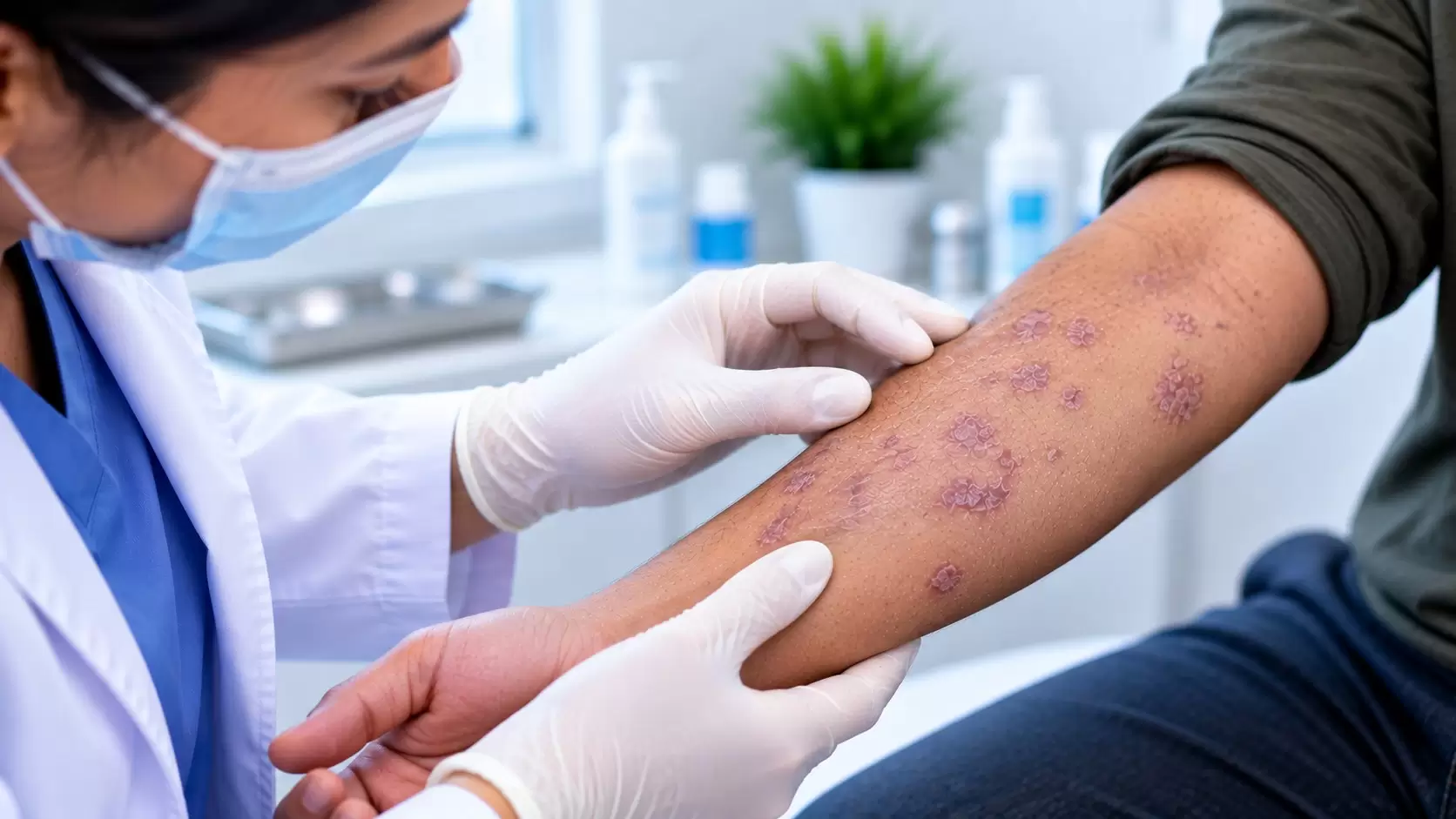
Why are there different types?
Lichen planus is an immune-mediated inflammatory condition, but its clinical appearance depends on the tissue involved and the pattern of inflammation. A person may have disease at only one site or several sites simultaneously.
For an overview of the condition, see Lichen Planus Causes & Symptoms.
Main types of lichen planus
Cutaneous lichen planus
The classic skin form causes shiny, flat-topped, firm papules or plaques, often with fine white Wickham striae. Itch can range from mild to intense.
Oral lichen planus
Inside the mouth it can produce painless lacy white lines, red inflamed areas or painful erosions and ulcers.
Lichen planopilaris
This form targets hair follicles, particularly on the scalp, and can lead to permanent scarring hair loss if follicles are destroyed.
Nail lichen planus
Nails may become ridged, rough, thin or split. Severe disease can scar the nail matrix and permanently alter or destroy the nail.
Genital lichen planus
Genital disease may cause papules, white streaks, soreness, burning or painful erosions depending on the site and pattern.
Pigmentary forms
Lichen planus pigmentosus produces brown or grey-brown pigmentation and is more frequently recognised in people with darker skin.
Classic cutaneous lichen planus
The classic skin eruption consists of polygonal, shiny, flat-topped papules and plaques. The wrists, ankles and lower back are common sites, although lesions can occur elsewhere. Fine white lines called Wickham striae may be visible over the surface.
After inflammation settles, darker pigmentation can remain for months or longer, especially in darker skin tones.
Hypertrophic lichen planus
Hypertrophic lichen planus produces thick, scaly, intensely itchy plaques, commonly on the lower legs. Repeated scratching can further thicken the lesions.
Longstanding hypertrophic lesions can sometimes resemble other thickened skin disorders, so persistent or changing plaques may require biopsy to confirm the diagnosis.
Annular and actinic lichen planus
Annular lichen planus
Lesions form ring-shaped plaques with central clearing. Genital and skin-fold areas are among recognised sites.
Actinic lichen planus
This photosensitive variant occurs mainly on sun-exposed skin and may appear as red-brown annular plaques or hyperpigmented patches.
Oral lichen planus
Oral lichen planus may occur with or without skin disease. Reticular disease produces a white lace-like pattern, while erosive disease causes red, sore or ulcerated areas that can burn and make eating uncomfortable. Plaque-like white patches are another recognised pattern.
Persistent erosive oral disease needs ongoing clinical follow-up. Our next supporting article will examine oral lichen planus in more detail.
Lichen planopilaris: scalp and hair follicles
Lichen planopilaris is an inflammatory form involving hair follicles. Typical findings include perifollicular redness and scale around the edges of smooth patches of hair loss. Symptoms can include itch, tenderness, pain or burning.
Nail lichen planus
Lichen planus can involve one or several fingernails or toenails, sometimes without obvious skin lesions. Changes may include longitudinal ridging, thinning, splitting and progressive nail damage.
Early dermatologist assessment is important because severe nail-matrix inflammation can lead to permanent structural damage.
Genital lichen planus
Genital lichen planus varies considerably. Vulval disease may cause lacy white streaks, painful erosions or scarring. Penile disease can produce classic papules, often around the glans, and less commonly white streaks or erosive lesions.
Because several other inflammatory and infectious conditions can resemble genital lichen planus, diagnosis should be made clinically rather than assumed from symptoms alone.
Lichen planus pigmentosus
Lichen planus pigmentosus is characterised predominantly by dark brown, grey-brown or slate-coloured pigmentation rather than the classic purple papules. It commonly affects darker skin types and may involve the face, neck or skin folds.
Pigmentary disorders have many causes, so examination is important before labelling persistent facial or body pigmentation as lichen planus pigmentosus.
How does a dermatologist identify the type?
Diagnosis is based on the appearance, distribution and symptoms together with examination of other potential sites such as the mouth, scalp and nails. Dermoscopy can provide additional clues. A biopsy may be recommended when the diagnosis is uncertain or a persistent lesion needs histological assessment.
For diagnosis and management, visit Lichen Planus Treatment in Chennai.
Frequently asked questions
What are the main types of lichen planus?
Major forms include cutaneous lichen planus, oral or other mucosal disease, lichen planopilaris, nail lichen planus, genital disease and pigmentary variants.
What is hypertrophic lichen planus?
It is a thick, scaly and often very itchy form of lichen planus that commonly affects the lower legs.
What is lichen planopilaris?
It is lichen planus affecting hair follicles, usually on the scalp. It can cause scarring and permanent hair loss.
Can lichen planus affect the nails?
Yes. It can cause ridging, thinning, splitting and other nail changes, and severe disease may permanently damage the nail.
Can someone have more than one type?
Yes. Lichen planus may affect one site or several sites at the same time.
Medical guidance checked against current American Academy of Dermatology and DermNet guidance.
Visit us in OMR
Not sure which type of lichen planus you have? Get it assessed.
Book a dermatologist consultation at Ram Skin Clinic in Thoraipakkam, Chennai.
#48, Second Floor, Flat E, Best Towers,Okkiampet, Thoraipakkam, OMR,
Chennai – 600097. Above Domino’s Pizza.