
Understanding Lichen Planus
Lichen Planus Causes & Symptoms
Lichen planus is a chronic inflammatory condition that can affect the skin, mouth, scalp, nails and genital areas. Its exact cause is unknown, but immune-system activity plays a central role.
What is lichen planus?
Lichen planus is an inflammatory disorder with several clinical forms. It may affect only the skin or involve mucosal surfaces, scalp hair follicles, nails or genital tissue.
DermNet describes it as a T-cell-mediated autoimmune disorder, while the American Academy of Dermatology explains that the exact cause remains unknown and is thought to involve an immune attack on healthy cells.
What causes lichen planus?
There is no single established cause. Research supports an immune-mediated mechanism, but what initiates that response varies and often cannot be identified.
Immune response
Inflammatory T cells target cells in the epidermis or mucous membranes, producing the characteristic lichenoid inflammation.
Genetic susceptibility
Familial cases have been reported, suggesting that genetics may influence susceptibility in some people.
Skin injury
New lesions can appear in areas of scratching, trauma or surgery. This response is known as the Koebner phenomenon.
Medications and look-alike eruptions
Some medicines can trigger a lichenoid drug eruption that resembles lichen planus, making a medication history important.
AAD also notes an association between lichen planus and hepatitis C in some populations, although an association does not mean hepatitis C is the cause in every patient.
What does lichen planus look like on the skin?
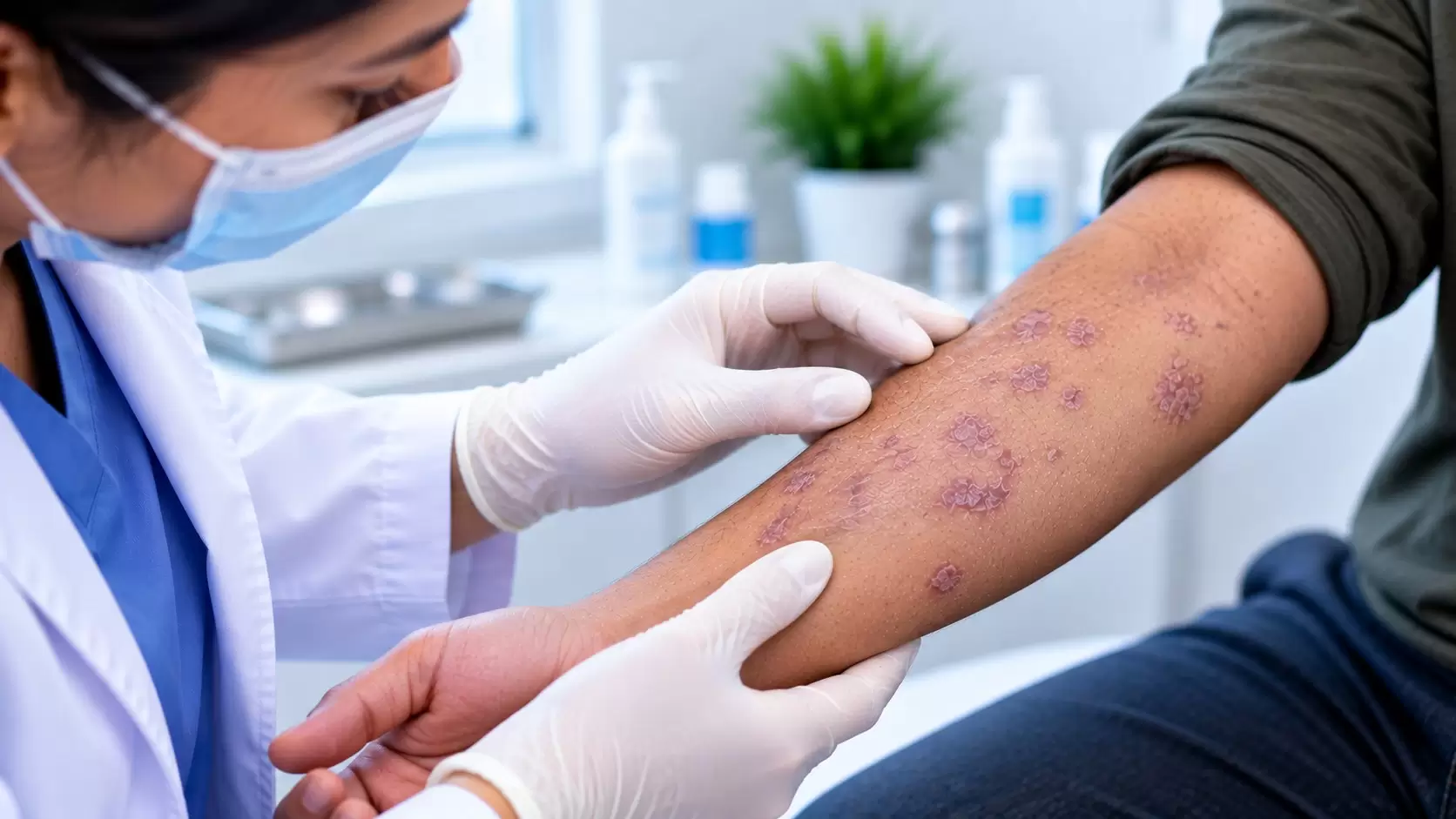
Classic cutaneous lichen planus typically produces shiny, flat-topped, firm papules or plaques. Depending on skin tone, lesions may look red, purple, gray or brown. Fine white lines called Wickham striae can cross the surface.
Common sites include the wrists, arms, legs, ankles and lower back. The rash can be mildly itchy or intensely itchy.
Common lichen planus symptoms
Itchy bumps or plaques
Itch ranges from absent or mild to severe. Individual bumps can merge into larger plaques.
Colour changes after healing
Post-inflammatory hyperpigmentation can remain after active lesions settle and may be particularly noticeable in darker skin tones.
White surface lines
Wickham striae are fine whitish lines that can be visible on classic lesions and oral disease.
New lesions after injury
Scratching or other skin trauma can sometimes trigger lesions along the injured area.
Can lichen planus affect the mouth?
Yes. Oral lichen planus may produce lacy white lines or small white spots on the cheeks, tongue, gums or other oral surfaces. Some people have little discomfort, while erosive disease can cause redness, painful sores, tenderness or burning that makes eating difficult.
Persistent painful or ulcerated oral lesions deserve professional assessment and ongoing follow-up.
Scalp, nail and genital symptoms
Scalp
Lichen planopilaris can cause redness and scale around follicles, itching, burning or tenderness and patches of scarring hair loss.
Nails
Nails can become rough, ridged, thin or split. Severe disease may permanently damage or destroy the nail.
Genitals
Genital lichen planus may cause a rash, soreness, burning, itch, pain or erosions depending on the form and site.
Multiple sites
A person may have lichen planus in only one area or in several areas at the same time.
AAD recommends early assessment of nail disease because timely treatment can help prevent progression and permanent nail changes.
Is lichen planus contagious?
No. Lichen planus is not an infection that passes from person to person. You cannot catch it by touching someone who has it.
How is lichen planus diagnosed?
A dermatologist often recognises lichen planus from its appearance, distribution and symptoms. Examination may include the skin, scalp, nails and mouth, together with a medication and medical history.
When confirmation is needed, a skin or nail biopsy may be performed. Selected patients may also require blood tests or allergy testing depending on the clinical situation.
Learn about assessment and treatment at Lichen Planus Treatment in Chennai.
When should you see a dermatologist?
Arrange an assessment if you develop a persistent unexplained itchy rash, painful or erosive mouth or genital lesions, nail changes, or scalp inflammation with hair loss. Early assessment is particularly important when nail or scalp disease could cause permanent structural change.
A biopsy can also help when the appearance is atypical or another condition needs to be excluded.
Frequently asked questions
What causes lichen planus?
The exact cause is unknown. It is considered an immune-mediated inflammatory condition in which T cells attack cells in the skin or mucous membranes.
Is lichen planus contagious?
No. Lichen planus cannot be passed from one person to another.
What does lichen planus look like?
Typical skin lesions are shiny, flat-topped, firm bumps or plaques that may be purple, red, gray or brown and can show fine white Wickham striae.
Can lichen planus affect the mouth and nails?
Yes. It can affect the mouth, nails, scalp and genital areas as well as the skin.
How is lichen planus diagnosed?
A dermatologist can often diagnose it clinically. A biopsy and selected blood or allergy tests may be used when further confirmation is needed.
Medical guidance checked against current American Academy of Dermatology and DermNet guidance.
Visit us in OMR
Concerned about lichen planus? Get it assessed.
Book a dermatologist consultation at Ram Skin Clinic in Thoraipakkam, Chennai.
#48, Second Floor, Flat E, Best Towers,Okkiampet, Thoraipakkam, OMR,
Chennai – 600097. Above Domino’s Pizza.