
Understanding Lichen Planus
Is Lichen Planus Contagious?
No. Lichen planus is an inflammatory, immune-mediated condition. It is not an infection and cannot be passed from one person to another.
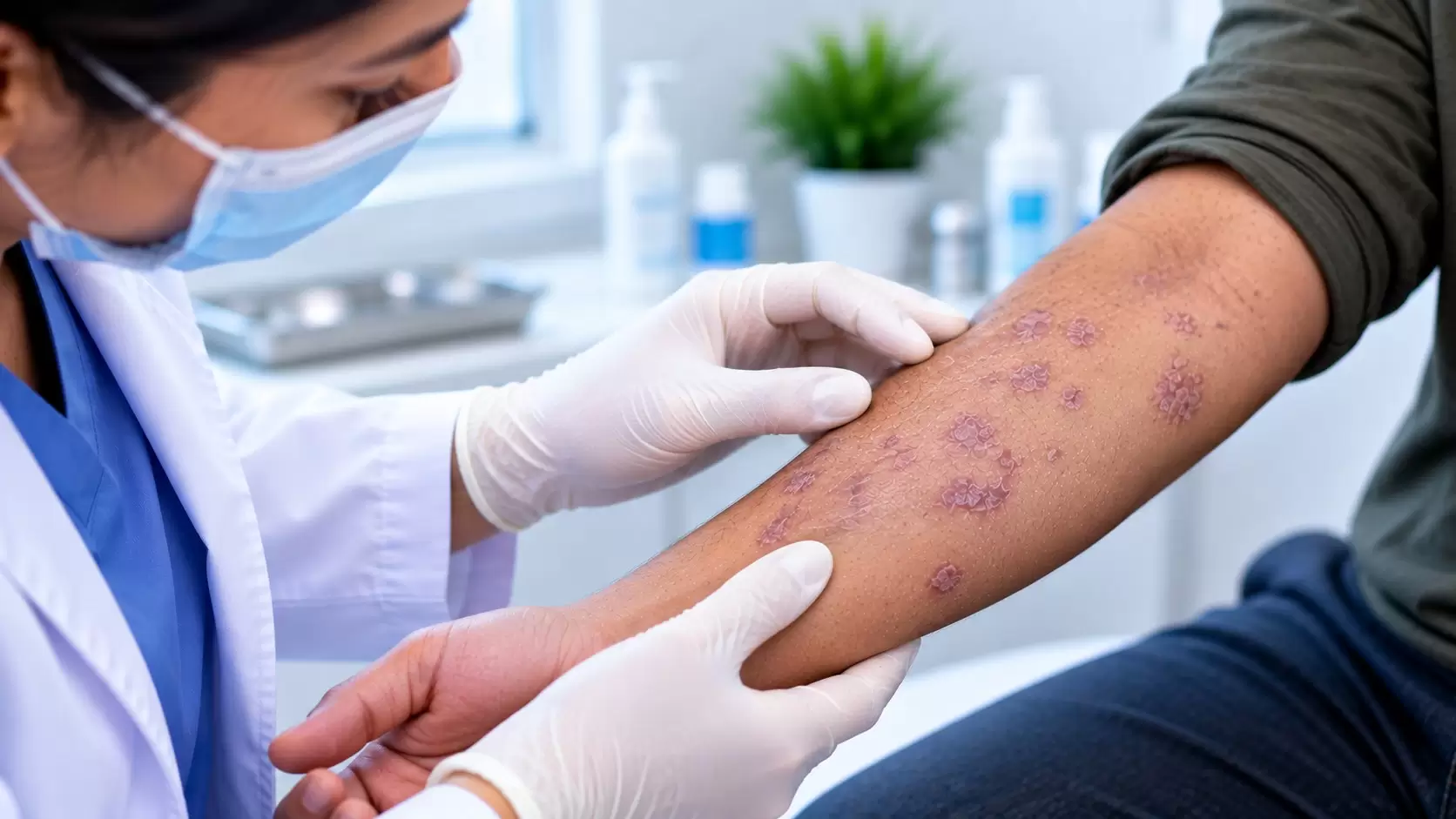
Lichen planus is not an infection
Lichen planus develops because of inflammation involving the immune system rather than because a contagious organism is growing in the skin. Current dermatology references describe it as an immune-mediated condition in which T cells attack cells in the skin or mucous membranes.
Because the condition itself is not caused by a transmissible skin infection, ordinary contact with a person who has lichen planus does not spread it.
For an overview of the underlying process, read Lichen Planus Causes & Symptoms.
Can you catch lichen planus by touching it?
No. Touching the bumps, plaques or discoloured areas of lichen planus does not transmit the condition. You do not need to avoid normal skin-to-skin contact with someone simply because they have lichen planus.
Touching
Lichen planus does not spread from person to person by touching affected skin.
Shared objects
It is not transmitted through towels, clothing, bedding, cutlery or other everyday shared items.
Kissing
Oral lichen planus is not passed to another person through kissing.
Sexual contact
Genital lichen planus is not a sexually transmitted infection and is not acquired through sexual contact.
Is oral lichen planus contagious?
No. Oral lichen planus can cause white lacy lines, red inflamed areas or painful erosions inside the mouth, but these lesions do not transmit lichen planus to another person.
Persistent mouth lesions should nevertheless be assessed because infections, trauma, medication reactions and other oral disorders can produce overlapping appearances.
Is genital lichen planus an STI?
No. Genital lichen planus is not classified as a sexually transmitted infection. It can cause soreness, burning, papules, white streaks or erosions, depending on the form and location.
Because several infections and inflammatory genital conditions can look similar, examination is important before assuming that symptoms are due to lichen planus.
Why can lichen planus appear in new areas?
Although it is not contagious, lichen planus can develop at multiple sites in the same person. New skin lesions can also appear along areas of scratching, rubbing, injury or surgery. Dermatologists call this the Koebner phenomenon.
What about lichen planus and hepatitis C?
Studies have found an association between lichen planus and hepatitis C infection in some populations. This does not mean that lichen planus itself is infectious or contagious, and it does not mean that everyone with lichen planus has hepatitis C.
A dermatologist may recommend selected investigations based on the person’s history, examination and relevant risk factors rather than assuming an infection is present.
Conditions that can be mistaken for lichen planus
Some fungal infections, eczema, psoriasis, drug-related lichenoid eruptions and other inflammatory disorders can resemble particular forms of lichen planus. Genital and oral lesions have their own broad differential diagnoses.
This is why a persistent or unusual rash should be clinically assessed rather than diagnosed solely from photographs or from whether someone else in the household has symptoms.
See Types of Lichen Planus for the different clinical patterns.
Do family members need to take precautions?
No special isolation or disinfection is required simply because someone has lichen planus. Normal household contact is safe.
Good general skin hygiene remains sensible, but there is no need to separate towels, utensils or bedding specifically to prevent transmission of lichen planus.
When should you see a dermatologist?
Arrange an assessment if you have a persistent unexplained rash, severe itching, painful mouth or genital erosions, nail changes, or scalp inflammation with hair loss. Clinical review is also important if you are uncertain whether a lesion is lichen planus or a contagious infection.
For diagnosis and management, visit Lichen Planus Treatment in Chennai.
Frequently asked questions
Is lichen planus contagious?
No. Lichen planus cannot be passed from one person to another.
Can you catch lichen planus by touching the rash?
No. Touching affected skin does not transmit lichen planus.
Is oral lichen planus contagious?
No. Oral lichen planus is an immune-mediated inflammatory condition and is not contagious.
Is genital lichen planus sexually transmitted?
No. Genital lichen planus is not an STI, although other genital conditions can resemble it and may need assessment.
Can lichen planus spread on my own body?
New lesions can appear at other sites and sometimes develop after skin injury through the Koebner phenomenon, but this is not person-to-person spread.
Medical guidance checked against current American Academy of Dermatology and DermNet guidance.
Visit us in OMR
Unsure whether your rash is lichen planus? Get it assessed.
Book a dermatologist consultation at Ram Skin Clinic in Thoraipakkam, Chennai.
#48, Second Floor, Flat E, Best Towers,Okkiampet, Thoraipakkam, OMR,
Chennai – 600097. Above Domino’s Pizza.