
Understand the Risks Before Treatment
Chemical Peel Side Effects & Safety: Risks, Complications and Precautions
Chemical peels are controlled skin-resurfacing procedures. Temporary redness and peeling are expected with many treatments, but pigment changes, infection and scarring are recognised complications. Risk depends on peel depth, skin type, medical history and aftercare.
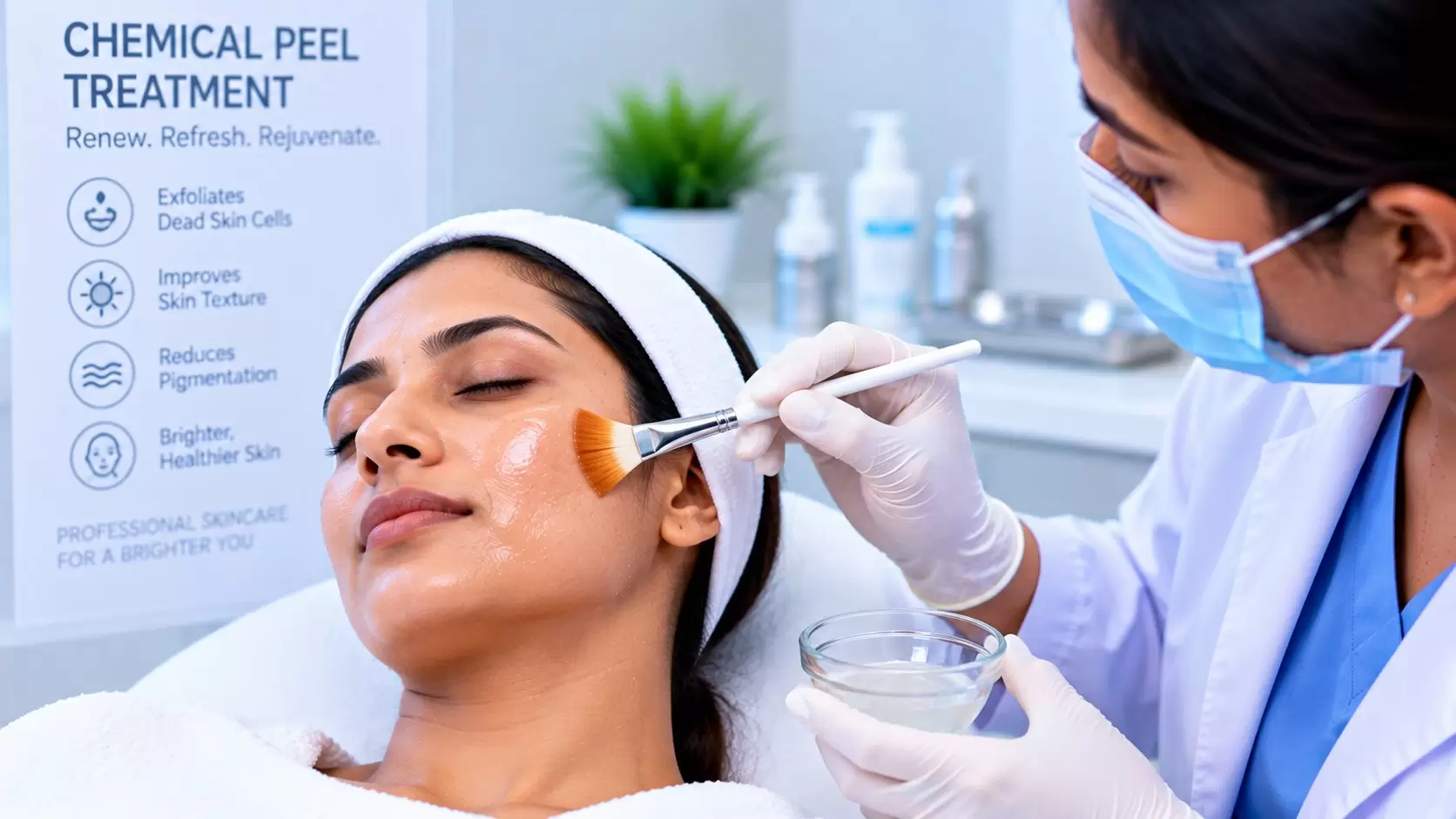
Are chemical peels safe?
Chemical peels can be performed safely when the peeling agent, concentration, treatment depth and patient are appropriately selected. Safety is not determined by the product name alone. The same chemical can behave differently depending on concentration, application technique and the condition of the skin.
The American Academy of Dermatology recommends having a chemical peel performed under appropriate medical supervision because complications can occur and skin type influences risk.
For a basic explanation of superficial, medium and deep peels, see What Is a Chemical Peel?.
Common and expected side effects
Redness
Temporary redness is common. It is usually mild after superficial peeling but can be more pronounced and persistent after deeper treatment.
Dryness and tightness
The treated surface may feel dry or tight as the outer skin renews. Gentle moisturising is commonly part of aftercare.
Peeling or flaking
Fine scaling can occur after superficial treatment. Stronger peels can cause more visible peeling or crusting.
Swelling
Mild swelling may occur, while medium and deep peels can produce considerably more swelling during early healing.
Post-inflammatory hyperpigmentation
One of the most important chemical peel risks in darker skin is post-inflammatory hyperpigmentation, or PIH. Inflammation stimulates pigment-producing cells and can leave an area darker than it was before treatment.
DermNet notes that Fitzpatrick skin types IV to VI have an increased risk of dyspigmentation after chemical peeling. This is why aggressive peeling is not automatically better for pigmentation-prone skin.
Read more about post-inflammatory hyperpigmentation and chemical peels for pigmentation.
Can a peel cause lighter patches?
Yes. Hypopigmentation—skin becoming lighter than the surrounding area—is a recognised complication, particularly after deeper injury. The risk of persistent colour change is one reason peel depth must be chosen conservatively in patients with darker skin.
Significant or persistent lightening after a peel should be assessed rather than treated with additional home exfoliation.
Infection after a chemical peel
Chemical peeling temporarily disrupts the skin barrier. Infection is uncommon after appropriately performed superficial peels, but the risk increases as the depth of injury increases.
DermNet lists bacterial, fungal and viral infection among possible complications. A history of recurrent herpes simplex around the mouth is particularly relevant before deeper facial resurfacing because reactivation can occur.
Can chemical peels cause scarring?
Scarring is uncommon but possible. Risk increases with excessive treatment depth, infection, delayed wound healing and picking or forcibly removing crusts.
People with a history of hypertrophic scars or keloids should tell the dermatologist before treatment. Previous procedures, medications and wound-healing problems are also relevant to the safety assessment.
Why deeper does not always mean better
Deeper peels can produce more substantial resurfacing, but they also create more inflammation, longer downtime and greater complication risk. The appropriate goal is not to create the maximum possible peeling; it is to reach the treatment depth needed for the specific indication while minimising unnecessary injury.
Many acne and pigmentation concerns can be approached with superficial treatments performed as a series rather than one aggressive procedure.
Who needs extra caution before a chemical peel?
Darker or pigment-prone skin
Inflammation can trigger hyperpigmentation, so agent, concentration and depth require careful selection.
Active skin disease
Active eczema, dermatitis, infection or significant inflammation may need treatment before elective resurfacing.
History of abnormal scarring
Keloid or hypertrophic scar history can alter the risk-benefit assessment.
Recent procedures or medicines
Recent resurfacing, certain medications and products that alter skin sensitivity or healing should be discussed before treatment.
Why your medication history matters
A pre-peel consultation should include prescription medicines, topical retinoids, acne treatment, previous isotretinoin use, recent cosmetic procedures and any history of cold sores. Do not stop prescribed medication solely because you plan to have a peel; discuss it with the treating clinician.
Pregnancy or breastfeeding should also be disclosed because treatment selection and topical products used before or after a peel may need to change.
Chemical peels and darker Indian skin
Indian skin spans a broad range of phototypes, but many patients have a stronger tendency to develop pigment after irritation or inflammation. A dermatologist may therefore favour superficial peeling, conservative concentrations, appropriate skin preparation and careful intervals between sessions.
The aim is controlled improvement without provoking the very pigmentation being treated. Sunscreen and avoidance of unnecessary irritation are especially important during recovery.
How aftercare reduces complications
Post-procedure care is part of the safety plan. Gentle cleansing, appropriate moisturising, sun protection and avoiding picking help the skin barrier recover normally. Strong acids, scrubs and retinoids may need to remain paused until adequate healing has occurred.
See our detailed guide to chemical peel aftercare and recovery for what to expect during healing.
Can home chemical peels be dangerous?
The term “chemical peel” covers products with very different acids, concentrations, pH values and penetration depths. Using a stronger formulation than intended, leaving it on too long, combining acids or applying it to already irritated skin can cause a chemical burn.
A professional assessment is particularly important when treating melasma, acne marks or darker skin because excessive inflammation can produce persistent pigmentation rather than improvement.
Signs of a possible chemical burn
Some stinging during treatment and temporary redness afterwards can be expected, but severe or escalating pain, blistering, marked swelling, raw areas or unexpected ulceration need prompt assessment.
Do not try to correct an excessive reaction by applying additional acids, bleaching products or abrasive treatments. Further irritation can deepen the injury.
How dermatologists improve chemical peel safety
Safety begins before the peel. The dermatologist assesses the diagnosis, skin phototype, treatment goal, history of pigmentation, scarring tendency, current products and previous procedures. The peel agent and depth are then selected for that individual rather than using the same protocol for everyone.
For treatment information at Ram Skin Clinic, visit Chemical Peel Treatment in Chennai.
Frequently asked questions
What are the most common chemical peel side effects?
Common temporary effects include redness, dryness, tightness, mild swelling and peeling or flaking. Their severity and duration depend largely on peel depth.
Can chemical peels damage the skin?
A chemical peel intentionally creates a controlled skin injury. If the treatment is too deep, poorly selected or followed by complications, unwanted pigment changes, infection or scarring can occur.
Are chemical peels safe for darker skin?
They can be used in darker skin, but treatment requires careful selection because post-inflammatory hyperpigmentation and other pigment changes are more likely after excessive inflammation.
Can a chemical peel cause permanent pigmentation?
Most temporary colour changes improve, but persistent hyperpigmentation or hypopigmentation is a recognised complication, particularly after deeper injury.
When should I contact a dermatologist after a peel?
Seek advice if pain, redness or swelling is increasing rather than improving, or if you develop extensive blistering, discharge, signs of infection, unexpected wounds or significant persistent colour change.
Dermatologist-guided chemical peels in OMR
Considering a chemical peel? Choose the peel according to your skin, not a trend.
Book a dermatologist consultation at Ram Skin Clinic in Thoraipakkam, Chennai.
#48, Second Floor, Flat E, Best Towers,Okkiampet, Thoraipakkam, OMR,
Chennai – 600097. Above Domino’s Pizza.