
A Dermatologist’s Guide to Skin Resurfacing
What Is a Chemical Peel? Types, Uses, Procedure & Recovery
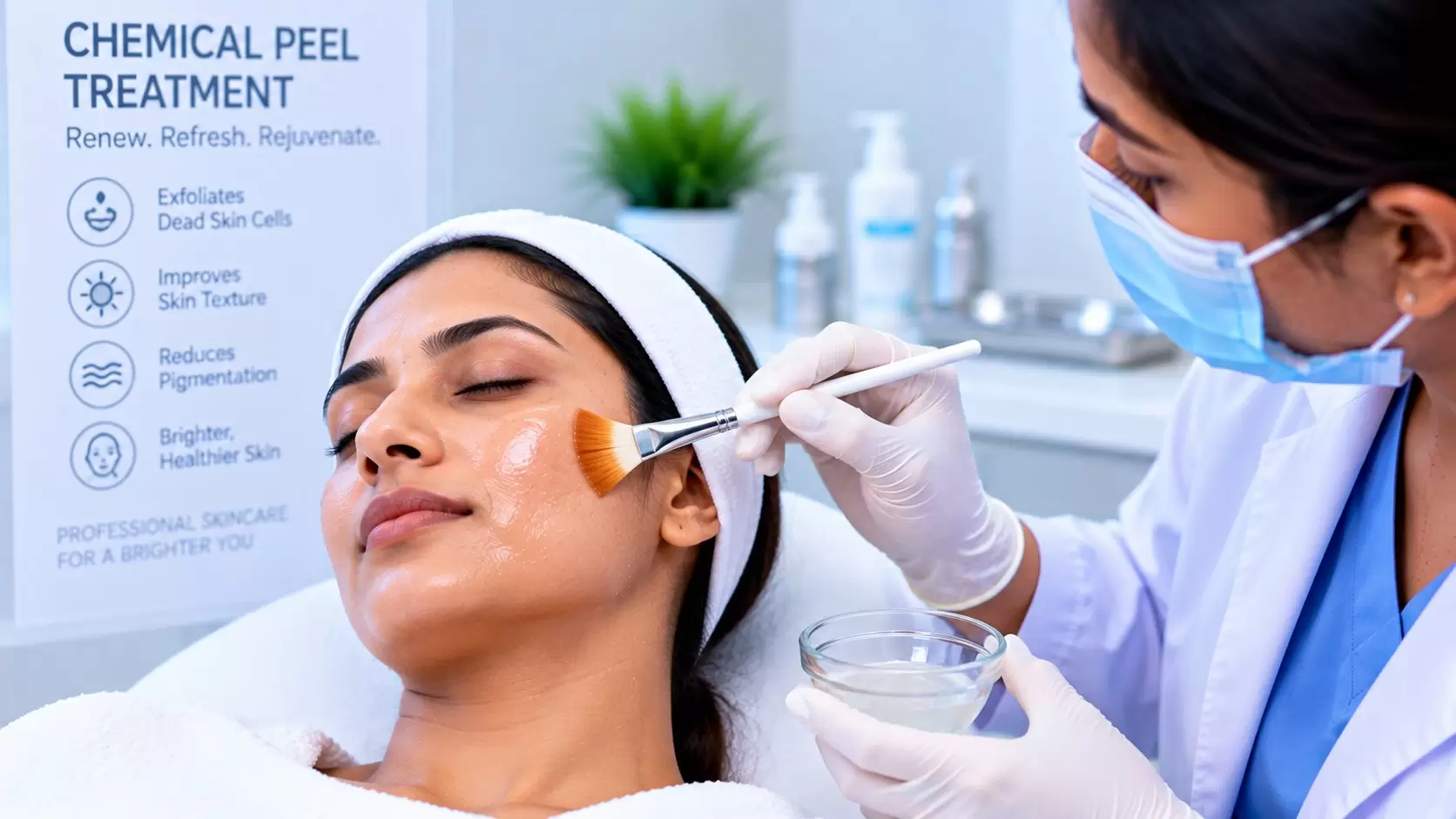
A chemical peel is a controlled skin-resurfacing procedure in which a chemical solution is applied to remove selected layers of damaged or uneven skin. The depth and peeling agent are chosen according to the skin concern, skin type and acceptable recovery time.
How does a chemical peel work?
A peeling agent creates a controlled injury at a planned depth. Damaged surface cells are shed as the skin heals, producing a smoother and often more even-looking surface. Deeper peels can also stimulate remodelling in the dermis.
DermNet describes chemical peeling as resurfacing the skin by removing layers of damaged cells. The treatment can range from very superficial epidermal exfoliation to substantially deeper injury depending on the chemical, concentration and technique.
What can chemical peels treat?
Acne
Selected superficial peels can help unclog pores, reduce excess surface oil and complement a medical acne treatment plan.
Pigmentation
Certain peels can improve uneven tone, post-inflammatory pigmentation, freckles and selected cases of melasma.
Texture and dullness
Removing damaged surface cells can make rough or dull skin appear smoother and brighter.
Photoageing
Peels can improve selected fine lines, blotchy pigmentation and other superficial signs of sun damage.
The three main depths of chemical peel
Chemical peels are commonly grouped as superficial, medium-depth and deep. Depth determines the degree of skin injury, the conditions a peel can address, recovery time and complication risk.
A superficial peel is not simply a “weaker” version of a deep peel. Each depth has different indications and should be selected according to the problem being treated.
1. Superficial chemical peels
Superficial peels act mainly within the epidermis. Common agents include glycolic acid, salicylic acid and other alpha- or beta-hydroxy acid formulations.
These peels are often used for acne-prone skin, mild pigmentation, roughness and superficial photoageing. Redness and light scaling are usually limited, and a series of treatments may be needed for the desired improvement.
2. Medium-depth chemical peels
Medium peels penetrate beyond the epidermis into the upper dermis. Trichloroacetic acid, or TCA, is a commonly used medium-depth peeling agent.
They can produce more noticeable improvement in blotchy pigmentation, superficial textural change and fine lines, but they also cause greater inflammation, peeling and downtime than superficial treatments.
3. Deep chemical peels
Deep peels create substantially deeper injury and require intensive medical supervision, wound care and recovery. Phenol-based formulations are a traditional example.
DermNet notes that phenol peels are now rarely used because of their potential toxicity and scarring risk. Deep peeling is fundamentally different from the superficial peels commonly used in routine dermatology practice.
Which chemical is used in a peel?
The peeling agent depends on the indication and desired depth. Dermatology practice can use glycolic acid and other alpha-hydroxy acids, salicylic acid, Jessner solution, TCA and other carefully selected formulations.
The same chemical can behave differently depending on concentration, number of coats, skin preparation, contact time and technique. For that reason, choosing a peel based only on the percentage printed on a product is unsafe.
What happens during a chemical peel?
The skin is first assessed and cleansed thoroughly. The chosen peeling solution is then applied evenly while the clinician watches the skin’s response and controls the exposure according to the product and technique.
Stinging, warmth or burning can occur. Some peels are neutralised after a defined endpoint, while others are self-neutralising or are removed according to their specific protocol.
After treatment, soothing skin care and strict sun protection form an important part of recovery.
Do you need to prepare your skin beforehand?
Sometimes. The AAD notes that some patients follow a pre-peel skin-care plan for two to four weeks to improve results and reduce side effects.
Preparation varies according to skin type and peel. Tell your dermatologist about current or previous isotretinoin use, acne medicines, other medicines, cold sores, a tendency to scar and previous cosmetic procedures.
What happens after a superficial peel?
Mild redness, dryness, tightness or light scaling can occur. AAD guidance describes healing after a light or “lunchtime” peel as generally taking about one to seven days.
Moisturiser and sunscreen are central to aftercare. Picking or deliberately peeling loose skin increases the risk of irritation, infection, pigment change and scarring.
How is recovery different after a medium peel?
A medium peel causes more visible redness, swelling and peeling. DermNet notes that inflammation and swelling commonly settle over about a week, although redness can persist longer.
Because the skin barrier is more significantly disrupted, aftercare and sun avoidance become even more important.
Are chemical peels safe for Indian and darker skin tones?
They can be, but treatment must be selected carefully. Darker skin has a greater tendency to develop post-inflammatory hyperpigmentation after irritation or injury.
DermNet specifically notes increased risks of dyspigmentation and abnormal scarring in Fitzpatrick skin types IV to VI. The AAD also advises choosing a dermatologist experienced in performing chemical peels in skin of colour.
What are the possible side effects?
Expected temporary effects can include redness, stinging, dryness and peeling. Depending on peel depth and individual susceptibility, complications can include prolonged redness, post-inflammatory hyperpigmentation, hypopigmentation, infection and scarring.
People with a history of herpes simplex may need specific precautions because resurfacing procedures can reactivate cold sores.
Why at-home high-strength peels can be risky
The AAD highlights an FDA warning about serious injuries from some chemical peel products used without appropriate professional supervision. Concentrated acids can cause chemical burns, scarring and permanent pigment changes when the depth is not controlled.
Professional assessment also matters because a pigmentation problem, acne-like eruption or facial redness may have a diagnosis for which a peel is not the appropriate first treatment.
How many chemical peels do you need?
The number depends on peel depth, skin concern and response. Superficial peels are often performed as a series because each treatment creates a relatively limited controlled effect.
The AAD notes that three to five light peels may be required for some desired results. Medium-depth peels are repeated less frequently, while deep peels are not used as a routine repeating treatment.
Chemical peel vs everyday exfoliating products
Skin-care products containing low concentrations of acids can gradually exfoliate the surface, but a medical chemical peel uses a planned agent, concentration and technique to create a controlled treatment effect.
They should not be considered interchangeable. Combining strong home acids with professional peels without guidance can also increase irritation and pigment risk.
Who should have a dermatologist assessment before a peel?
People with pigmentation-prone skin
Skin type and previous post-inflammatory pigmentation influence peel selection and preparation.
Active skin disease
Inflamed dermatitis, infection, active wounds or uncontrolled acne may need treatment before resurfacing.
History of scarring
Keloid or hypertrophic scarring history can change whether a peel is appropriate.
Current medicines or recent procedures
Retinoids, isotretinoin history and recent cosmetic procedures should be discussed before treatment.
For individual assessment, visit Chemical Peel Treatment in Chennai.
Frequently asked questions
What does a chemical peel do?
A chemical peel applies a controlled chemical solution to the skin to remove selected surface layers and stimulate renewal. Depending on peel depth, it can improve acne, uneven pigmentation, rough texture, sun damage and fine lines.
What are the main types of chemical peel?
Chemical peels are broadly classified as superficial, medium-depth and deep according to how deeply they injure and remodel the skin.
Does a chemical peel hurt?
Superficial peels commonly cause temporary stinging or burning. Medium and deep peels cause more intense discomfort and require more extensive pain control and recovery.
How long does chemical peel recovery take?
Recovery depends on peel depth. Superficial peels usually have mild redness and scaling over several days, while medium peels generally require about a week of more visible peeling and inflammation. Deep peels require substantially longer recovery.
Are chemical peels safe for darker skin?
Chemical peels can be used in darker skin, but the risk of post-inflammatory hyperpigmentation and other pigment changes is higher. Peel selection, preparation and aftercare should therefore be individualised by a clinician experienced with the patient’s skin type.
Dermatologist-guided peels in OMR
Considering a chemical peel? Choose the peel for your skin—not just the strongest acid.
Book a dermatologist consultation at Ram Skin Clinic in Thoraipakkam, Chennai.
#48, Second Floor, Flat E, Best Towers,Okkiampet, Thoraipakkam, OMR,
Chennai – 600097. Above Domino’s Pizza.