
Recovery Is Part of the Treatment
What to Expect After a Chemical Peel: Recovery, Peeling & Aftercare
Redness, dryness and visible flaking can be normal after a chemical peel, but the amount of downtime depends strongly on peel depth. Good aftercare protects the healing skin and helps reduce avoidable irritation, infection and pigment changes.
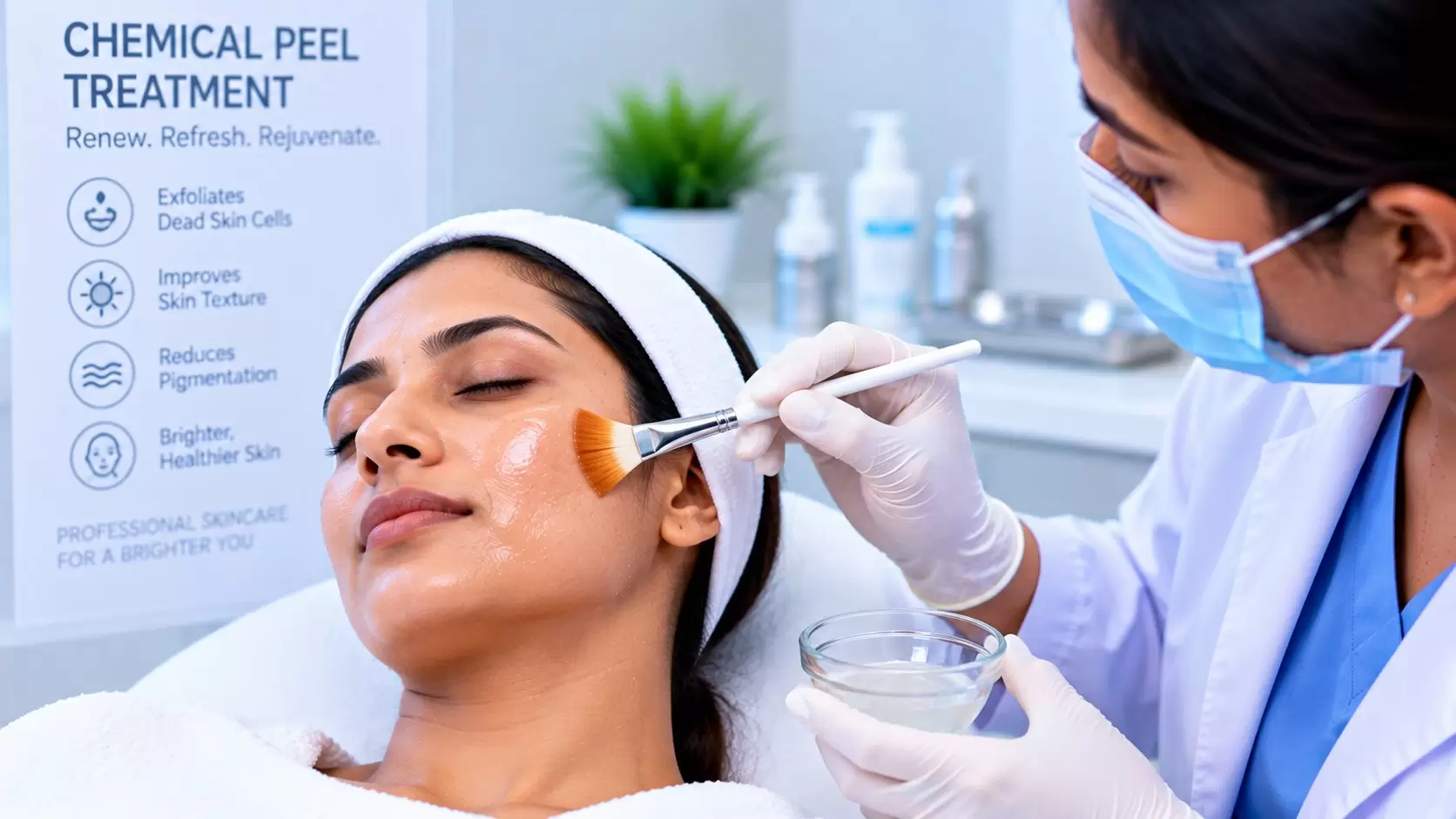
Why chemical peel recovery varies
A chemical peel creates a controlled injury to selected layers of skin. The depth of that injury determines how much redness, peeling and downtime follows. A light superficial peel affects the outer layers and usually heals quickly, while medium and deep peels produce a more substantial wound-healing response.
The American Academy of Dermatology describes healing times ranging from about 1–7 days for refreshing or superficial peels to 7–14 days for medium peels and roughly 14–21 days for deep peels. Your own recovery can differ according to the peeling agent, strength, skin type and treatment area.
What you may notice in the first 24 hours
Redness
Mild redness is common after superficial peeling. Stronger peels can produce more intense and longer-lasting redness.
Tightness or dryness
The skin may feel dry or tight as the treated surface begins its renewal process. Use only the moisturising products recommended for your recovery.
Mild stinging
A temporary warm or stinging sensation can occur after treatment. Persistent or increasing pain should be reported rather than assumed to be normal.
Swelling
Minor swelling can occur, while medium-depth treatment may cause more obvious swelling during the early recovery period.
When does the skin start peeling?
Visible flaking does not always begin immediately. After a superficial peel, the skin may first feel dry or tight before fine scaling appears. Some very light peels produce little visible peeling at all, even though treatment has taken place.
With stronger peels, peeling can be more noticeable and may be accompanied by crusting. Do not judge the effectiveness of a treatment by how dramatically the skin sheds. The intended depth and clinical result matter more than the amount of visible flaking.
Chemical peel recovery: a practical timeline
Superficial peel
Redness may be mild and short-lived. Fine scaling can develop and commonly settles within several days. Many people can continue routine activities.
Medium-depth peel
Redness and swelling are more pronounced. The skin can crust and peel over approximately one to two weeks, and planned downtime is often necessary.
Deep peel
Recovery is substantially longer and requires close medical supervision, wound care and follow-up. Deep peeling is very different from a routine superficial clinic peel.
Your individual response
Skin phototype, the condition being treated, peel formulation, concentration and previous treatments can all alter the recovery pattern.
For an overview of peel depths and how they differ, read What Is a Chemical Peel?.
How to wash your face after a chemical peel
Follow the specific instructions given after your procedure. In general, healing skin should be treated gently. Avoid aggressive rubbing, facial brushes, scrubs and exfoliating cloths. Pat rather than rub the skin dry.
The cleanser used during recovery should not add unnecessary irritation. Your dermatologist may recommend a simple gentle cleanser and adjust the routine according to peel depth and your skin condition.
Moisturiser after a chemical peel
Moisturising supports the skin barrier while it recovers. DermNet recommends lighter moisturising preparations after superficial peels and thicker moisturisers after deeper peels.
Do not assume that a product is safe simply because it is labelled natural or soothing. Fragrance, botanical extracts and active ingredients can irritate freshly treated skin. Use the post-procedure products advised for you.
Sunscreen is essential after a peel
Freshly treated skin is vulnerable to ultraviolet exposure. Sun exposure during recovery can worsen inflammation and contribute to unwanted pigment changes, particularly in pigmentation-prone skin.
DermNet advises sun protection after chemical peeling, while the AAD recommends daily sunscreen once the skin has healed. Your dermatologist may advise stricter avoidance during the initial healing phase depending on peel depth.
What skincare should you avoid?
Immediately after a peel is not the time to restart every active product in your routine. Retinoids, exfoliating acids, scrubs and other potentially irritating treatments may need to be paused until adequate healing has occurred.
The restart date depends on the peel and your skin. Follow the instructions given by your dermatologist rather than using a fixed internet timetable. Restarting strong products too early can prolong irritation and may increase the chance of post-inflammatory hyperpigmentation.
Can you wear makeup after a chemical peel?
It depends on peel depth and how intact the skin surface is. The AAD notes that makeup may be possible immediately or the next day after some superficial peels, whereas medium peels require a longer delay and deep peels longer still.
If the skin is raw, blistered, crusted or incompletely healed, cosmetic products can interfere with recovery. Use the timetable provided after your procedure.
Exercise, heat and sweating after a peel
Heat, friction and heavy sweating can make freshly treated skin feel more irritated. Your clinician may advise temporarily avoiding strenuous exercise, steam rooms, saunas, hot showers or other activities that noticeably heat the treated skin.
The required pause depends on treatment intensity. Resume activities according to your individual aftercare instructions rather than forcing a predetermined schedule.
Why you should never pick peeling skin
It can be tempting to remove flakes or crusts, but premature removal can expose incompletely healed skin. DermNet specifically warns that picking delays healing and can cause scarring.
Let shedding occur naturally. Moisturising as directed can make dryness more comfortable without mechanically stripping the skin.
When darkening happens after a peel
Temporary darkening can occur after chemical peeling. Post-inflammatory hyperpigmentation is particularly important in darker skin tones because inflammation itself can stimulate excess pigment.
If your peel was performed for acne marks or pigmentation, preventing unnecessary inflammation is especially important. See Chemical Peel for Pigmentation and Chemical Peel for Acne Marks for condition-specific information.
Warning signs that deserve medical review
Expected redness and peeling should gradually settle rather than become progressively more painful or inflamed. Contact your treating clinician if recovery does not follow the pattern you were given.
Increasing pain or burning
Symptoms that intensify rather than settle need assessment, particularly when accompanied by marked redness or swelling.
Blisters or unexpected wounds
Blistering may occur with stronger peels, but unexpected or extensive blistering should be reviewed.
Possible infection
Increasing tenderness, discharge, spreading redness or other signs of infection require prompt medical advice.
Persistent colour change
New or worsening dark or light patches should be discussed with the dermatologist, especially in pigment-prone skin.
How to support a smoother recovery
Successful aftercare is usually simple rather than aggressive: protect the healing barrier, moisturise as advised, avoid picking, limit unnecessary irritation and follow sun-protection instructions. Do not add home remedies or extra exfoliation to “speed up” peeling.
If you are considering treatment, the peel itself should be chosen with recovery in mind. Visit Chemical Peel Treatment in Chennai for information about dermatologist-guided peel selection at Ram Skin Clinic.
Frequently asked questions
How long does peeling last after a chemical peel?
After a superficial peel, fine scaling may last several days. Medium peels can involve more obvious peeling and crusting over about 7–14 days. Recovery varies with peel depth, formulation and individual skin response.
Should I peel off flaking skin after a chemical peel?
No. Allow flaking skin to shed naturally. Picking or pulling can delay healing and increase the risk of infection, pigmentation changes and scarring.
When can I wash my face after a chemical peel?
Follow the instructions given for your specific peel. When cleansing is allowed, use a gentle approach without scrubbing or exfoliating tools and pat the skin dry.
When can I use retinol or acids again after a peel?
The timing depends on peel depth and how quickly your skin barrier recovers. Do not restart retinoids, exfoliating acids or other irritating actives until your dermatologist advises that the skin has healed sufficiently.
Is it normal for skin to become darker after a chemical peel?
Temporary darkening or post-inflammatory hyperpigmentation can occur, particularly in darker or pigmentation-prone skin. Contact your dermatologist if pigmentation is significant, worsening or persistent.
Dermatologist-guided chemical peels in OMR
Considering a chemical peel? Plan the treatment and recovery together.
Book a dermatologist consultation at Ram Skin Clinic in Thoraipakkam, Chennai.
#48, Second Floor, Flat E, Best Towers,Okkiampet, Thoraipakkam, OMR,
Chennai – 600097. Above Domino’s Pizza.