
Treat the Diagnosis, Not Just the Dark Patch
Chemical Peel for Pigmentation: What It Can Treat & What to Expect
Chemical peels can improve selected superficial pigmentation by removing pigment-containing surface cells and encouraging controlled skin renewal. But “pigmentation” is not one diagnosis, and the safest peel depends on the cause, depth of pigment and skin type.
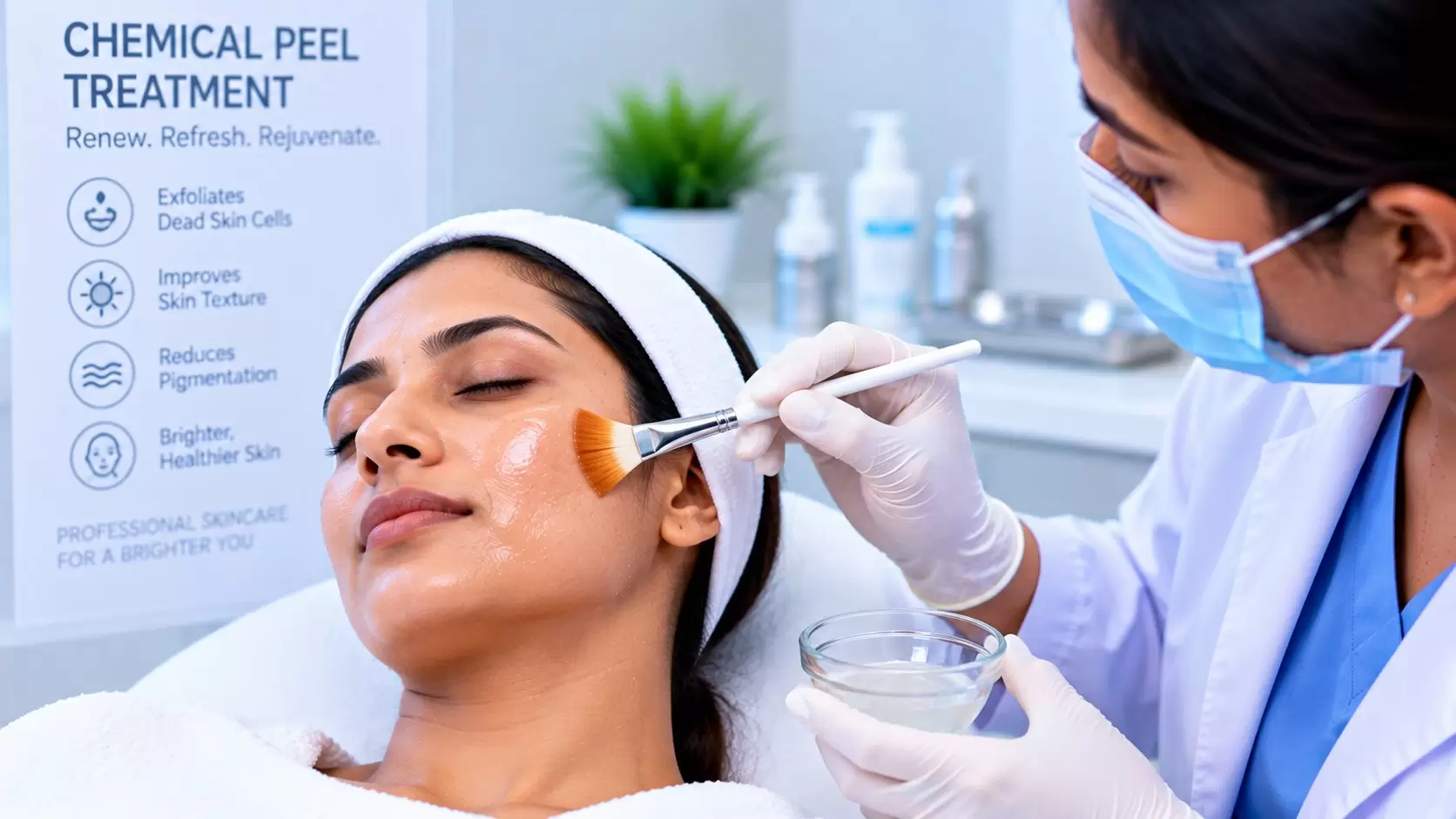
Why the type of pigmentation matters
Dark patches can result from melasma, previous acne or dermatitis, sun exposure, medications, friction and several other skin disorders. Some pigmentation is concentrated in the epidermis, while some lies deeper in the dermis.
A chemical peel mainly works by controlled resurfacing. Superficial epidermal pigment is therefore generally more accessible than deeper pigment.
Pigmentation problems that may respond to peeling
Post-inflammatory hyperpigmentation
Flat dark marks after acne, eczema, irritation or another inflammatory skin problem can improve when excess pigment is mainly epidermal.
Melasma
Chemical peels may be added to a broader melasma plan when topical treatment and photoprotection need additional support.
Freckles and superficial sun spots
Selected epidermal pigmented lesions can become lighter after superficial resurfacing.
Uneven superficial tone
Appropriately selected peels can improve blotchy surface pigmentation and roughness together.
How does a chemical peel lighten pigmentation?
The peeling solution creates a controlled injury at a planned depth. As damaged epidermal cells are shed and replaced, some excess melanin within those cells is removed as well.
DermNet notes that superficial peels reduce pigment and surface dryness, while medium-depth TCA peels can reduce blotchy pigmentation and freckling. The trade-off is that deeper treatment also creates more inflammation and greater complication risk.
Chemical peels for post-inflammatory hyperpigmentation
Post-inflammatory hyperpigmentation, or PIH, develops after skin inflammation or injury. Acne, eczema, folliculitis, burns and cosmetic irritation are common triggers.
Superficial glycolic acid and other resurfacing approaches can help selected epidermal PIH. However, DermNet cautions that physical and resurfacing treatments can also aggravate PIH by causing additional epidermal injury.
If acne marks are the main concern, read Chemical Peel for Acne Marks.
Can chemical peels help melasma?
Yes, but a peel is usually one component of treatment rather than a standalone cure. The AAD includes chemical peeling among procedures a dermatologist may add when treating persistent melasma.
Melasma is strongly influenced by light exposure and can recur. A comprehensive plan typically includes strict photoprotection and pigment-control medication, with a peel added when appropriate.
Why sunscreen is part of pigmentation treatment
Ultraviolet exposure stimulates melanin production and can darken both melasma and post-inflammatory pigmentation. DermNet recommends daily broad-spectrum SPF 50+ protection for exposed melanin-related pigmentation.
AAD guidance for melasma recommends broad-spectrum SPF 30 or higher and often favours tinted sunscreen containing iron oxide because visible light can also worsen melasma.
Which chemical peels are used for pigmentation?
Common superficial agents include glycolic acid, salicylic acid and Jessner solution. TCA can be used at different strengths and techniques, including medium-depth peeling in selected patients.
There is no universally “best” pigmentation peel. The dermatologist considers the diagnosis, skin phototype, pigment depth, previous treatment response and tendency to develop dark marks after irritation.
Glycolic acid peels
Glycolic acid is an alpha-hydroxy acid used for superficial peeling. DermNet includes glycolic acid among treatments for epidermal hyperpigmentation and notes its use in pre-peel skin preparation as well.
A series of superficial treatments is commonly used because improvement is gradual and the objective is controlled exfoliation rather than a deep wound.
Salicylic acid peels
Salicylic acid is a beta-hydroxy acid commonly used as a superficial peel, particularly when pigmentation occurs alongside oily or acne-prone skin.
Because acne inflammation itself produces new dark marks, addressing both breakouts and residual pigmentation can be more effective than treating colour alone.
What about TCA peels?
Trichloroacetic acid can produce superficial or medium-depth injury depending on concentration and technique. Medium-depth TCA can improve blotchy pigmentation, but it causes more redness, swelling and peeling and carries a higher risk of pigment disturbance.
In darker skin, deeper peeling requires particular caution because post-inflammatory hyperpigmentation and hypopigmentation are more likely after significant injury.
Why darker skin requires careful peel selection
Darker skin has more active pigment responses to inflammation. DermNet notes that Fitzpatrick skin types IV to VI have an increased risk of dyspigmentation and abnormal scarring after chemical peels.
This does not mean people with darker skin cannot have chemical peels. It means peel depth, concentration, preparation, exposure time and aftercare need to be selected conservatively and individually.
Can a peel make pigmentation worse?
Yes. Any procedure that inflames or injures the epidermis can trigger post-inflammatory hyperpigmentation. Excessive peel depth, picking, infection, inadequate sun protection and using irritating products too soon can all increase this risk.
Permanent lightening or scarring is less common but is a recognised complication of deeper or improperly performed peels.
What happens before a pigmentation peel?
The dermatologist first identifies the likely pigmentation disorder and reviews skin type, previous reactions, medications and recent cosmetic treatments. Some patients use a pre-peel regimen for several weeks.
DermNet notes that pre-treatment may include agents such as tretinoin, alpha-hydroxy acids or hydroquinone in selected patients. These are prescription or clinician-directed strategies and should not be copied without individual advice.
What happens after the peel?
Superficial peels can cause temporary redness, tightness, dryness and light scaling. Medium-depth peels create more visible inflammation and typically require longer recovery.
Moisturiser, gentle cleansing and sun protection are central to aftercare. Do not pick peeling skin, scrub it away or add strong acids and retinoids until the skin has recovered and your dermatologist advises restarting them.
How many peels are needed for pigmentation?
Superficial pigmentation treatment is commonly performed as a series. DermNet notes that the first superficial peel may produce limited change, with more significant improvement becoming evident after repeated treatments.
The number and spacing depend on the peeling agent, diagnosis and skin response. Maintenance treatment may also be needed because conditions such as melasma can recur.
Why not every dark patch should be peeled
Pigmented lesions include benign moles, seborrhoeic keratoses, post-inflammatory pigmentation, melasma and, less commonly, skin cancers. A new, changing or atypical pigmented lesion should be diagnosed before any cosmetic lightening procedure.
Peeling an undiagnosed lesion can delay appropriate assessment and may alter its appearance.
When a peel may not be the first choice
Active dermatitis or infection
Inflamed or infected skin should usually be stabilised before elective resurfacing.
Predominantly dermal pigment
Deep pigment is less accessible to superficial peeling and may require a different strategy.
High scarring tendency
A history of hypertrophic or keloid scarring changes the risk-benefit assessment.
Uncertain diagnosis
Atypical or changing dark lesions should be diagnosed before attempting cosmetic pigment removal.
For broader evaluation of dark patches, see Pigmentation Treatment in Chennai. For peel selection, visit Chemical Peel Treatment in Chennai.
Frequently asked questions
Can chemical peels remove pigmentation?
Chemical peels can improve selected superficial pigmentation by removing pigment-containing epidermal cells, but results depend on the diagnosis and pigment depth. Dermal pigmentation is generally harder to treat.
Can chemical peels help melasma?
Yes, a dermatologist may add a chemical peel to a melasma treatment plan, but melasma is chronic and recurrence is common. Sun protection and pigment-control treatment remain important.
Which chemical peel is best for pigmentation?
There is no single best peel for every pigmentation problem. Glycolic acid, salicylic acid, Jessner solution and selected TCA formulations may be used depending on diagnosis, skin phototype, pigment depth and treatment goals.
Can a chemical peel make pigmentation worse?
Yes. A peel can trigger post-inflammatory hyperpigmentation, especially in darker skin or when treatment is too aggressive. Careful selection, preparation, aftercare and sun protection reduce this risk.
How many chemical peels are needed for pigmentation?
Superficial peels are often performed as a series because improvement is gradual. The number and interval depend on the peeling agent, diagnosis, skin response and other treatments being used.
Dermatologist-guided peels in OMR
Uneven pigmentation or dark patches? Choose treatment based on the cause and depth.
Book a dermatologist consultation at Ram Skin Clinic in Thoraipakkam, Chennai.
#48, Second Floor, Flat E, Best Towers,Okkiampet, Thoraipakkam, OMR,
Chennai – 600097. Above Domino’s Pizza.