
Pigmented birthmarks
These include congenital melanocytic naevi, café-au-lait macules and other brown or blue-grey marks. Their size, pattern and number help guide assessment.
Birthmark evaluation · OMR
Birthmarks can be pigmented, vascular, flat, raised, small or extensive. Most are harmless, but identifying the type helps determine whether simple observation, follow-up or further evaluation is appropriate.
At Ram Skin Clinic in Thoraipakkam, OMR, birthmarks in children and adults are assessed by history and skin examination, with attention to colour, shape, size, location and any change over time.
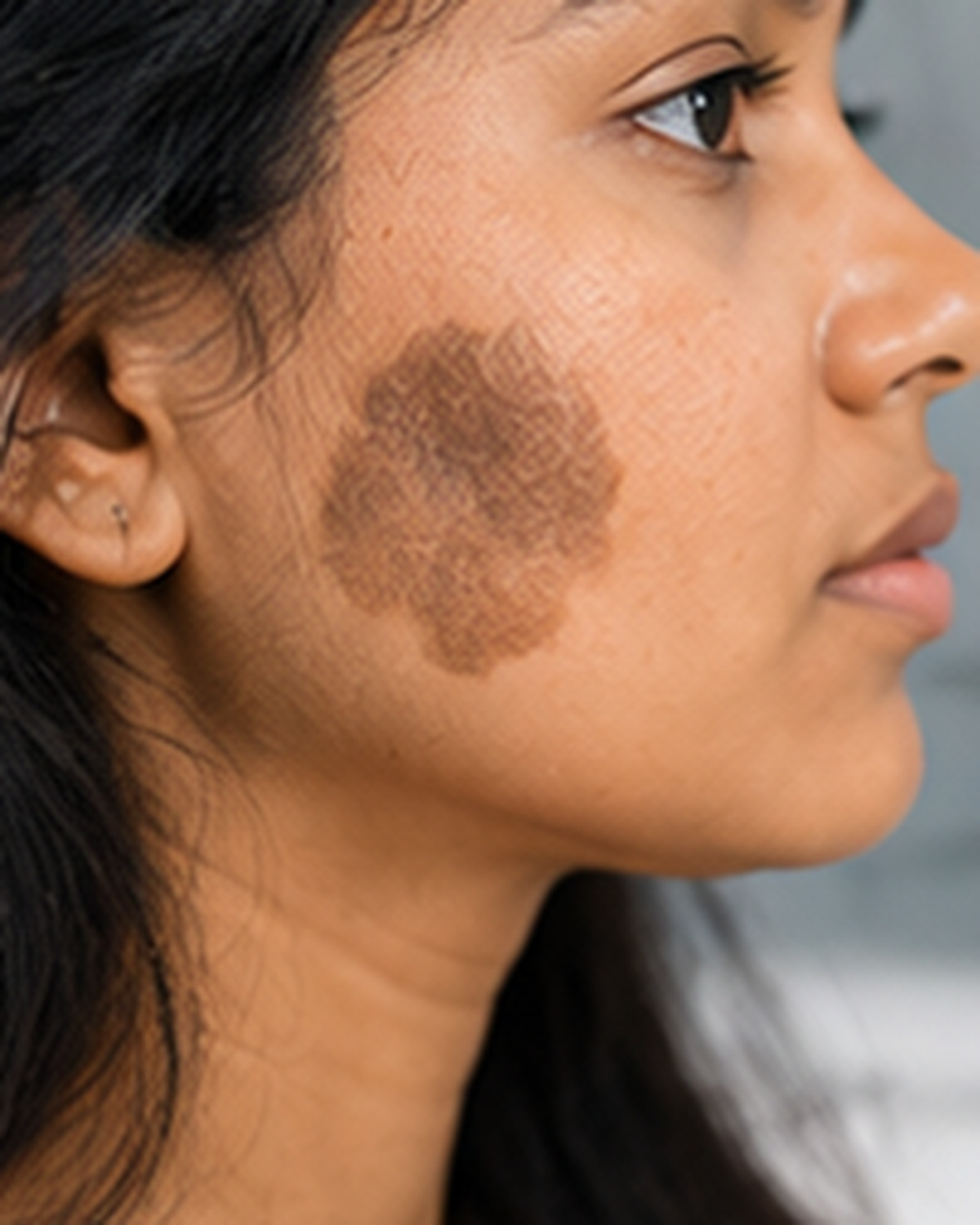
Diagnosis first
The American Academy of Dermatology notes that many birthmarks can be identified by examination alone. The type of birthmark, its location and how it behaves over time help determine whether observation or treatment is recommended.
Some birthmarks fade with time, while others persist. The goal of assessment is to understand what the mark is and whether it needs monitoring, treatment or referral for additional evaluation.
Common types
DermNet describes congenital naevi as coloured skin markings present at or shortly after birth, with melanocytic and vascular birthmarks among the common groups.
These include congenital melanocytic naevi, café-au-lait macules and other brown or blue-grey marks. Their size, pattern and number help guide assessment.
These include infantile haemangiomas, salmon patches and port-wine stains. Some fade naturally, while others persist or may need earlier specialist attention depending on location and behaviour.
Some birthmarks arise from other skin structures and may look raised, textured or follow a distinctive pattern. Examination helps separate these from acquired skin lesions.
What we look for
A dermatologist may document the size, colour, border, surface and distribution of a birthmark. Photographs can be useful for comparing changes at future visits.
Most marks are benign, but some patterns deserve closer review because location, number or rapid change can affect management.
Assessment options
Many birthmarks are diagnosed clinically. Additional testing is considered only when the appearance, number or associated findings make it useful.
For many birthmarks, careful visual and tactile examination is enough to identify the likely type and determine whether monitoring is reasonable.
Depending on the lesion, magnification or specialised light examination may help clarify pigment patterns or surface features.
If the diagnosis remains uncertain or the lesion has atypical features, a skin biopsy or referral for additional assessment may be discussed.
Children
The AAD notes that certain birthmarks, including many infantile haemangiomas, may grow for a period and later shrink, while others such as port-wine stains tend to persist. Knowing the expected course helps avoid unnecessary treatment while still identifying marks that benefit from earlier review.
When a birthmark is large, rapidly growing, ulcerated or close to an eye, nose or mouth, earlier assessment is particularly important.
When a birthmark is clearly benign and not causing a functional or cosmetic problem, periodic observation may be all that is needed.
Parents can be advised what changes to watch for and when to return sooner.
Adults
Adults may seek assessment because a birthmark has changed, becomes irritated, affects appearance or was never formally diagnosed. The same diagnosis-first approach applies.
If a long-standing pigmented lesion develops new asymmetry, colour variation, surface change or persistent symptoms, examination is appropriate.
Some birthmarks can be left alone. When removal or another procedure is considered, the reason, expected benefit, scar risk and likelihood of recurrence should be discussed first.
Follow-up
Some birthmarks need no routine follow-up after diagnosis, while others benefit from periodic review, especially if they are large, changing or located in areas where growth could cause problems.
Bring older photographs if available; comparing images can help clarify whether a birthmark has truly changed.
Cost depends on whether the visit involves examination alone or whether dermoscopic assessment, biopsy, procedure planning or referral is needed.
The next step can be discussed after the lesion is examined.
Frequently asked questions
Yes. Most birthmarks are benign, but an examination can confirm the type and whether any follow-up is needed.
No. Many birthmarks can simply be observed. Treatment is considered when there is a functional issue, repeated irritation, a concerning change or a significant cosmetic concern.
Some can. Certain vascular birthmarks, including many infantile haemangiomas, may fade over time, while others such as port-wine stains and many pigmented birthmarks usually persist.
Arrange an assessment if there is rapid growth, new colour variation, bleeding, pain, ulceration, surface change or another noticeable change that is not explained by injury.
No. Most birthmarks are diagnosed clinically. Biopsy is considered selectively when the diagnosis is uncertain or another skin condition needs to be excluded.
Related care
Book an assessment
Bring any old photographs if the mark has changed over time and note whether it has grown, bled, become painful or changed in colour or surface.

This page provides general educational information and is not a substitute for diagnosis or personalised medical advice.