
Treatment Depends on the Birthmark Type
Birthmark Removal Options: When & How Birthmarks Are Treated
There is no single “birthmark removal” procedure. Some birthmarks are best observed because they fade naturally, while others may be treated with laser, medicine or surgery. The first step is identifying exactly what type of birthmark is present.
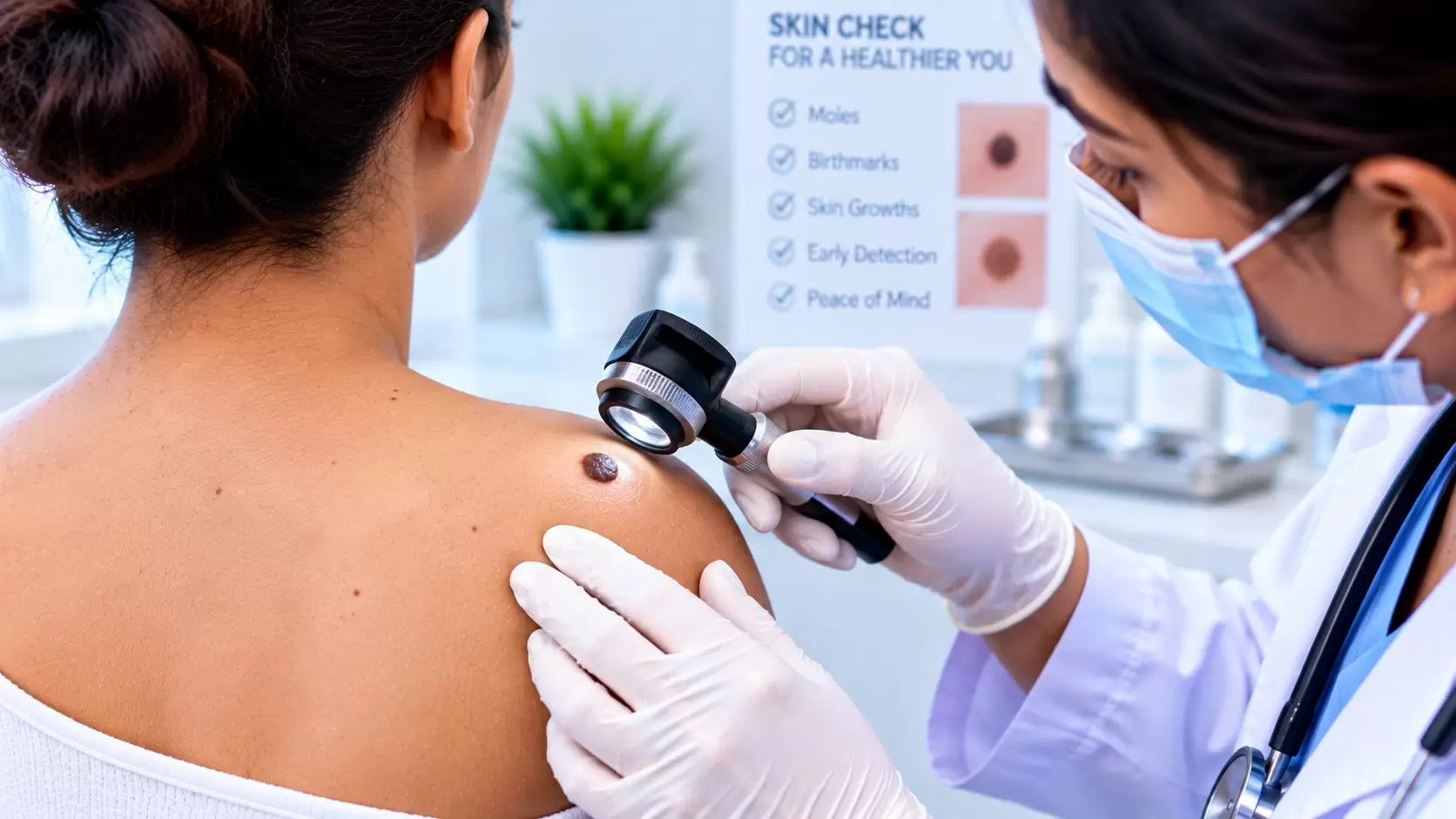
Does every birthmark need removal?
No. Most birthmarks are harmless, and several common types fade naturally. The American Academy of Dermatology lists careful observation as an appropriate option for many birthmarks.
Treatment becomes more relevant when a birthmark may interfere with function, ulcerates or causes other complications, has specific medical considerations, or creates significant cosmetic or psychosocial concern.
Birthmark treatment options at a glance
Observation
Appropriate for many harmless birthmarks, particularly those expected to fade or remain stable.
Laser therapy
Used particularly for vascular birthmarks such as port-wine stains and for selected pigmented lesions.
Medication
Propranolol and, in selected cases, topical timolol can treat infantile haemangiomas that need intervention.
Surgery
May be considered for selected congenital moles or raised birthmarks where excision is medically or cosmetically appropriate.
1. Observation: sometimes the best treatment is to wait
Some birthmarks naturally improve with age. Infantile haemangiomas commonly shrink over several years, facial salmon patches often fade, and dermal melanocytosis frequently becomes less visible during childhood.
Observation does not mean ignoring the birthmark. The dermatologist can explain which changes are expected and which should prompt reassessment.
Read Birthmarks and Age.
2. Laser treatment for vascular birthmarks
Laser therapy is an established treatment for selected vascular birthmarks. Pulsed-dye laser is widely used for port-wine stains because it targets haemoglobin within abnormal blood vessels while limiting damage to surrounding tissue.
Multiple sessions are usually required, and treatment generally aims to lighten the birthmark rather than promise complete removal. Response varies with colour, depth, location and age.
Why port-wine stains are often treated early
Port-wine stains do not normally disappear on their own. They can become darker and thicker with age. The AAD notes that early treatment tends to be more effective.
DermNet describes pulsed-dye laser as the treatment of choice for most port-wine stains, although results vary and a series of treatments may be needed.
3. Medicines for infantile haemangiomas
Many infantile haemangiomas can simply be monitored, but treatment may be recommended when rapid growth threatens vision or another function, when the lesion ulcerates, or when its size and location create other risks.
Oral propranolol can stop growth and shrink selected haemangiomas. Topical timolol may be used for some smaller superficial lesions. These medicines require clinician selection and monitoring rather than self-treatment.
Why timing matters for a growing haemangioma
Infantile haemangiomas grow fastest during early infancy. A lesion near the eye, mouth, nose or another functionally important area may therefore need assessment while it is still in its growth phase.
Waiting for spontaneous fading is appropriate for many uncomplicated haemangiomas, but not when continued growth could cause a functional or structural problem.
4. Surgery for congenital moles
Selected congenital melanocytic naevi can be removed surgically. The decision depends on the lesion’s size, site, appearance, symptoms, melanoma risk, cosmetic impact and the scar that surgery would create.
Small stable congenital naevi do not automatically require removal. DermNet notes that elective excision of a small congenital naevus is often delayed until the child is old enough to cooperate with local anaesthesia, and even then removal is not essential.
Read Birthmark vs Mole.
Can a large congenital mole be completely removed?
Large or giant congenital melanocytic naevi can be technically difficult to excise because of their size and depth. Complete removal may require staged surgery, reconstruction or specialist multidisciplinary care.
Importantly, removing visible skin does not necessarily eliminate all melanoma risk in very large congenital naevi because melanocytes can also occur deeper or in other tissues.
5. Laser treatment for pigmented birthmarks
Some pigmented birthmarks can be lightened with pigment-targeting lasers. The result depends on the type of lesion, depth of pigment and skin tone, and recurrence can occur.
Laser is not appropriate for every melanocytic lesion. DermNet advises that atypical pigmented lesions should be evaluated before laser treatment so a suspicious lesion is not cosmetically treated without diagnosis.
Why diagnosis must come before cosmetic laser
A laser can alter the appearance of pigment without providing tissue for histopathology. If a lesion has suspicious features, the priority is diagnosis rather than cosmetic lightening.
Changing moles, lesions with irregular colour or borders, spontaneous bleeding and other concerning features should therefore be assessed before any removal procedure.
6. Camouflage and cosmetic cover
Not every visible birthmark needs a procedure. Camouflage makeup can reduce the visibility of discoloured skin and may be useful for older children and adults who prefer a non-invasive option.
This can be considered alone or while deciding whether procedural treatment is worthwhile.
Can birthmarks be removed without a scar?
No treatment can guarantee scar-free removal. Surgical excision necessarily replaces the birthmark with a surgical scar. Laser therapy can cause temporary bruising or swelling and, less commonly, lasting pigment or texture changes and scarring.
Skin of colour requires particularly careful laser selection and settings because unwanted hyperpigmentation or hypopigmentation can occur.
Will one treatment session be enough?
Often not. Vascular laser treatment commonly requires a series of sessions. Pigmented birthmarks treated with laser may also need multiple sessions, and some can recur.
Surgery can remove selected lesions in one procedure, but larger lesions may require staged treatment. The expected number of sessions should be discussed only after the birthmark is examined.
How a dermatologist chooses the right treatment
Birthmark type
Vascular, melanocytic and other developmental birthmarks respond to different treatments.
Age and natural history
A lesion likely to fade may be observed, while early treatment may benefit selected persistent or rapidly growing vascular marks.
Size and location
Birthmarks near important structures or covering a large area require different planning from small isolated marks.
Skin tone and treatment risk
Laser-related pigment change and scarring risk must be considered, particularly in darker skin tones.
When should treatment be considered for appearance?
A medically harmless birthmark can still have a meaningful cosmetic or psychosocial impact. The AAD includes very large or visible birthmarks among situations where treatment may be discussed.
The decision should balance expected improvement against pain, repeated visits, anaesthesia requirements, pigment change and scarring. There is no obligation to remove a harmless birthmark simply because it is visible.
Start with assessment, not a removal method
The same procedure is not appropriate for a port-wine stain, infantile haemangioma, café-au-lait macule and congenital melanocytic naevus. Correct identification determines whether observation, medication, laser or surgery makes sense.
For individual evaluation, visit Birthmark Assessment in Chennai.
Frequently asked questions
Can all birthmarks be removed?
No. Some birthmarks fade naturally, some can be lightened or reduced, and others may be surgically removed. Complete removal is not always possible or necessary.
Can laser treatment remove a port-wine stain?
Pulsed-dye laser is commonly used to lighten port-wine stains. Multiple sessions are often needed, and complete clearance is not guaranteed.
How are infantile haemangiomas treated?
Many can be observed. Haemangiomas that threaten function, ulcerate or have other complications may be treated with medicines such as propranolol; topical timolol can be used for selected superficial lesions.
Can congenital moles be removed?
Yes, selected congenital melanocytic naevi can be surgically removed. The decision depends on size, location, appearance, symptoms, melanoma risk, cosmetic considerations and the scar expected from surgery.
Will birthmark treatment leave a scar?
It can. Surgery necessarily leaves a scar, while lasers and other procedures can cause pigment changes, textural changes or scarring. The risk depends on the birthmark, treatment and skin type.
Visit us in OMR
Considering birthmark treatment? Identify the type before choosing the procedure.
Book a dermatologist consultation at Ram Skin Clinic in Thoraipakkam, Chennai.
#48, Second Floor, Flat E, Best Towers,Okkiampet, Thoraipakkam, OMR,
Chennai – 600097. Above Domino’s Pizza.