
Nail Warning Signs
When to See a Dermatologist for Nail Changes
Many nail changes are harmless or related to everyday trauma, but persistent changes in colour, texture, shape or attachment can also signal infection, inflammatory nail disease or—less commonly—a nail tumour. Knowing which changes deserve assessment can prevent delayed diagnosis.
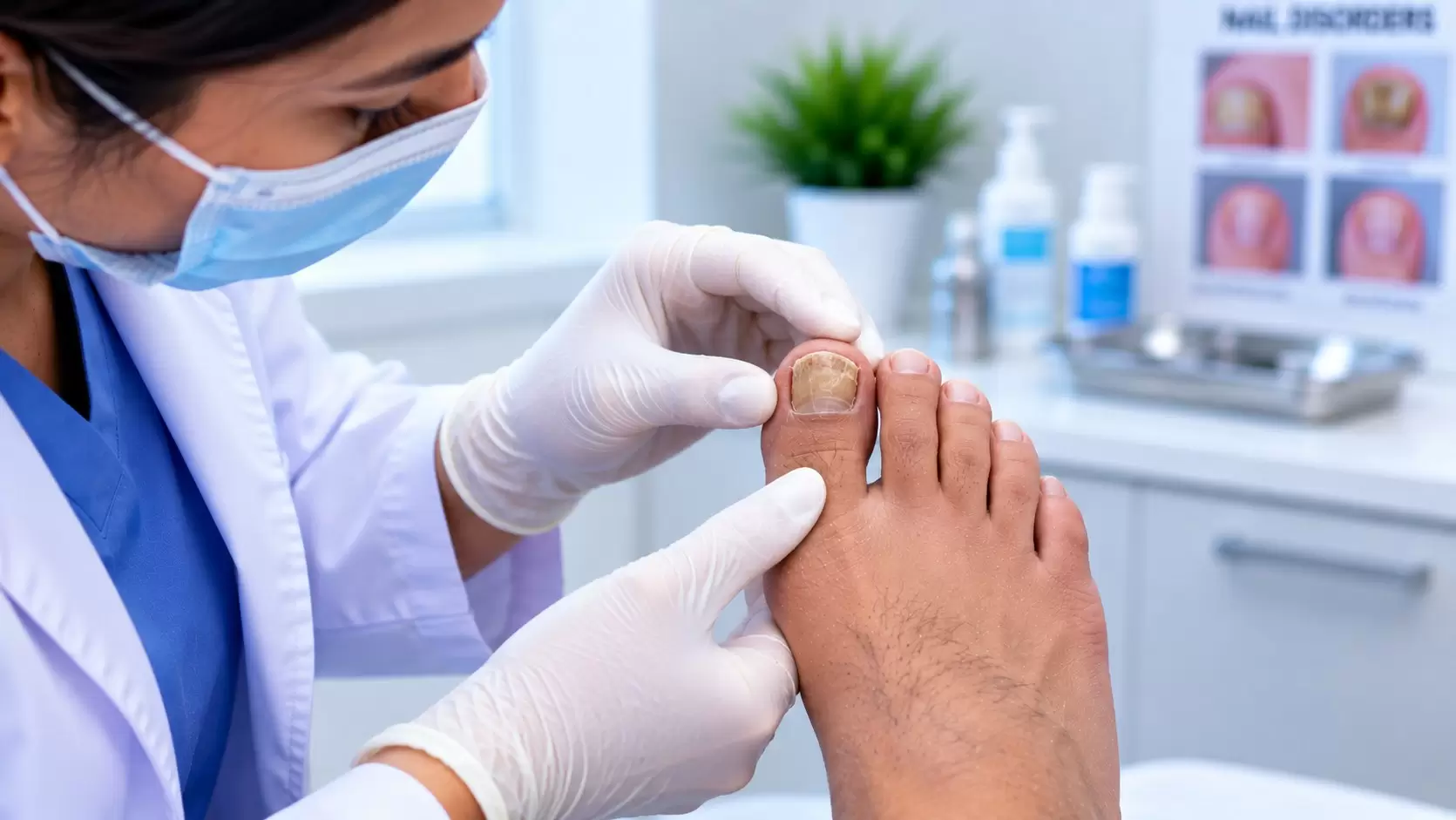
Why persistent nail changes should not be ignored
The American Academy of Dermatology advises that changes in nail colour, texture or shape can sometimes be signs of disease. Dermatologists assess the nail plate, nail bed, matrix and surrounding skin to determine whether a change is harmless, infectious, inflammatory or needs further testing.
DermNet also notes that nail changes can be an early sign of skin diseases such as psoriasis or lichen planus. The pattern across one nail versus several nails often provides important clues.
Nail changes that deserve assessment
New or changing dark streak
Many pigmented nail bands are benign, but a new or evolving brown-black band should be examined to exclude nail-unit melanoma.
Nail lifting
Onycholysis can occur with fungal infection, psoriasis, trauma, chemicals and other conditions. Persistent lifting deserves diagnosis.
Redness, swelling or pus
Inflammation around a nail can be paronychia. Pain, pus or spreading redness may indicate infection requiring treatment.
Progressive distortion
Persistent thickening, crumbling, pitting, grooves or destruction may reflect fungal disease, psoriasis, eczema, lichen planus or other nail disorders.
1. A new or changing dark nail streak
A brown or black longitudinal band is called melanonychia. Benign pigmentation is common, especially in people with darker skin tones, and not every band is melanoma.
However, DermNet describes concerning evolution such as progressive widening, irregular colour or borders, pigment extending onto the surrounding nail fold, nail distortion, a lump, ulceration or bleeding. The AAD recommends assessment of a new or changing dark streak.
2. A nail that starts lifting
Onycholysis is separation of the nail plate from the nail bed. It can result from repetitive trauma, manicures, prolonged water exposure, psoriasis, fungal infection, medicines and several other causes.
DermNet notes that the detached portion does not reattach. Treatment aims to identify the cause and allow new nail to grow forward while remaining attached.
3. Redness, swelling, tenderness or pus
Inflammation of the skin around a nail is called paronychia. Acute paronychia may follow a break in the skin from biting, picking, manicuring, artificial nails or an ingrown toenail.
Seek prompt medical assessment for significant pain, pus, spreading redness or fever. People with diabetes, poor circulation or reduced immunity should be particularly cautious because infections can become more serious.
4. Thick, yellow, crumbly or distorted nails
These changes often raise suspicion for fungal nail infection, but psoriasis, trauma and other nail disorders can look similar. Treating every thick yellow nail as fungus can lead to months of ineffective therapy.
A dermatologist may take nail clippings or scrapings for fungal testing when the diagnosis is uncertain. Read Nail Fungus vs Nail Psoriasis.
5. Persistent pitting, ridging or grooves
Fine longitudinal ridges can be harmless, but irregular pitting and more pronounced nail dystrophy can occur with psoriasis, eczema and other inflammatory disorders. DermNet notes that lichen planus may thin, groove, ridge, darken or lift the nail plate.
If several nails change or there are associated skin, scalp or joint symptoms, a dermatology assessment can help identify a wider inflammatory condition.
6. Nails that suddenly become curved or clubbed
Clubbing describes progressive downward curvature of the nails together with enlargement of the fingertips. The AAD notes that while curved nails can sometimes be familial, new clubbing can be associated with diseases affecting organs such as the lungs, heart, liver or gastrointestinal tract.
New clubbing therefore deserves medical assessment rather than cosmetic treatment alone.
7. A nail change that does not grow out
Bruising or external staining generally moves toward the nail tip as the nail grows. A fixed or expanding area, persistent lump, recurrent bleeding or progressive destruction requires assessment.
Nail growth is slow, so movement takes time, but photographs taken at intervals can sometimes help document whether a mark is moving with the nail plate or changing independently.
8. A lump, wart-like growth or persistent sore around a nail
Most growths around nails are benign, but tumours can occur in the nail unit. DermNet notes that both melanoma and squamous cell carcinoma can damage or distort the nail plate.
A persistent growth, ulcer, bleeding lesion or unexplained nail destruction should be examined rather than repeatedly treated as a wart or infection without confirmation.
9. Brittle nails that persist despite care
Repeated wet work, detergents, manicures and trauma commonly cause brittle nails. If fragility continues despite protection and moisturising—or occurs with other nail, skin or health changes—assessment can help identify secondary causes.
What will a dermatologist check?
The assessment usually starts with the history: when the change began, whether one or several nails are involved, pain or itching, trauma, occupation, wet work, nail cosmetics, medicines and associated skin or joint symptoms.
The dermatologist then examines the nail plate, nail folds, surrounding skin and other nails. Depending on the suspected cause, investigations may include nail clippings or scrapings for fungal testing, bacterial testing, blood tests for selected systemic causes, dermoscopy of pigmented nail lesions or—when clinically necessary—a nail biopsy.
When is a nail problem urgent?
Seek prompt medical attention for rapidly spreading redness, severe throbbing pain, significant pus, fever, red streaking up a finger or toe, or severe swelling. These can indicate a spreading infection.
A rapidly changing pigmented nail lesion, recurrent unexplained bleeding or an enlarging mass should also be assessed without unnecessary delay.
When monitoring may be reasonable
A minor nail bruise with a clear injury history, a small white spot after trauma or mild brittleness from repeated wet work may simply grow out with time and protective care.
Monitor for progression rather than repeatedly manipulating the nail. If the change persists, worsens, spreads to other nails or develops warning features, arrange an examination.
Get the diagnosis before starting long-term treatment
Nail disorders grow out slowly, so treatment often takes months. Confirming the diagnosis first is particularly useful before prolonged antifungal treatment or when psoriasis, infection and trauma are difficult to distinguish visually.
For a complete nail assessment, visit Nail Disorder Treatment in Chennai. You can also read Common Nail Disorders.
Frequently asked questions
When should I see a dermatologist for a nail change?
Persistent or unexplained changes in nail colour, shape or texture should be assessed, especially a new or changing dark streak, nail lifting, painful swelling, infection, progressive thickening or destruction.
Should a dark line in a nail be checked?
A new or changing dark longitudinal band should be examined. Many dark bands are benign, particularly in darker skin tones, but nail-unit melanoma is an important diagnosis to exclude.
Does a lifted nail need treatment?
Nail lifting can result from trauma, psoriasis, fungal infection and other causes. The detached portion does not reattach, so identifying the cause helps healthier new nail grow attached.
When is redness around a nail concerning?
Painful redness, swelling, pus, spreading redness or fever can indicate infection and should be assessed promptly, particularly in people with diabetes or reduced immunity.
Can nail changes be a sign of another disease?
Yes. Some nail changes can accompany psoriasis, eczema, lichen planus, thyroid disease and other conditions. Nail findings need to be interpreted with the person’s overall symptoms and examination.
Visit us in OMR
Concerned about a nail change? Get the diagnosis before treating it.
Book a dermatologist consultation at Ram Skin Clinic in Thoraipakkam, Chennai.
#48, Second Floor, Flat E, Best Towers,Okkiampet, Thoraipakkam, OMR,
Chennai – 600097. Above Domino’s Pizza.