
Similar Nails, Different Causes
Nail Fungus vs Nail Psoriasis: How to Tell the Difference
Fungal nail infection and nail psoriasis can both make nails thick, discoloured, brittle, crumbly or lifted. Because their appearances overlap—and the two conditions can occur together—testing may be needed before treatment.
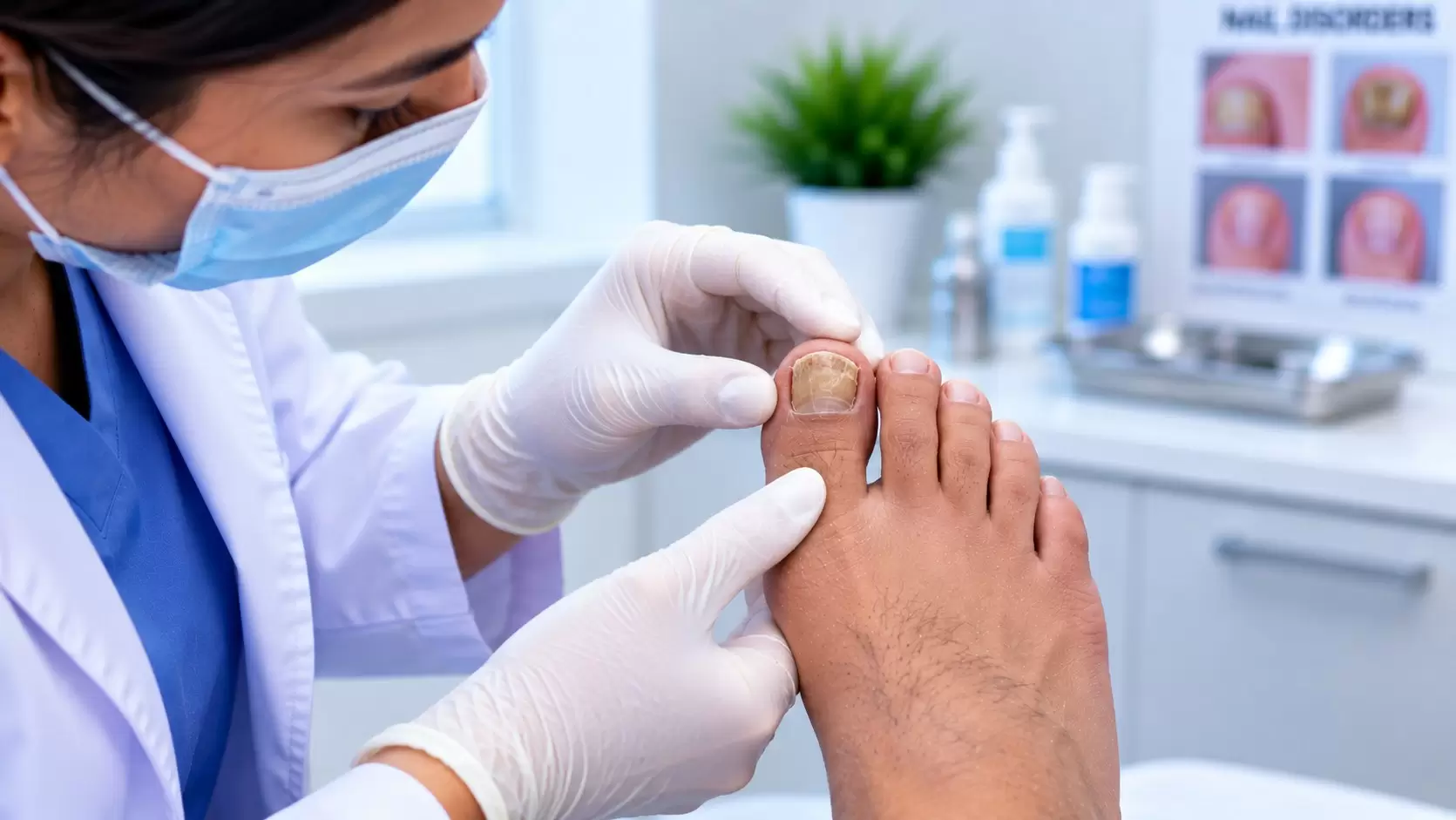
Why nail fungus and psoriasis are often confused
Onychomycosis is a fungal infection of the nail. Nail psoriasis is inflammatory psoriatic disease involving the nail matrix, nail bed or surrounding structures. Despite different causes, both can produce thickened, discoloured and distorted nails.
The American Academy of Dermatology notes that nail psoriasis or nail injury can look like nail fungus, which is why a dermatologist may test nail material before treating presumed fungal disease.
Nail fungus vs psoriasis: quick comparison
Nail fungus
Common signs include yellow, white or brown discoloration, thickening, brittle or crumbling nail, debris beneath the nail and separation from the nail bed.
Nail psoriasis
Typical features include irregular pitting, oil-drop or salmon-patch change, onycholysis, thickening beneath the nail, splinter haemorrhages and crumbling.
Other clues
Fungal infection is more common in toenails and may coexist with athlete’s foot. Psoriasis elsewhere on the skin, scalp, joints or other nails supports nail psoriasis.
Confirmation
Fungal microscopy, culture or other testing can help confirm onychomycosis. Nail psoriasis is usually diagnosed clinically, with biopsy only occasionally required.
What nail fungus can look like
The AAD describes fungal nails as potentially thickened, brittle, cracked, split, crumbly, misshapen or lifted. Colour may change to yellow, brown, white or other shades.
Toenails are affected more often than fingernails. Infection may involve one nail initially and can spread to additional nails over time.
What nail psoriasis can look like
Nail psoriasis can affect the nail matrix and nail bed. Matrix involvement may produce pitting, white spots, ridges, transverse lines and crumbling. Nail-bed disease can cause oil-drop or salmon-patch colour, lifting, thickening beneath the nail and splinter haemorrhages.
Nail psoriasis may occur even without obvious psoriasis elsewhere, although skin psoriasis and psoriatic arthritis provide useful diagnostic clues.
Is nail pitting more suggestive of psoriasis?
Irregular nail pitting is a classic feature of nail psoriasis, particularly when several pits affect the nail surface. However, pitting is not exclusive to psoriasis and can occur with other inflammatory nail disorders.
Diagnosis therefore considers the entire nail pattern, other nails and any skin or joint findings rather than relying on one sign.
Does a yellow thick nail automatically mean fungus?
No. Yellowing, thickening, crumbling and nail lifting can occur with both fungal infection and psoriasis. Trauma and other nail diseases can create a similar appearance.
DermNet specifically lists psoriasis among the important conditions that can mimic onychomycosis. Read Nail Colour Changes: Causes & What They Can Mean.
Can nail fungus and psoriasis occur together?
Yes. A psoriatic nail can also develop onychomycosis. DermNet recommends fungal microscopy and culture in suspected nail psoriasis because fungal infection may precede or complicate psoriatic nail dystrophy.
This matters particularly before treatment that affects the immune system, because an untreated fungal infection may require separate management.
How is nail fungus confirmed?
A dermatologist can examine the nails and may collect a clipping, scrape the nail surface or take debris from beneath the nail. Laboratory examination helps confirm whether fungus is actually present.
Testing is valuable because antifungal treatment can take months, and oral medicines have potential interactions and adverse effects. Confirming the diagnosis helps avoid unnecessary treatment.
How is nail psoriasis diagnosed?
Nail psoriasis is often diagnosed clinically when characteristic nail findings occur with skin psoriasis or psoriatic arthritis. Examination of the scalp, elbows, knees and other common psoriasis sites may provide additional clues.
When only one nail is abnormal or the diagnosis remains uncertain, additional testing may be needed. Nail biopsy is reserved for selected cases because it can itself cause permanent nail deformity.
How treatment differs
Fungal nail infection
Treatment may involve prescription topical or oral antifungal medication depending on severity, nail involvement, health conditions and the organism involved.
Nail psoriasis
Treatment may include topical anti-inflammatory or vitamin-D-related medicines, injections around the nail in selected cases, or systemic psoriasis treatment when disease is more extensive.
Both conditions improve slowly because a healthier nail must grow forward. Fingernails generally grow out faster than toenails.
Why nail care matters for psoriasis
The AAD recommends keeping psoriatic nails short, protecting them during manual and wet work, avoiding scraping material from beneath lifted nails and minimising trauma.
Trauma can aggravate psoriasis and can also increase the chance of secondary infection in an already damaged nail.
When should you see a dermatologist?
Arrange an assessment when a nail becomes persistently thick, discoloured, crumbly or lifted; when several nails are changing; or when self-treatment for presumed fungus has not worked.
Also seek review if you have psoriasis with new nail changes, joint pain or stiffness, because nail psoriasis is associated with psoriatic arthritis.
For assessment, visit Nail Disorder Treatment in Chennai. For broader psoriasis care, see Psoriasis Treatment in Chennai.
Frequently asked questions
How can I tell nail fungus from nail psoriasis?
Both can cause thickening, discoloration, crumbling and nail lifting. Psoriasis is more suggestive when there is pitting, oil-drop or salmon-patch change, or psoriasis elsewhere, while fungal infection may show characteristic fungal patterns. Testing is often needed because appearance overlaps.
Can nail psoriasis and nail fungus occur together?
Yes. Onychomycosis can coexist with nail psoriasis, so fungal microscopy or culture may be appropriate when fungal infection is suspected.
Does every yellow thick nail mean fungus?
No. Psoriasis, trauma and other nail disorders can mimic fungal nail infection. Diagnostic confirmation can prevent unnecessary antifungal treatment.
How is nail fungus confirmed?
A dermatologist may take nail clippings, scrapings or material from beneath the nail for microscopy and other fungal testing before selecting treatment.
Do nail fungus and nail psoriasis need different treatment?
Yes. Fungal nail infection requires antifungal treatment, while nail psoriasis is treated as inflammatory psoriatic disease. When both coexist, both conditions may need treatment.
Visit us in OMR
Fungus or nail psoriasis? Confirm the cause before treating it.
Book a dermatologist consultation at Ram Skin Clinic in Thoraipakkam, Chennai.
#48, Second Floor, Flat E, Best Towers,Okkiampet, Thoraipakkam, OMR,
Chennai – 600097. Above Domino’s Pizza.