
Understanding Nail Changes
Common Nail Disorders: Causes, Signs & When to Seek Care
Changes in nail colour, thickness, texture or shape can result from infection, inflammation, trauma or skin disease. Some are harmless, while persistent or painful nail changes deserve a dermatologist’s assessment.
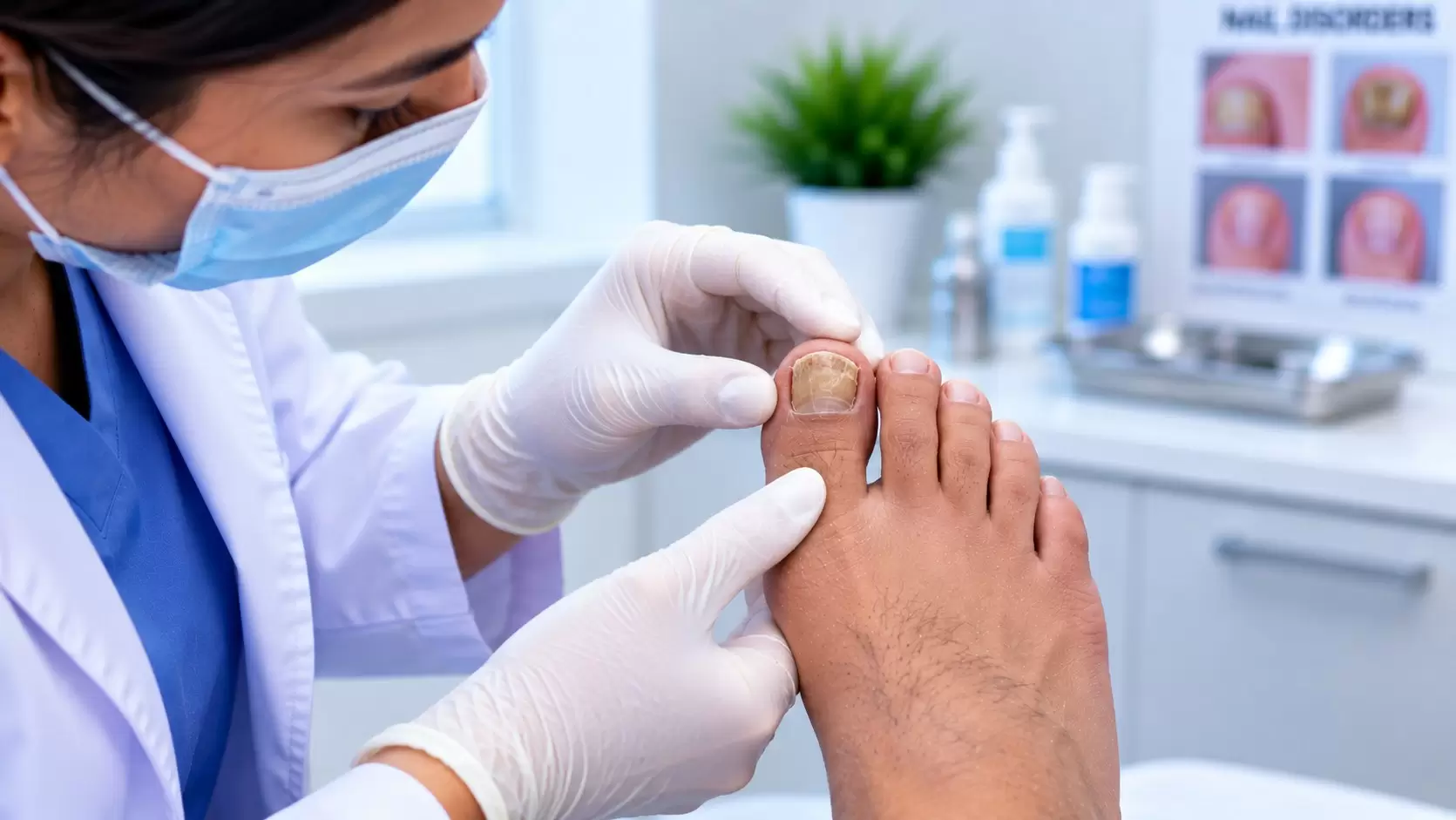
Why nail changes need the right diagnosis
Nails are made predominantly of keratin, but their appearance is influenced by the nail matrix, nail bed and surrounding skin. Disease in any of these structures can change the nail plate.
DermNet notes that nail changes may be the first sign of conditions such as psoriasis or lichen planus. Fungal disease, trauma and eczema can also produce overlapping appearances, so treatment should target the diagnosis rather than the appearance alone.
Common types of nail disorders
Fungal nail infection
Onychomycosis can cause discoloration, thickening, crumbling, brittleness or lifting of the nail from the nail bed.
Nail psoriasis
Psoriasis can cause pitting, nail lifting, yellow or salmon-coloured areas, thickening beneath the nail and crumbling.
Brittle or splitting nails
Repeated water exposure, detergents and trauma can contribute to splitting, peeling and breakage of the nail plate.
Paronychia
Inflammation around the nail fold can cause redness, swelling, tenderness and sometimes pus. Acute and chronic forms have different causes.
1. Fungal nail infection (onychomycosis)
Fungal nail infection can affect fingernails or toenails, although toenails are commonly involved. Nails may become yellow, white or brown, thickened, brittle, misshapen or separated from the nail bed.
Not every abnormal-looking nail is fungal. Psoriasis, trauma and other disorders can mimic onychomycosis, so fungal testing may be appropriate before prolonged treatment.
2. Nail psoriasis
Psoriasis can involve the nail matrix or nail bed. Characteristic changes include pitting, onycholysis (lifting), subungual hyperkeratosis, ridging, splinter haemorrhages and yellow-orange “oil drop” or salmon-patch changes.
Nail psoriasis can occur with skin or joint psoriasis, but it can occasionally be the main visible manifestation. Fungal infection can also coexist, which is why testing may be needed when the diagnosis is uncertain.
3. Brittle, peeling or splitting nails
Brittle nails can split into layers at the free edge or develop longitudinal cracks. Repeated wetting and drying, detergents, solvents, manicures and mechanical trauma are common contributors.
The American Academy of Dermatology recommends protecting nails from prolonged water exposure and moisturising after hand washing. Persistent brittleness may warrant assessment for associated skin disease or other contributing factors.
4. Paronychia: inflammation around the nail
Paronychia affects the skin around the nail fold. Acute cases often develop rapidly with pain, redness and swelling and may involve bacterial infection after minor trauma.
Chronic paronychia tends to persist and is often associated with repeated moisture exposure, irritants and disruption of the cuticle barrier. Treatment depends on whether infection, inflammation or both are present.
5. Ingrown toenails
An ingrown toenail occurs when the edge of the nail presses into the surrounding skin, commonly affecting the big toe. Pain, redness and swelling can develop, and secondary infection is possible.
Cutting toenails straight across and wearing properly fitting shoes can reduce risk. The AAD advises against digging out a painful or infected ingrown nail yourself.
6. Nail lifting (onycholysis)
Onycholysis means separation of the nail plate from the nail bed. It can occur with psoriasis, fungal infection, trauma, irritants and several other conditions.
The separated portion generally does not reattach; improvement is seen as a new nail grows forward after the underlying cause is addressed.
7. Nail ridges, pits and grooves
Fine longitudinal ridges can become more noticeable with age and are often harmless. In contrast, irregular pitting may occur with psoriasis or eczema, while transverse grooves known as Beau lines can follow temporary interruption of nail growth.
The pattern across one nail versus many nails and the presence of skin symptoms help determine whether investigation is needed.
8. Nail colour changes
Nails can change colour for many reasons, including fungal infection, trauma, nail products, inflammatory disease and pigmentation in the nail matrix.
A new or changing dark longitudinal band—particularly when affecting a single nail or extending pigment onto surrounding skin—needs assessment because melanoma of the nail unit is an important, although uncommon, diagnosis to exclude.
9. Nail changes from trauma
Repeated pressure from footwear, sports, manicures or direct injury can cause bruising, lifting, ridging or thickening. Toenails are especially exposed to repetitive shoe trauma.
A blood collection beneath the nail after an injury may appear dark. If the pigment does not move outward as the nail grows, or the history is unclear, it should be examined rather than assumed to be bruising.
Healthy nail-care basics
Keep nails clean and trimmed
Trim fingernails nearly straight across and toenails straight across, then smooth rough edges with a file.
Protect from water and chemicals
Use gloves for prolonged wet work or cleaning and moisturise hands and nails afterward.
Leave cuticles intact
Cuticles help protect the nail root. Cutting or aggressively pushing them back can increase infection risk.
Reduce fungal exposure
Keep feet dry and use footwear in communal showers or pool areas to reduce exposure to fungi.
When should you see a dermatologist?
The AAD advises assessment when a nail changes in colour, texture or shape, particularly when the change is persistent. Pain, swelling, drainage, nail lifting, thickening, unexplained destruction or a new dark streak also deserve evaluation.
For diagnosis and treatment, visit Nail Disorder Treatment in Chennai.
Frequently asked questions
What are common nail disorders?
Common nail problems include fungal nail infection, nail psoriasis, brittle or splitting nails, paronychia, ingrown toenails, nail lifting and changes caused by trauma.
Does every thick or yellow nail mean fungus?
No. Fungal infection is common, but psoriasis, trauma and other nail disorders can also cause thickening, discoloration or crumbling.
Can psoriasis affect only the nails?
Yes. Nail psoriasis can occur even without obvious psoriasis elsewhere, although skin or joint psoriasis is commonly associated.
Why do nails split or become brittle?
Repeated wetting and drying, detergents, trauma, nail cosmetics and some skin or medical conditions can contribute to brittle or splitting nails.
When should a nail change be checked?
Seek assessment for persistent unexplained changes in nail colour, texture or shape, pain or swelling, nail lifting, a new dark streak, or changes that do not grow out normally.
Visit us in OMR
Noticed persistent nail changes? Find out what is causing them.
Book a dermatologist consultation at Ram Skin Clinic in Thoraipakkam, Chennai.
#48, Second Floor, Flat E, Best Towers,Okkiampet, Thoraipakkam, OMR,
Chennai – 600097. Above Domino’s Pizza.