
Dermatology Procedures
Radiofrequency Cautery Procedure: What to Expect
Understanding the assessment, anaesthesia, treatment and healing stages can make a minor dermatologic electrosurgical procedure easier to prepare for.
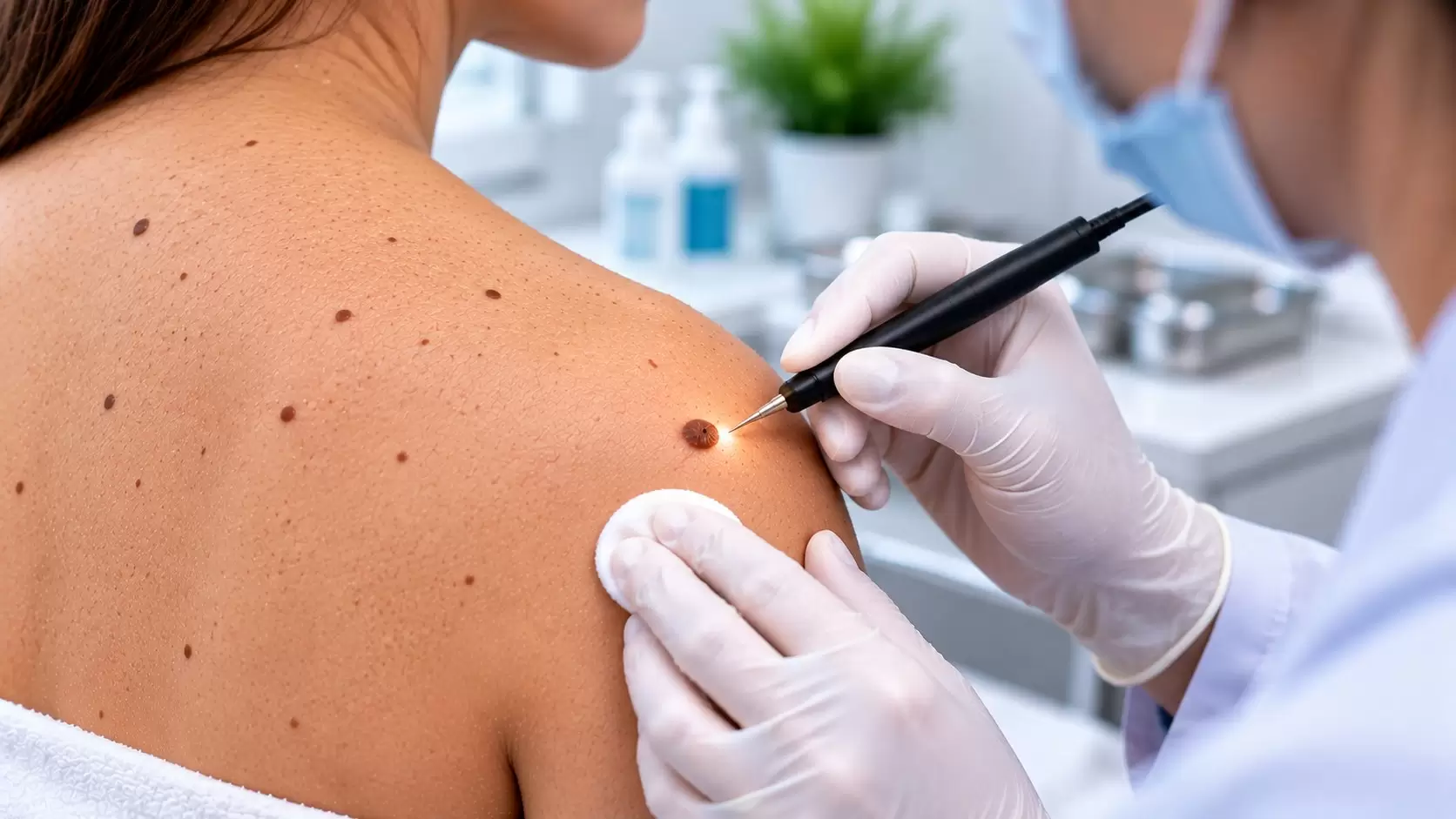
Before treatment
Step 1: Assessment and diagnosis
The procedure begins before the device is switched on. The dermatologist examines the lesion, considers its history, location and depth, and decides whether a destructive or cutting electrosurgical technique is appropriate. A changing, irregular, pigmented or diagnostically uncertain lesion may require tissue to be preserved for histopathology instead.
Tell your dermatologist about medical conditions, allergies, medicines and implanted electronic devices such as a pacemaker or defibrillator. Electrosurgery can require additional precautions in people with cardiac implantable electronic devices.
For an overview of suitable lesions, see Radiofrequency Cautery for Skin Conditions.
During treatment
Step 2: Cleaning, anaesthesia and the procedure
Prepare the area
The treatment site is cleaned. The exact preparation depends on the lesion and procedure being performed.
Local anaesthesia
For curettage and cautery, local anaesthetic is commonly injected around the lesion. DermNet notes that patients may feel pressure or pushing but should not feel procedural pain once the area is numb.
Controlled treatment
The dermatologist selects an electrode and energy setting appropriate for the intended effect, such as cutting, coagulation or controlled tissue destruction.
Different techniques
What does radiofrequency cautery actually do?
Radiofrequency devices are part of the electrosurgery family. High-frequency electrical energy produces a controlled tissue effect. Depending on the waveform, electrode and technique, electrosurgery can desiccate superficial tissue, coagulate small blood vessels or cut tissue.
DermNet describes radiofrequency devices as very-high-frequency devices often used for electrosection. Curettage may also be combined with cautery: a lesion is scraped with a curette and the wound surface is treated to control bleeding and, in selected indications, address remaining abnormal tissue.
Read What Is Radiofrequency Cautery? for a more detailed explanation of the terminology and technology.
Immediately afterward
Step 3: Dressing and wound care
After treatment, the area may look like a small superficial wound. Depending on the technique, stitches may not be required. A dressing may be applied and your dermatologist should give instructions tailored to the site and depth of treatment.
DermNet’s curettage-and-cautery guidance notes that the area can become tender after local anaesthesia wears off. If bleeding occurs, firm continuous pressure is commonly advised. Wound-care instructions vary, so follow the instructions provided for your specific procedure rather than applying a generic routine.
Recovery
How long does healing take?
Healing depends on the lesion, treatment depth, anatomical site and individual response. DermNet states that wounds after curettage and cautery commonly take around two to three weeks to heal over, although other electrosurgical procedures can have different recovery times.
Some redness or crusting can occur during healing. Scarring and pigmentary change are possible. People who form keloids or hypertrophic scars should tell their dermatologist before treatment. See our Keloid Treatment in Chennai page if raised scarring is a concern.
Reliable sources
Evidence-based references
For additional patient information, see DermNet’s Electrosurgery overview and Curettage and Cautery guide. These sources explain electrosurgical techniques, local anaesthesia, wound care, healing and potential complications.
Common questions
Radiofrequency cautery procedure FAQ
Is radiofrequency cautery painful?
Local anaesthesia is commonly used for procedures that would otherwise be uncomfortable. You may feel the anaesthetic injection and some pressure or movement during treatment.
Will I need stitches?
Not always. Some small lesions treated by electrosection, curettage or tissue destruction heal without sutures. The technique depends on the lesion and treatment depth.
How long does the wound take to heal?
It varies. DermNet notes that curettage-and-cautery wounds commonly heal over in approximately two to three weeks, but the exact time depends on the procedure, site and individual healing.
Can the procedure leave a scar?
Yes. Scarring and pigment changes are possible. Risk varies with treatment depth, lesion size, body site and individual healing response.
Should every skin growth be cauterised?
No. Diagnosis comes first. Lesions that are suspicious or require histopathology may need biopsy or excision rather than immediate destructive treatment.
Visit us in OMR
Let’s talk about
your skin concerns.
Book a consultation at Ram Skin Clinic in Thoraipakkam, Chennai.
#48, Second Floor, Flat E, Best Towers,Okkiampet, Thoraipakkam, OMR,
Chennai – 600097. Above Domino’s Pizza.