
Everyday Acne-Prone Skin Care
Skincare Routine for Acne-Prone Skin: What to Use and What to Avoid
An acne-prone skincare routine does not need ten products. A gentle cleanser, appropriate acne treatment, moisturiser and sunscreen form a practical foundation. The exact active ingredients should match your acne type and skin tolerance.
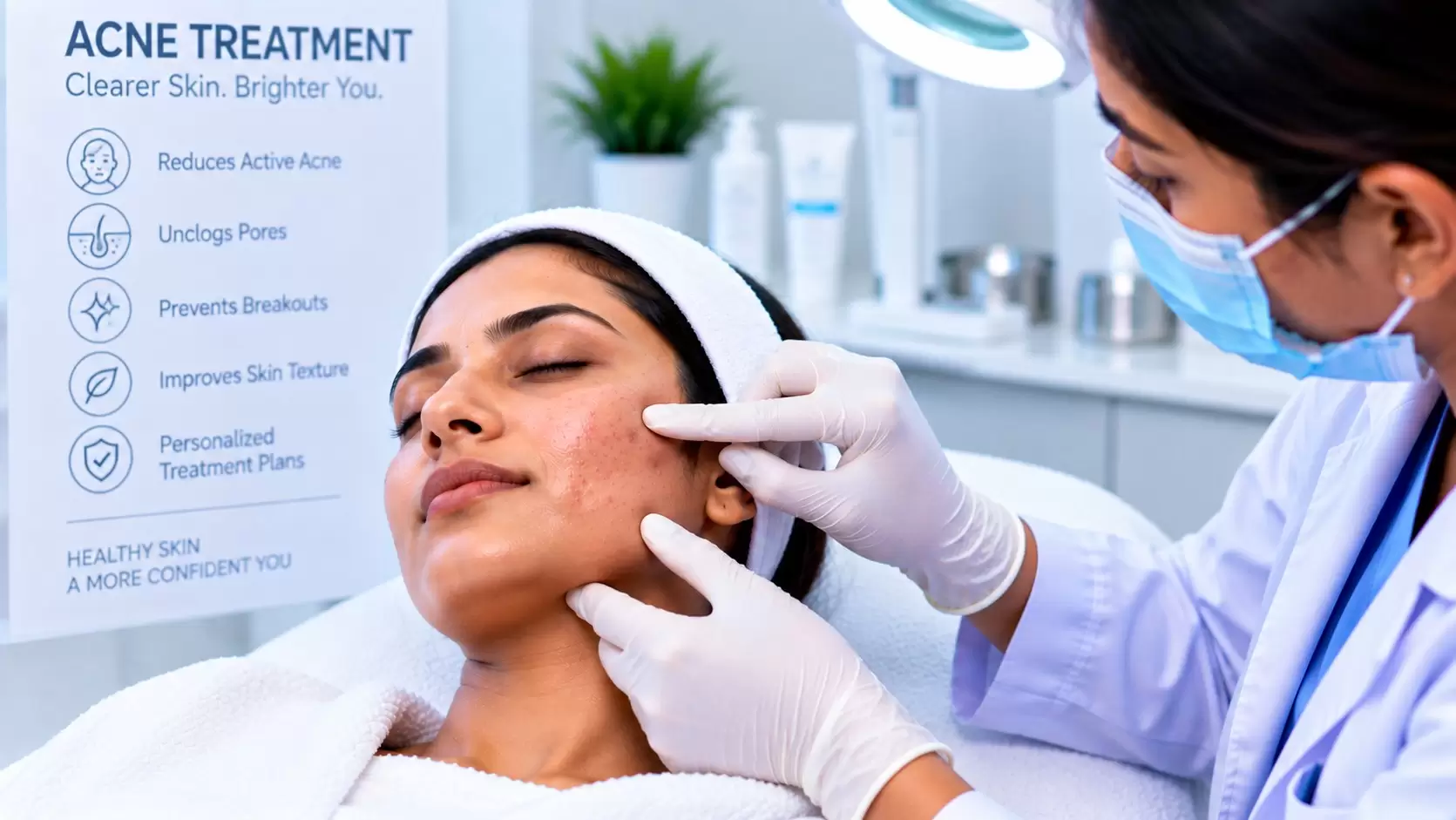
The goal is acne control without damaging the skin barrier
Acne treatments can be effective but some also cause dryness, peeling or irritation. A routine should therefore balance treatment of blocked follicles and inflammation with maintaining a tolerable skin barrier.
If you are unsure what type of acne you have, start with What Causes Acne? and the clinic’s Acne Treatment in Chennai page.
A simple morning routine
1. Gentle cleanser
Use a cleanser that removes sweat, oil and residue without leaving the skin excessively tight or irritated.
2. Prescribed or suitable active
If your treatment plan includes a morning acne medicine, apply it according to the instructions given.
3. Moisturiser
A lightweight, non-comedogenic moisturiser can reduce treatment-related dryness and improve tolerability.
4. Sunscreen
Broad-spectrum sun protection is especially useful when acne leaves dark marks or treatment makes skin more sun-sensitive.
A simple evening routine
Cleanse gently to remove sunscreen, cosmetics and surface debris. Apply the acne treatment prescribed or selected for evening use, then moisturise as appropriate.
More products do not necessarily produce faster clearing. Using several acids, retinoids, scrubs and spot treatments together can increase irritation and make it harder to identify which product is helping.
Which cleanser is best for acne-prone skin?
There is no single cleanser suitable for everyone. A gentle cleanser is a reasonable base. Some patients may benefit from an active cleanser containing ingredients such as salicylic acid or benzoyl peroxide, depending on their acne and the rest of their regimen.
If you already use prescription acne treatments, adding another strong active cleanser may increase dryness, so the complete routine should be considered together.
Do acne-prone people need a moisturiser?
Yes. Oily or acne-prone skin can still become dehydrated and irritated. Moisturiser can improve comfort and help patients continue effective acne medicines that would otherwise be difficult to tolerate.
Look for a formulation that suits your skin and is labelled non-comedogenic or appropriate for acne-prone skin, while recognising that individual tolerance varies.
Why sunscreen matters when you have acne
Inflamed acne can leave post-inflammatory hyperpigmentation, especially in pigment-prone skin. Ultraviolet exposure can make these marks more persistent or noticeable.
Choose a sunscreen texture you can use consistently without excessive greasiness or irritation. Sunscreen is particularly important when your treatment includes ingredients that increase photosensitivity.
Common acne active ingredients
Topical retinoids
Help prevent comedone formation and are useful in many acne regimens, but can initially cause dryness and irritation.
Benzoyl peroxide
Has antimicrobial activity and can be useful for inflammatory acne. It may dry the skin and bleach fabrics.
Salicylic acid
A keratolytic ingredient used in some acne products to help with follicular plugging.
Azelaic acid
Can help acne in selected patients and may also be useful when post-inflammatory pigmentation is a concern.
For a fuller overview, read Acne Treatment Options.
Should you use every acne active together?
No. Combining multiple irritating actives without a plan can lead to burning, peeling, redness and barrier disruption. This can make the skin look worse and may lead patients to stop useful treatment altogether.
Should you scrub acne?
No. Acne is not surface dirt that can be physically scrubbed away. Abrasive scrubs, rough cleansing brushes and repeated rubbing can increase irritation and inflammation.
Gentle cleansing does not mean inadequate cleansing—it means avoiding unnecessary mechanical injury.
Should you squeeze pimples?
Picking and squeezing can increase inflammation and tissue injury and may increase the chance of post-acne pigmentation or permanent scarring.
Deep painful lesions are particularly unsuitable for repeated manipulation. If acne is nodular or beginning to scar, seek treatment rather than trying to extract lesions yourself.
What does “non-comedogenic” mean?
Non-comedogenic products are formulated with the intention of being less likely to block pores. The label can be useful when selecting moisturisers, sunscreens and cosmetics for acne-prone skin, but it does not guarantee that every individual will tolerate the product.
Hair oil, makeup and acne
Hair oils and styling products can contact the forehead and temples and may aggravate breakouts in susceptible people. Heavy cosmetics or occlusive products may also contribute.
If breakouts repeatedly cluster around the hairline, consider what hair and skin products touch that area.
How quickly should you change your routine?
Acne usually does not clear in a few days. Constantly switching products can prevent you from assessing whether a treatment is working and can expose the skin to repeated irritation.
Unless a product is causing a significant adverse reaction, follow the recommended treatment period and review progress at an appropriate interval.
What about acne marks?
Flat red or brown marks after acne are different from structural acne scars. Preventing new inflammation, using sun protection and treating active acne are important foundations before aggressively targeting marks.
Read Acne Marks vs Acne Scars. For pigmentation-focused skincare, see Skin Care for Pigmentation.
Pregnancy and acne skincare
Pregnancy or plans to conceive change which acne ingredients and medicines are appropriate. Retinoids require particular caution and should be avoided in pregnancy.
Tell your dermatologist if you are pregnant, trying to conceive or could become pregnant before starting or continuing acne medication.
When skincare alone is not enough
Skincare supports acne treatment, but painful nodules, scarring acne, widespread chest or back acne and persistent inflammatory acne may need prescription treatment. Hormonal symptoms can also justify broader assessment.
Adult women with cyclical acne or signs of androgen excess can read Hormonal Acne in Women. For persistent adult breakouts, see Adult Acne.
Frequently asked questions
What is a simple skincare routine for acne-prone skin?
A practical foundation is gentle cleansing, appropriate acne treatment, non-comedogenic moisturiser and sunscreen. The treatment step should be tailored to acne type and tolerance.
Should oily acne-prone skin use moisturiser?
Yes. Acne-prone skin can become dry and irritated, particularly during treatment. A suitable non-comedogenic moisturiser can improve tolerance.
Can I use salicylic acid and a retinoid together?
Some regimens may include both, but combining irritating actives can increase dryness. How they are introduced should depend on the products, skin tolerance and treatment plan.
Does scrubbing help acne?
No. Aggressive scrubbing does not correct the follicular causes of acne and can increase irritation.
How long should I try an acne routine before changing it?
Many acne treatments require consistent use over several weeks. Follow the recommended review period unless you develop a significant adverse reaction.
Acne treatment in OMR, Chennai
A good acne routine should be effective enough to work and gentle enough to continue.
Book a consultation at Ram Skin Clinic in Thoraipakkam, Chennai.
#48, Second Floor, Flat E, Best Towers,Okkiampet, Thoraipakkam, OMR,
Chennai – 600097. Above Domino’s Pizza.