
Acne Beyond the Teenage Years
Adult Acne: Why You Still Get Pimples in Your 20s, 30s and 40s
Acne can persist well beyond adolescence or appear for the first time in adulthood. Hormones, genetics, skincare and hair products, medicines, friction and other factors can overlap, so recurring adult breakouts are best approached according to their pattern and severity.
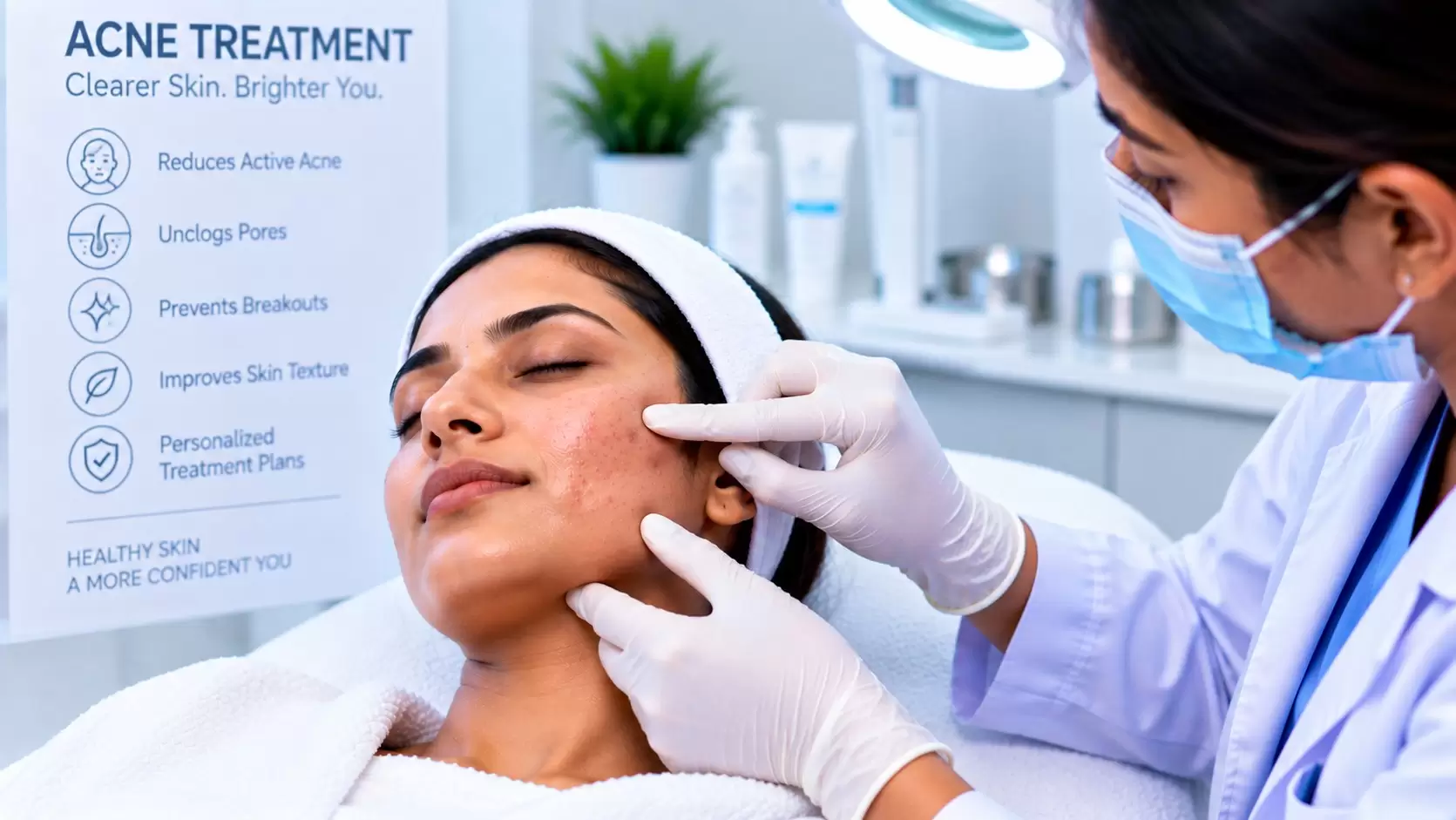
Can you really get acne in your 30s or 40s?
Yes. Acne is not restricted to teenagers. Some adults continue to experience acne that began during adolescence, while others develop breakouts after years of relatively clear skin.
The underlying processes remain familiar: follicular plugging, sebum, Cutibacterium acnes activity and inflammation. Read What Causes Acne?.
Persistent vs late-onset adult acne
Persistent acne
Acne begins during adolescence and continues into adult life, sometimes changing in severity or distribution over time.
Late-onset acne
Breakouts begin in adulthood after little or no significant teenage acne. Clinical assessment can help identify contributing factors.
Why adult acne keeps coming back
Acne-prone follicles can continue forming microcomedones even when the skin temporarily looks clear. Hormonal influences, genetic susceptibility, treatment interruption, products and environmental or mechanical factors can then contribute to another visible flare.
Hormones and adult acne
Hormonal influences are particularly relevant in some women. Cyclical flares, irregular periods, excess facial/body hair or scalp hair thinning can provide useful clinical clues.
However, adult acne or jawline acne alone does not diagnose a hormonal disorder. Read Hormonal Acne in Women for a detailed discussion of PCOS and hormone testing.
Can stress cause adult breakouts?
Stress is not the sole cause of acne, but some people notice worsening during stressful periods. Hormonal and inflammatory pathways, altered sleep, touching or picking the skin and disrupted skincare routines may all contribute.
If acne repeatedly flares with stress, the underlying acne still needs appropriate treatment rather than relying only on stress reduction.
Skincare and cosmetics can matter
Heavy or occlusive skincare, cosmetics and hair products can aggravate follicular blockage in susceptible people. Breakouts around the forehead, temples or hairline may sometimes be associated with hair oils or styling products contacting the skin.
Introducing several new active ingredients at once can also cause irritation that complicates the picture.
Is it acne—or something that looks like acne?
Rosacea, folliculitis, perioral dermatitis and other eruptions can resemble adult acne. Very itchy, unusually uniform or treatment-resistant bumps deserve diagnostic reconsideration.
For one common mimic, see Folliculitis vs Acne.
Adult acne on the jawline and chin
Lower-face acne is often associated with adult female acne, but distribution is not specific enough to determine the cause by itself. Friction, cosmetics, hair removal, occlusion and ordinary acne can affect the same area.
The pattern becomes more informative when considered with menstrual history and other signs of androgen excess.
Adult acne on the back and chest
Truncal acne can be harder to treat with topical products because of the larger surface area and difficulty applying medication consistently. Sweat, occlusive clothing and friction can aggravate symptoms, but they are not the only causes.
Widespread inflammatory truncal acne may require dermatologist-guided systemic treatment.
Why adult acne leaves dark marks
Inflammation can stimulate excess pigment production, particularly in pigment-prone skin. Repeated picking, squeezing and irritation can worsen post-inflammatory hyperpigmentation.
These flat dark marks are different from permanent textural scars. Read Acne Marks vs Acne Scars.
How is adult acne treated?
Treatment can include topical retinoids, benzoyl peroxide, azelaic acid and other topical medicines. Moderate, severe, widespread or scarring acne may require oral treatment. In selected women, hormonal therapies may also be considered.
Isotretinoin can be appropriate for selected severe, scarring or treatment-resistant acne but requires medical supervision and strict pregnancy precautions where relevant.
Can chemical peels help adult acne?
Chemical peels may complement treatment in selected patients, including for comedonal acne or post-acne pigmentation, depending on skin type and the peel chosen. They do not replace appropriate medical therapy for significant active inflammatory acne.
Learn more at Chemical Peel Treatment in Chennai.
Adult acne during pregnancy or when planning pregnancy
Pregnancy and pregnancy planning change which acne medicines are appropriate. Some commonly used acne treatments—including retinoids—require avoidance in pregnancy.
Tell your dermatologist if you are pregnant, trying to conceive or could become pregnant so that the treatment plan can be selected accordingly. Do not stop necessary prescribed medicines without discussing them with the relevant clinician.
A practical adult-acne routine
Cleanse gently
Harsh scrubbing does not remove the follicular causes of acne and can increase irritation.
Keep treatment consistent
Acne medicines usually need regular use over weeks rather than spot treatment for one or two days.
Moisturise appropriately
A suitable non-comedogenic moisturiser can improve tolerance of drying treatments.
Use sun protection
Sun protection is particularly helpful when acne leaves persistent dark marks.
When should adult acne be assessed?
See a dermatologist when acne is painful, nodular, scarring, widespread, persistently recurring, not responding to appropriate non-prescription care or associated with irregular periods, excess facial/body hair or other possible hormonal symptoms.
Early control matters because preventing new scars is generally easier than correcting established scars later. Visit Acne Treatment in Chennai for clinic information.
Frequently asked questions
Why am I suddenly getting acne as an adult?
Adult acne can be influenced by hormones, genetics, products, medicines, friction and other factors. Sudden or unusual acne may warrant assessment for triggers or an acne-like condition.
Is adult acne always hormonal?
No. Hormones can contribute, particularly in some women, but adult acne can occur without a clinically significant hormonal disorder.
Why do I get acne on my chin and jawline?
Lower-face acne can occur in adult acne, but its location alone cannot determine whether the cause is hormonal.
Can adult acne be treated permanently?
Acne can often be controlled effectively, but recurrence is possible. Some patients benefit from maintenance treatment to reduce new breakouts.
Should I see a dermatologist for adult acne?
Assessment is especially useful for persistent, painful, scarring or treatment-resistant acne and when hormonal symptoms are also present.
Acne treatment in OMR, Chennai
Still getting acne as an adult? Treat the pattern, not just each pimple.
Book a consultation at Ram Skin Clinic in Thoraipakkam, Chennai.
#48, Second Floor, Flat E, Best Towers,Okkiampet, Thoraipakkam, OMR,
Chennai – 600097. Above Domino’s Pizza.