
Adult & Female Acne
Hormonal Acne in Women: Causes, Signs, PCOS and Treatment
Hormones can influence oil-gland activity and acne, particularly during puberty, menstrual cycles and some endocrine conditions. Persistent adult acne in women may have a hormonal component, but the location of a breakout alone does not prove a hormonal disorder.
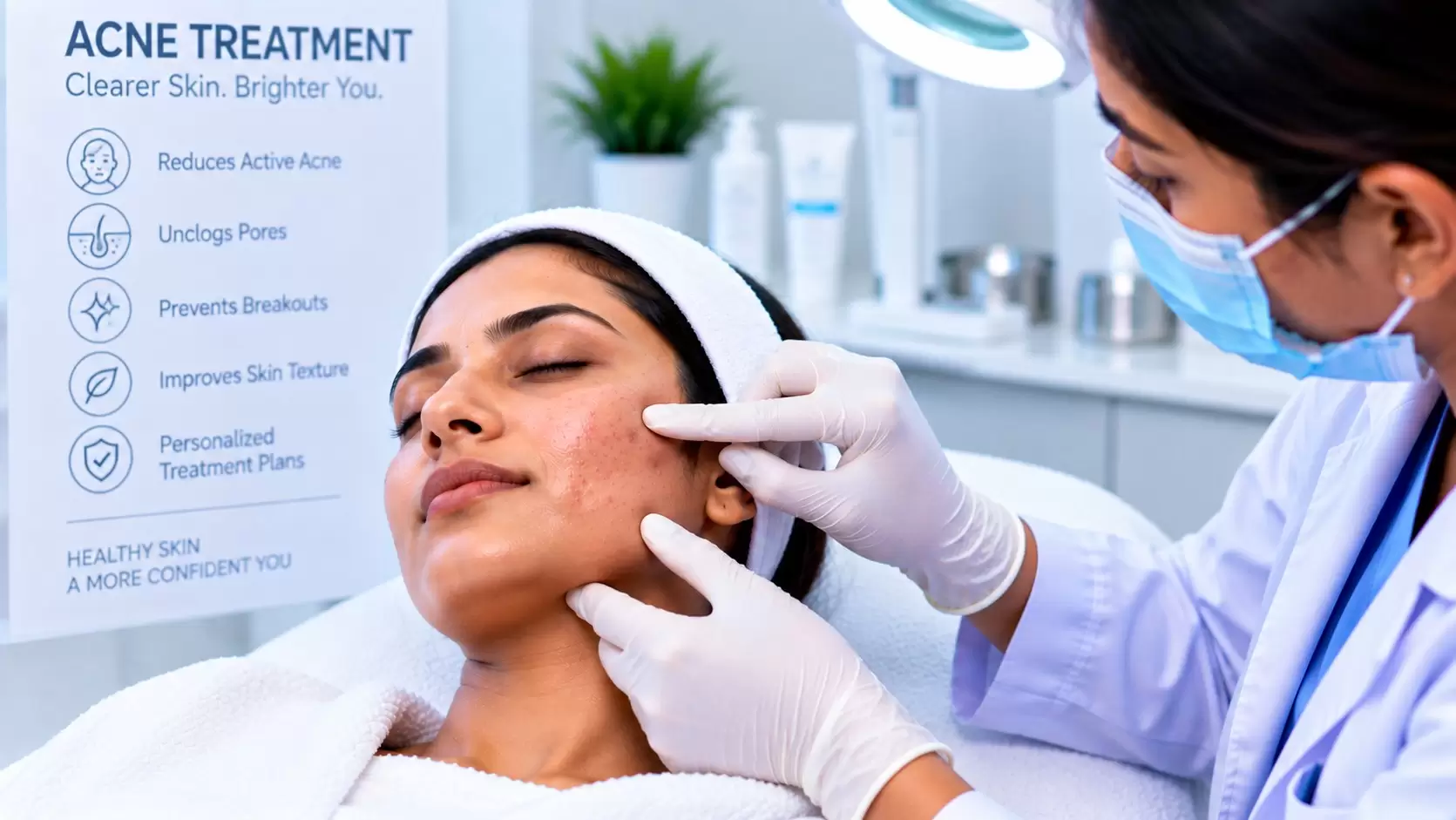
How hormones influence acne
Androgens can stimulate sebaceous glands and influence sebum production and follicular activity. Acne develops when this interacts with follicular plugging, Cutibacterium acnes activity and inflammation.
Hormones are therefore one part of acne biology rather than the only cause. Read What Causes Acne? for the broader mechanism.
Common clues to a hormonal component
Adult persistence
Acne that continues or begins in adulthood may have hormonal influences, although other causes remain possible.
Cyclical flares
Some women notice predictable worsening around particular phases of the menstrual cycle.
Other androgen signs
Excess facial/body hair or scalp hair thinning can increase suspicion of androgen excess.
Menstrual changes
Irregular or infrequent periods may be relevant when considered together with acne and other symptoms.
Does jawline acne always mean hormonal acne?
No. Adult female acne often affects the lower face in some patients, but jawline or chin location by itself cannot diagnose a hormonal disorder. Cosmetics, occlusion, friction and ordinary acne biology can also produce lesions in these areas.
What is the connection between PCOS and acne?
Polycystic ovary syndrome can involve androgen excess and may present with acne, irregular menstrual cycles, excess terminal hair growth and other features. However, acne alone is not enough to diagnose PCOS.
PCOS diagnosis requires appropriate clinical assessment and may involve other healthcare specialists depending on the patient’s symptoms and findings.
Does every woman with acne need hormone tests?
No. Many women with acne have no clinically significant endocrine disorder. Laboratory testing is more likely to be considered when acne occurs with features such as irregular periods, significant hirsutism, rapid onset, virilisation or other findings suggesting hormonal abnormality.
The decision about testing should follow history and examination rather than using a standard hormone panel for every acne patient.
Can periods trigger breakouts?
Some women experience acne flares around menstruation. Hormonal fluctuations can influence sebaceous activity and inflammation, but the degree and timing vary considerably between individuals.
Tracking breakouts and menstrual cycles for several months can sometimes help identify a reproducible pattern.
Hormonal acne after the teenage years
Adult female acne may represent persistent acne from adolescence or acne that begins later. Hormonal influences, genetics, products, stress, medicines and other factors can overlap.
Persistent adult acne should not automatically be treated as a cosmetic problem if it is painful, scarring or associated with other systemic symptoms.
How is hormonal acne treated?
Treatment depends on severity, lesion type, scarring risk, pregnancy plans, medical history and whether there is evidence of an underlying hormonal disorder. Topical acne medicines remain useful even when hormones contribute to the condition.
In selected women, clinicians may consider hormonal therapies such as certain combined oral contraceptives or anti-androgen treatment. These are prescription decisions with contraindications and monitoring considerations.
See Acne Treatment Options for a broader overview.
What about spironolactone?
Spironolactone is an anti-androgen medicine that may be used for acne in appropriately selected women. It is not suitable for everyone, and treatment requires consideration of medical history, other medicines, pregnancy potential and clinician-directed monitoring where appropriate.
It should not be started, stopped or adjusted without medical guidance.
Can birth-control pills help acne?
Certain combined oral contraceptives can improve acne in selected patients by modifying androgen-related effects. Choice depends on individual health factors and contraindications, and they are not prescribed solely on the basis of having a few breakouts.
A clinician should assess cardiovascular, thrombotic and other relevant risks before prescribing hormonal contraception.
Can isotretinoin treat hormonal acne?
Isotretinoin may be considered for severe, scarring or treatment-resistant acne regardless of whether hormonal influences are present. It can produce substantial improvement, but recurrence can still occur in some patients if an underlying hormonal driver remains active.
Because isotretinoin has important pregnancy-related risks and other potential adverse effects, it requires medical supervision.
Skincare for hormonally influenced acne
Keep cleansing gentle
Hormonal acne is not caused by inadequate washing, so aggressive scrubbing does not correct the hormonal component.
Use non-comedogenic products
Choose skincare and cosmetics that are less likely to aggravate follicular blockage.
Protect from sun
Sun protection can help reduce worsening of post-inflammatory dark marks.
Avoid picking
Deep inflamed lesions are especially prone to marks and scars when squeezed.
Hormonal acne and acne scars
Recurring deep inflammatory lesions can create permanent scars. Controlling active acne is therefore the priority before focusing heavily on scar procedures.
Dark marks are not the same as structural scars. See Acne Marks vs Acne Scars.
When should you see a dermatologist?
Consider assessment when acne is persistent, painful, nodular, scarring, repeatedly flares despite appropriate treatment, or occurs with irregular periods, significant excess facial/body hair, scalp hair thinning or other possible hormonal symptoms.
Visit Acne Treatment in Chennai for dermatologist-guided evaluation at Ram Skin Clinic.
Frequently asked questions
How do I know if my acne is hormonal?
Adult persistence, cyclical flares and associated signs such as irregular periods or excess facial/body hair can suggest hormonal influence, but diagnosis requires clinical assessment.
Does chin or jawline acne mean I have PCOS?
No. Acne location alone cannot diagnose PCOS. Menstrual history, signs of androgen excess and other clinical findings are also considered.
Does everyone with hormonal acne need blood tests?
No. Testing is usually guided by history and examination and is more relevant when other signs suggest an endocrine abnormality.
Can PCOS acne be treated?
Yes. Acne can be treated with standard acne therapies, while an underlying hormonal condition may also need appropriate medical management.
Can hormonal acne come back after treatment?
Yes. If hormonal stimulation continues, acne can recur, which is why some patients require maintenance or longer-term management.
Acne treatment in OMR, Chennai
Persistent adult acne may need a broader clinical assessment.
Book a consultation at Ram Skin Clinic in Thoraipakkam, Chennai.
#48, Second Floor, Flat E, Best Towers,Okkiampet, Thoraipakkam, OMR,
Chennai – 600097. Above Domino’s Pizza.