
A Gentle Routine for Dark Spots
Skin Care for Pigmentation: A Dermatologist-Guided Routine
Pigmentation-prone skin usually benefits from consistency rather than an aggressive routine. The goal is to control the cause of dark spots, reduce unnecessary inflammation and protect the skin from ultraviolet and visible light while treatment works.
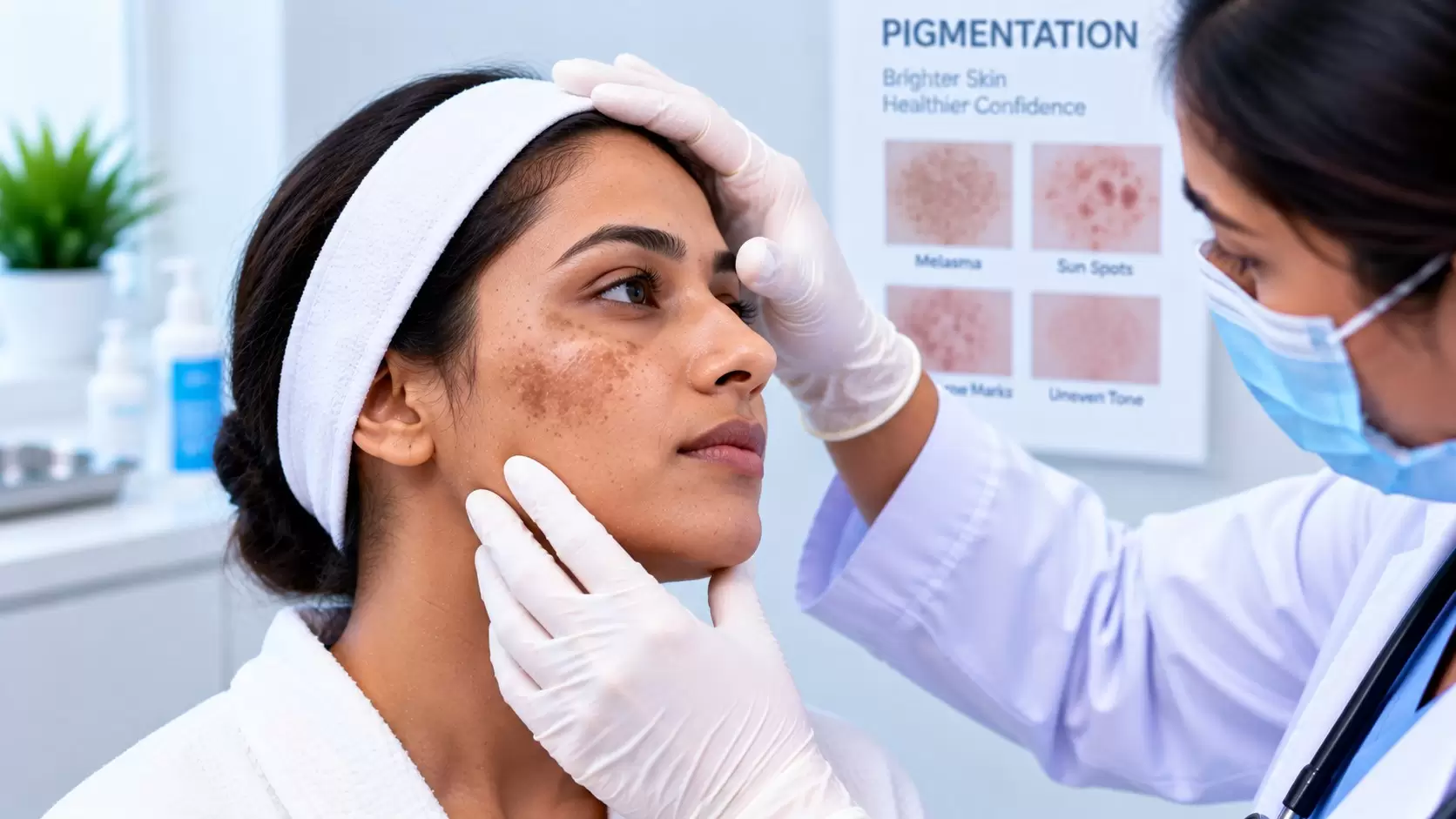
Why a gentle routine matters for pigmentation
Inflammation is a major driver of post-inflammatory hyperpigmentation. Acne, eczema, rubbing, picking and irritating skin-care products can all stimulate additional pigment production.
A routine that repeatedly causes redness, burning or peeling can therefore work against the goal of achieving a more even skin tone.
A simple pigmentation routine at a glance
Morning
Gentle cleanse, selected treatment if appropriate, moisturiser and broad-spectrum sunscreen.
Daytime
Use shade and protective clothing; reapply sunscreen during prolonged outdoor exposure.
Evening
Gentle cleanse, prescribed or tolerated pigment treatment, then moisturiser as needed.
Always
Avoid picking, harsh scrubs and stacking multiple irritating active ingredients at once.
Step 1: Use a gentle cleanser
Cleansing should remove sweat, sunscreen, makeup and surface debris without leaving the skin persistently tight, raw or irritated.
Fragrance-free or sensitive-skin formulations can be useful when pigmentation follows irritation or dermatitis. Scrubbing harder does not remove melanin that sits within the skin.
Step 2: Treat the condition causing the dark spots
If acne is producing new PIH, controlling acne is essential. If eczema or dermatitis is active, calming that inflammation comes before aggressive pigment treatment.
When the trigger remains active, new marks can continue appearing even while older ones fade. Read Post-Inflammatory Hyperpigmentation.
Step 3: Choose one appropriate pigment-targeting active
Depending on the diagnosis, dermatologists may use ingredients such as azelaic acid, retinoids, hydroquinone or combination treatment. Vitamin C, kojic acid and other agents are also used in selected routines.
The best choice depends on whether the problem is melasma, PIH, acne-associated pigmentation or another disorder. Adding several strong ingredients simultaneously makes it harder to identify what is helping and what is irritating the skin.
Azelaic acid for pigmentation-prone skin
Azelaic acid can help hyperpigmentation and is also used to treat acne. This makes it useful when breakouts and post-acne marks occur together.
Some stinging or irritation can occur, particularly when starting treatment. Frequency can be adjusted according to tolerance and the formulation being used.
Retinoids and dark marks
Retinoids can help acne and post-inflammatory hyperpigmentation by normalising skin-cell turnover and reducing new acne lesions. Tretinoin is also used in melasma treatment, including prescription combination regimens.
Retinoids can irritate the skin if introduced too aggressively. A dermatologist can advise on strength, frequency and whether a retinoid is suitable for your circumstances.
Hydroquinone and prescription treatment
Hydroquinone is an established treatment for epidermal hyperpigmentation and melasma. It may be used alone or as part of a prescription combination.
It is not intended to be used indiscriminately as an indefinite all-over lightening cream. Appropriate duration, concentration and monitoring matter, particularly if irritation develops.
See Pigmentation Treatment Options for a broader treatment comparison.
Step 4: Support the skin barrier with a moisturiser
A moisturiser can reduce dryness and improve tolerance when active treatments are being used. This is especially useful when retinoids or other treatments make the skin dry or sensitive.
Choose a texture appropriate for your skin type. Acne-prone skin may prefer a lighter non-comedogenic formulation, while dry or irritated skin may need a richer barrier-supporting moisturiser.
Step 5: Make sunscreen part of the treatment
Ultraviolet exposure can darken melasma and PIH. The American Academy of Dermatology recommends a broad-spectrum, water-resistant sunscreen with SPF 30 or higher.
For melasma and dark spots, tinted sunscreen containing iron oxides can also help protect against visible light, which can worsen hyperpigmentation—particularly in darker skin tones.
How to use sunscreen more effectively
Apply sunscreen before outdoor exposure and use enough to cover exposed skin. When outdoors, reapply approximately every two hours and after swimming or sweating according to the product directions.
Combine sunscreen with shade, a wide-brimmed hat and other sun-protective measures during prolonged exposure.
What should you avoid?
Harsh scrubbing
Mechanical irritation does not scrub pigment out of the skin and may trigger additional inflammation.
Picking acne
Squeezing and scratching add trauma and can increase both pigmentation and scarring risk.
Too many active ingredients
Layering several acids, retinoids and lightening products can damage the barrier and worsen PIH.
Unregulated lightening creams
Avoid products of uncertain composition, especially when they promise rapid bleaching or do not clearly list their ingredients.
If a product burns or stings, should you continue?
Persistent burning, stinging, redness or peeling is a sign that the skin may be irritated. The AAD specifically notes that irritating skin-care products can darken dark spots.
Stop the offending cosmetic product and simplify the routine. If the reaction is significant or the product is a prescription medicine, contact the prescribing clinician for advice rather than repeatedly pushing through severe irritation.
Skin care for melasma
Melasma needs particularly consistent photoprotection. Along with broad-spectrum sunscreen, tinted sunscreen with iron oxides can be useful because visible light can worsen melasma.
Prescription treatment may include hydroquinone, tretinoin-containing regimens, triple-combination therapy or other agents. Melasma often recurs, so maintenance is important even after visible improvement.
Skin care for post-acne pigmentation
The routine must address both active acne and the residual marks. A gentle cleanser, acne treatment, moisturiser and sunscreen form the foundation.
Azelaic acid and retinoids can be particularly useful in selected patients because they can address acne as well as pigmentation. For persistent breakouts, visit Acne Treatment in Chennai.
How long before you see improvement?
Pigmentation fades gradually. The AAD notes that a superficial spot only a few shades darker than the natural skin colour may take roughly 6 to 12 months to fade once the trigger has stopped, while deeper pigmentation can take much longer.
Prescription treatment can speed improvement, but ongoing acne, irritation or light exposure can continually create new pigment and delay visible progress.
When should you see a dermatologist?
Consider assessment when pigmentation is persistent, recurrent or difficult to identify; when skin-care products repeatedly cause irritation; or when you want to use prescription lightening treatment, peels or procedures.
A dermatologist can distinguish melasma, PIH and other pigment disorders and build a routine that fits your skin tone, underlying condition and tolerance.
For an individual plan, visit Pigmentation Treatment in Chennai.
Frequently asked questions
What is a simple skin-care routine for pigmentation?
A simple routine usually includes a gentle cleanser, a suitable pigment-targeting treatment, moisturiser and daily broad-spectrum sunscreen. The exact active ingredient should be matched to the cause of pigmentation and skin tolerance.
What sunscreen is useful for pigmentation?
Choose broad-spectrum, water-resistant SPF 30 or higher. For melasma and dark spots, tinted sunscreen containing iron oxide can add protection against visible light.
Can irritating skin-care products worsen dark spots?
Yes. Burning, stinging and dermatitis create inflammation that can cause or worsen post-inflammatory hyperpigmentation.
Which ingredients can help dark spots?
Depending on the diagnosis, options can include azelaic acid, retinoids, vitamin C, kojic acid and dermatologist-directed hydroquinone or combination therapy.
How long does pigmentation take to fade?
Fading is gradual. Superficial dark spots may take months, while deeper pigmentation can take much longer. Ongoing inflammation and light exposure can delay improvement.
Visit us in OMR
Not sure which pigmentation products suit your skin? Build the routine around the diagnosis.
Book a dermatologist consultation at Ram Skin Clinic in Thoraipakkam, Chennai.
#48, Second Floor, Flat E, Best Towers,Okkiampet, Thoraipakkam, OMR,
Chennai – 600097. Above Domino’s Pizza.