
Stress & the Hair Cycle
Stress and Hair Loss: Can Stress Cause Hair Fall?
Significant physical or psychological stress can affect the hair-growth cycle and trigger increased shedding. The most common pattern is telogen effluvium, in which hair fall appears weeks or months after the stressful event.
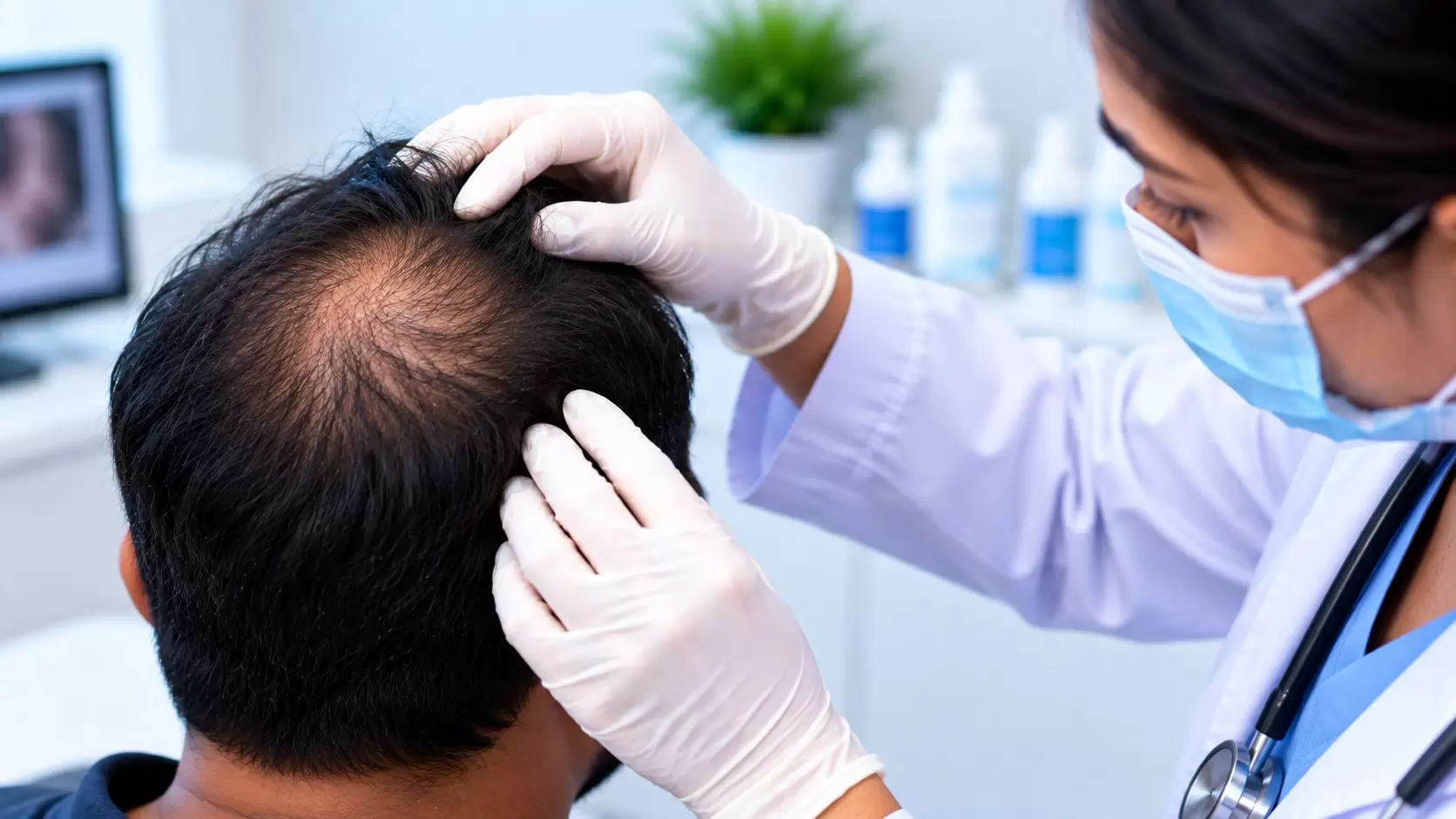
How can stress affect the hair cycle?
Hair follicles normally cycle independently through growth, transition and resting phases. A substantial stressor can cause more actively growing follicles than usual to enter the resting, or telogen, phase.
Those hairs are not shed immediately. They remain in the follicle for a period and are released later as new growth begins underneath. This explains why hair fall can start after the stressful period appears to be over.
Stressors that can trigger hair shedding
Major illness or fever
Acute illness, particularly when accompanied by fever or substantial physiological stress, can trigger telogen effluvium.
Surgery or trauma
A major operation, accident or other physical stress can temporarily alter the normal hair cycle.
Emotional stress
Major psychological stress, bereavement, relationship disruption or sustained work pressure can contribute in susceptible people.
Rapid weight loss
Crash dieting, nutritional stress and rapid weight change can act as physical stressors and trigger diffuse shedding.
Why does hair fall start months later?
Telogen effluvium has a characteristic delay. DermNet describes increased hair fall becoming noticeable about two to four months after the triggering event because the affected follicles first pass through the resting phase.
This timing is diagnostically useful. When shedding begins, it can help to look back several months for illness, surgery, childbirth, major emotional events, diet changes or new medicines.
For a detailed explanation, see Telogen Effluvium.
What does stress-related hair loss look like?
Telogen effluvium typically causes diffuse shedding from across the scalp rather than a single bald patch. You may notice more hair in the shower, brush, pillow or around the home and a general reduction in volume.
The scalp itself usually looks normal, without the smooth shiny scarring, marked inflammation or focal complete baldness seen in some other disorders.
Is every episode of hair loss caused by stress?
No. Stress is a recognised trigger, but it is easy to attribute persistent thinning to stress when another diagnosis is present. Pattern hair loss, alopecia areata, thyroid disease, nutritional deficiency, medicines and inflammatory scalp disorders can all cause hair loss.
Some people also have telogen effluvium and pattern hair loss at the same time. Read Common Causes of Hair Loss.
Stress-related shedding vs pattern hair loss
Stress-related telogen effluvium usually produces increased diffuse shedding. Male and female pattern hair loss more often causes gradual miniaturisation and reduced density in a characteristic distribution.
A stressful event can sometimes make underlying pattern thinning more noticeable. See Male Pattern Hair Loss and Female Pattern Hair Loss.
Can stress cause bald patches?
The clearest common relationship between stress and hair shedding is telogen effluvium, which is diffuse. Smooth round or oval bald patches are more typical of alopecia areata, an autoimmune condition.
The American Academy of Dermatology notes that alopecia areata may also be connected with stress, but a bald patch should not simply be labelled “stress hair loss.” It needs examination because treatment depends on the diagnosis.
Does stress-related hair loss grow back?
In many acute cases, yes. When the trigger resolves and there is no ongoing medical cause, excessive shedding gradually settles and new hairs continue growing.
The AAD notes that after stress-related excessive shedding stops, many people regain normal fullness over roughly six to nine months. Visible recovery varies because hair grows slowly and other hair-loss conditions can coexist.
How is stress-related hair loss diagnosed?
A dermatologist reviews the timing of shedding, recent physical and emotional stressors, illness, surgery, weight changes, diet, medicines and family history. The scalp is examined for pattern thinning, inflammation, breakage and scarring.
A hair-pull test and dermoscopy can provide additional clues. Blood tests may be selected when the history suggests iron deficiency, thyroid disease or another medical contributor.
What can you do about stress-related shedding?
When telogen effluvium is caused by a temporary trigger, the main strategy is to address that trigger and support normal recovery. Maintain adequate nutrition, including protein, and handle the hair gently while shedding is active.
Stress-management strategies such as regular physical activity, adequate sleep, relaxation practices and professional psychological support when needed may help overall wellbeing, but they do not replace evaluation when hair loss is persistent or has warning signs.
Can worrying about hair loss make stress worse?
Yes. Hair loss itself can cause significant emotional distress, which can create a difficult cycle of worry and increased attention to every shed hair. DermNet notes that the psychological impact of alopecia can affect personal, social and work life.
If hair loss is causing substantial anxiety or affecting daily life, discuss that openly during your consultation. The psychological impact deserves attention alongside the physical diagnosis.
When should you see a dermatologist?
Arrange an assessment when shedding is severe, persists for months, progressively reduces density or occurs without an obvious trigger. Seek earlier review for bald patches, scalp pain, burning, marked itching, inflammation or signs of scarring.
Read When to See a Dermatologist for Hair Loss or visit Hair Loss Treatment in Chennai for an individual assessment.
Frequently asked questions
Can stress cause hair loss?
Yes. Significant physical or psychological stress can trigger telogen effluvium, a temporary form of diffuse hair shedding.
How long after stress does hair shedding start?
With telogen effluvium, increased shedding commonly becomes noticeable about two to four months after the triggering event.
Does stress-related hair loss grow back?
In many acute cases, shedding improves after the trigger resolves and hair gradually regains density over subsequent months.
Can stress cause bald patches?
Stress is most clearly linked with diffuse shedding through telogen effluvium. Distinct bald patches can have other causes such as alopecia areata and should be assessed.
When should I see a dermatologist?
Seek assessment when shedding is severe or persistent, density keeps declining, bald patches appear, the scalp is inflamed or painful, or the diagnosis is uncertain.
Visit us in OMR
Noticing persistent shedding after a stressful period? Get the cause assessed.
Book a dermatologist consultation at Ram Skin Clinic in Thoraipakkam, Chennai.
#48, Second Floor, Flat E, Best Towers,Okkiampet, Thoraipakkam, OMR,
Chennai – 600097. Above Domino’s Pizza.