
Itchy & Inflamed Scalp Follicles
Scalp Folliculitis: Causes, Symptoms & Treatment
Scalp folliculitis is inflammation of hair follicles on the scalp. It typically causes small, very itchy pustules that may become sore or crusted, often around the frontal hairline.
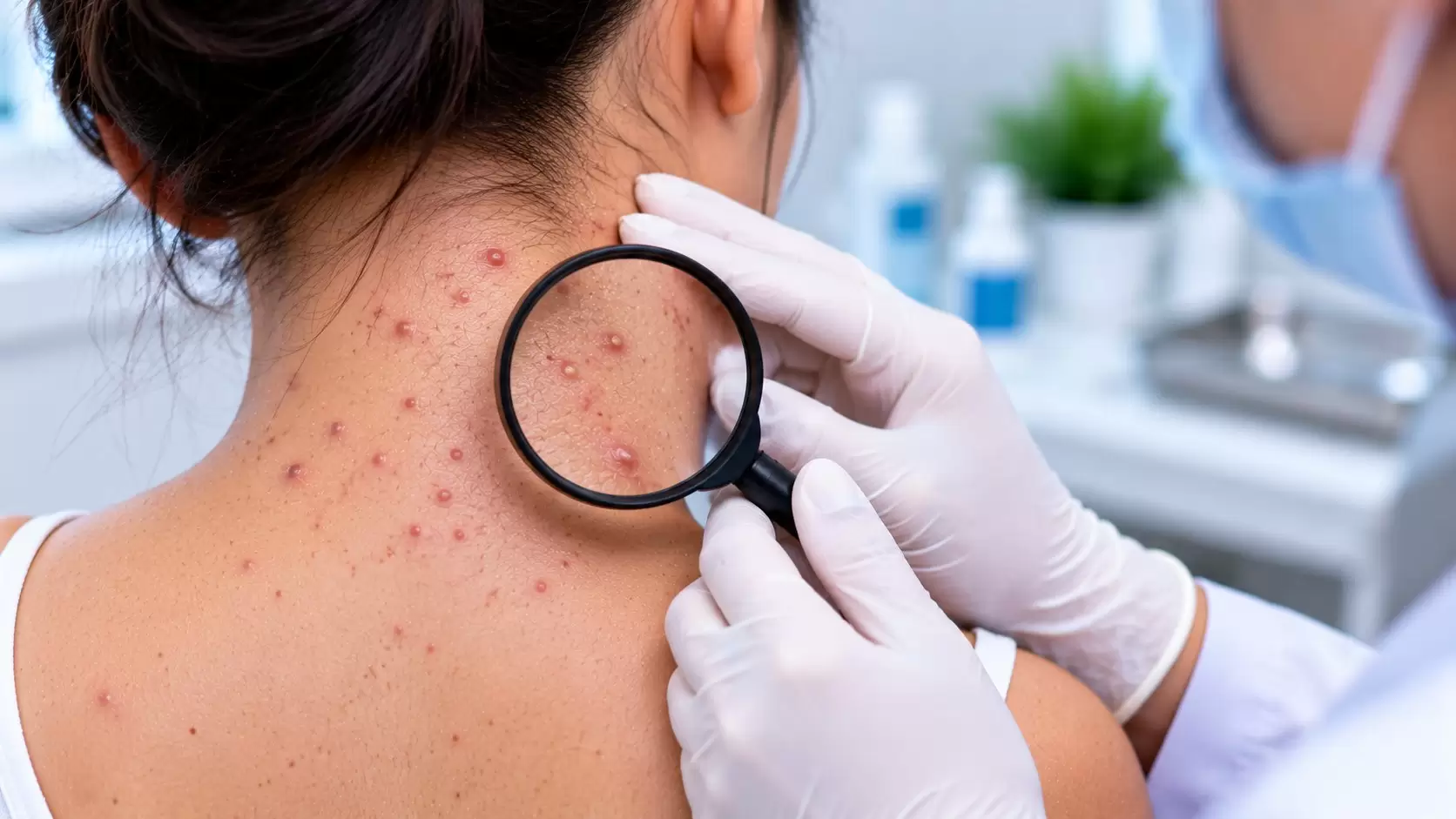
What is scalp folliculitis?
Scalp folliculitis is an inflammatory disorder affecting hair follicles on the scalp. DermNet describes it as small, very itchy pustules that are often particularly troublesome near the frontal hairline. Scratching can make the spots sore and crusted.
Folliculitis can be superficial or deeper. The scalp is also a site where several other inflammatory, infectious and scarring follicular disorders can occur, so persistent cases should not automatically be treated as ordinary dandruff or acne.
Common symptoms of scalp folliculitis
Small pustules
Small pus-filled spots form around individual hair follicles and may occur in small numbers or larger crops.
Intense itching
Itch can be one of the most prominent symptoms and often leads to repeated scratching.
Soreness or tenderness
Inflamed follicles may become painful, especially after scratching or when inflammation becomes deeper.
Crusting
Pustules and scratched areas can break and form crusts or superficial erosions.
What causes scalp folliculitis?
The exact mechanism is not always clear. DermNet describes scalp folliculitis as an inflammatory reaction involving components of the follicle and microorganisms. Organisms associated with it include bacteria—particularly Cutibacterium acnes and, in more severe disease, Staphylococcus aureus—as well as Malassezia yeast and Demodex mites.
More broadly, folliculitis can arise from infection, irritation, occlusion and inflammatory skin disease. That means similar-looking scalp pustules do not necessarily have the same cause.
For the general overview, read Folliculitis Causes & Symptoms.
Is scalp folliculitis always bacterial?
No. Bacteria can contribute, but yeast and other follicular factors may also be involved. This matters because antibacterial and antifungal treatments target different causes.
If lesions are recurrent or fail to respond as expected, a dermatologist may consider whether bacterial infection, Malassezia-associated disease, another scalp infection or a different inflammatory disorder is responsible.
See Bacterial vs Fungal Folliculitis for the broader distinction.
Can dandruff cause scalp folliculitis?
Dandruff and scalp folliculitis are different conditions, although they can coexist. Dandruff primarily causes flaking and scale, while folliculitis produces inflamed follicular papules or pustules. Malassezia yeast is associated with several scalp conditions, which can make symptoms overlap.
If the scalp has persistent pustules, sores, pain or crusting rather than mainly flaking, it deserves a closer examination. For persistent scaling, see Dandruff Treatment.
Can hair products and sweating make it worse?
Heat, sweat, friction and occlusion can aggravate follicular inflammation in susceptible people. Heavy or occlusive hair and scalp products may also contribute to follicular blockage in some cases.
Scalp folliculitis vs scalp acne
Both can produce pimple-like bumps. Acne is more likely to include comedones such as blackheads and whiteheads and may show a mixture of lesion types. Folliculitis tends to produce follicle-centred papules or pustules, and some forms are prominently itchy.
The distinction is not always obvious from appearance alone. Read Folliculitis vs Acne for a detailed comparison.
Does scalp folliculitis cause hair loss?
Ordinary superficial scalp folliculitis does not necessarily cause hair loss. DermNet’s scalp-rash diagnostic guidance describes typical scalp folliculitis as itchy or painful follicular pustules and erosions without hair loss.
However, more severe follicular disorders can scar. Acne necrotica can leave permanent pox-like scars, while dissecting cellulitis of the scalp can cause scarring and permanent bald patches. Hair loss, scarring or deep nodules therefore warrants dermatology assessment.
How is scalp folliculitis diagnosed?
A dermatologist examines the scalp, the distribution of pustules and crusting, and whether there is scale, hair loss, scarring, deep nodules or involvement elsewhere on the body. The history may include itch, pain, hair products, sweating, previous treatment and recurrence.
When infection is suspected or the diagnosis is uncertain, follicular pustules can be sampled for laboratory testing. General folliculitis guidance from DermNet recommends cytology and culture of pustules when an infectious cause needs to be identified.
How is scalp folliculitis treated?
Treatment depends on severity and suspected cause. DermNet recommends gentle washing with a mild shampoo and notes that antifungal antidandruff shampoos containing agents such as ketoconazole or ciclopirox may sometimes help.
Clinician-directed options can include topical antibiotics, anti-inflammatory topical treatments, oral antihistamines for itch, oral antibiotics and, in selected persistent cases, isotretinoin. These treatments are not interchangeable and should be chosen according to the diagnosis and individual medical context.
When should you see a dermatologist?
Arrange assessment if scalp pustules are recurrent, widespread, very itchy or painful, do not improve, or repeatedly return after treatment. A dermatologist should also examine any scalp eruption associated with noticeable hair loss, scarring, deep nodules or draining lesions.
For evaluation, visit Folliculitis Treatment in Chennai.
Frequently asked questions
What does scalp folliculitis look like?
It typically causes small follicular pustules that are often very itchy. They may become sore, scratched and crusted.
Is scalp folliculitis the same as dandruff?
No. Dandruff primarily causes scalp flaking and scale, while scalp folliculitis causes inflamed bumps or pustules around hair follicles. They can coexist.
Can scalp folliculitis cause hair loss?
Typical superficial scalp folliculitis does not necessarily cause hair loss, but severe or scarring follicular disorders can cause permanent hair loss. Hair loss with pustules should be assessed.
Is scalp folliculitis caused by bacteria or fungus?
Several microorganisms may contribute, including bacteria and Malassezia yeast. The exact cause may differ between patients.
Should I squeeze scalp folliculitis bumps?
No. Picking and squeezing can increase irritation, damage the skin and potentially contribute to infection or scarring.
When should scalp folliculitis be checked by a dermatologist?
Seek assessment when it is recurrent, widespread, painful, persistently itchy, treatment-resistant, or associated with deep nodules, scarring or hair loss.
This article is based on current dermatologist-reviewed guidance from DermNet and general folliculitis guidance from Mayo Clinic.
Visit us in OMR
Recurring scalp bumps? Get them assessed.
Book a dermatologist consultation at Ram Skin Clinic in Thoraipakkam, Chennai.
#48, Second Floor, Flat E, Best Towers,Okkiampet, Thoraipakkam, OMR,
Chennai – 600097. Above Domino’s Pizza.