
Vitiligo Causes, Symptoms and Diagnosis: White Patches
Why a white patch needs a name
A lighter patch of skin can raise immediate questions: is it vitiligo, will it change, and should treatment begin? Understanding vitiligo causes, symptoms and diagnosis starts with recognising that colour loss is a finding rather than a diagnosis. Vitiligo is one possible explanation, but other skin conditions can also produce pale or white-looking areas. A dermatologist considers the appearance, history, and distribution before advising what to do. This guide explains the concepts behind that conversation and helps you prepare useful observations. For appointment information and the broader care pathway, see our pillar on vitiligo treatment in Chennai.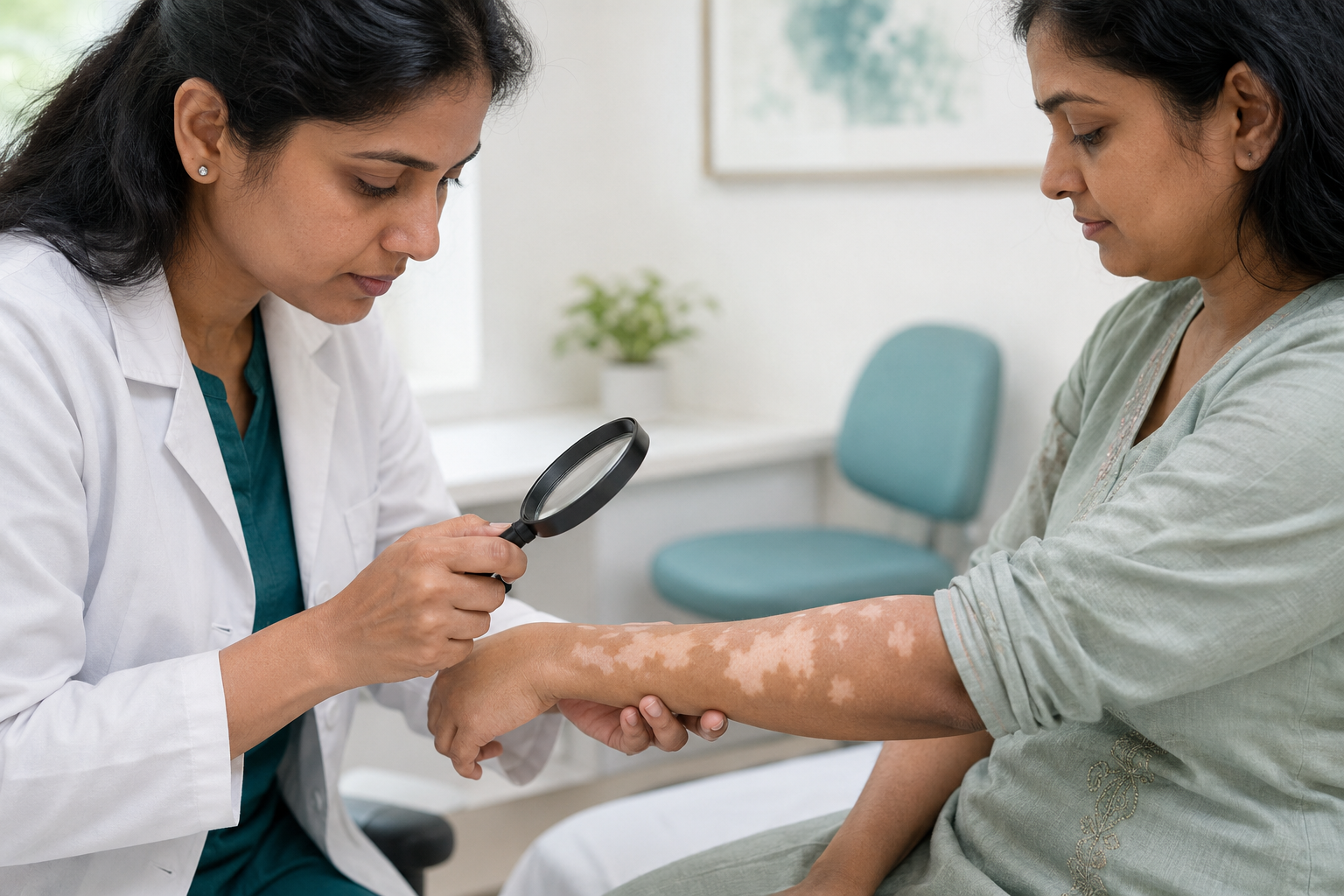
What happens in vitiligo
Skin colour depends partly on pigment made by cells called melanocytes. In vitiligo, pigment is lost in affected areas. Immune mechanisms and genetic susceptibility are involved, although an individual person may not be able to identify a single reason it began. The condition is not a sign of unclean skin and cannot be caught through ordinary contact. Knowing this helps separate medical questions from stigma. If someone has blamed a personal habit or a particular event for the patches, discuss the claim with a dermatologist. A plausible-sounding explanation online is not proof of the cause in an individual case.What people may notice
Vitiligo can produce well-defined areas that look lighter than surrounding skin, and hair within an affected area can sometimes lose colour. The pattern varies: some people notice changes in a limited area, while others have patches in several places. A dermatologist may use terms such as segmental or non-segmental when describing the pattern. Ask what that classification means for your assessment rather than treating it as a prediction from a photograph. The size of a visible patch does not measure its emotional impact. A small area can still prompt important questions about confidence, work, or relationships.Other explanations for lighter skin
Lighter patches can occur with conditions such as pityriasis versicolor, pityriasis alba, or pigment changes after inflammation. These examples illustrate why different conditions should not be grouped together under one home treatment. The appearance of scale, symptoms, timing, and prior skin irritation can help guide a clinical assessment, but no single feature in this article diagnoses the cause. Tell the dermatologist about anything you noticed before the colour change, including a rash or product reaction. Avoid repeatedly switching between antifungal and strong steroid creams without an examination. The useful question is what explains your patch, not which label looks closest online.
How to describe changes accurately
A brief timeline is often more helpful than a long list of guessed causes. Note where the first patch appeared, whether other areas followed, and whether its outline seems different now. If available, bring earlier photographs showing the same area. Tell the doctor about symptoms and treatments rather than editing out details you think are irrelevant. Mention any family history you know, while recognising that absence of a known family history does not settle the diagnosis. If you are unsure whether an area has changed, say so. Uncertainty is useful information and does not need to be replaced with a confident guess.What an assessment may include
The consultation generally brings together a medical history and a skin examination. A dermatologist may use a Wood's lamp to make pigment differences easier to assess. Tests are selected according to the clinical question rather than required automatically for every person. Because vitiligo can occur alongside other autoimmune conditions, the doctor may ask about symptoms or consider targeted investigations. Ask what a recommended test would clarify and whether its result would change your care. If you already have relevant reports, bring them. Do not assume that more testing necessarily means a more accurate or more personalised assessment.When to arrange a review
Arrange an assessment if a new white patch concerns you, the diagnosis is uncertain, or existing areas appear to be changing. If you are already under care, ask when changes should be reported and use the clinician's agreed contact arrangements. You do not need to wait until a large area is affected to seek an explanation. Equally, an online article cannot determine the urgency of an individual skin problem. Tell the clinic about any other symptoms when booking. The aim is to obtain appropriate advice and avoid prolonged experimentation with products chosen for a diagnosis that has never been confirmed.Move from diagnosis to an informed choice
Once the dermatologist explains the diagnosis, ask for the next step in plain language. Does the plan involve observation, a prescription, further assessment, or a discussion about treatment alternatives? Keep the written explanation and instructions so that later reading is anchored to your own clinical situation. Ram Skin Clinic lists vitiligo care and publishes an OMR location in Thoraipakkam; confirm an appointment directly if you would like an assessment. Continue to our treatment-options guide for questions about choosing care and the daily-care article for supportive routines. The value of diagnosis is that it makes those later decisions more specific and more understandable. Before leaving, ask which observations are worth recording before the next review. This keeps your notes focused on information the clinician can use and avoids turning uncertainty into repeated self-examination throughout the day.Frequently asked questions
Are all white patches vitiligo?
No. Other conditions can cause lighter skin. A dermatologist uses the history and examination to identify the cause.Can vitiligo occur without a family history?
Yes. A known family history is not required. Share what you know with the dermatologist rather than using family history to diagnose yourself.What is a Wood’s lamp examination?
It is an examination using a specialised light that can help a dermatologist assess pigment changes. Whether it is needed depends on the clinical assessment.Does everyone with vitiligo need the same tests?
No. The need for tests depends on the history, symptoms and examination. Ask what each proposed test is intended to clarify.This article provides general information. Diagnosis and treatment decisions require an individual medical assessment.