Laser Hair Reduction Explained
How Does Laser Hair Removal Work? Procedure, Sessions and Results
Laser hair removal uses concentrated light to target pigment in the hair and generate heat that damages structures involved in hair growth. Because hairs cycle through different growth phases, treatment is performed over multiple sessions rather than once.
Laser hair removal is really hair reduction
The term “laser hair removal” is widely used, but a more realistic medical description is long-term or permanent hair reduction. Treatment can substantially reduce the number, thickness and growth rate of suitable hairs, but it should not be presented as a guarantee that every hair will disappear forever.
Some follicles can later produce finer or lighter regrowth, and maintenance treatment may be useful for some patients.
For clinic-specific information, visit Laser Hair Removal in Chennai.
How the laser targets hair
1. Light reaches the hair
The device emits light at a wavelength selected for hair reduction and skin type.
2. Melanin absorbs energy
Pigment in the hair absorbs part of the light energy.
3. Light becomes heat
The absorbed energy is converted to heat within the hair-bearing structure.
4. Growth structures are impaired
Controlled thermal injury can reduce the follicle’s ability to produce a strong terminal hair.
Why hair colour matters
Laser hair reduction depends heavily on pigment. Darker, coarser hairs generally provide a stronger target because they contain more melanin than very light, grey or white hairs.
Hair with little or no pigment absorbs much less of the laser energy used for selective hair targeting, so response can be limited.
Why skin colour matters too
Melanin is also present in the epidermis. The clinician therefore needs to deliver enough energy to the hair target while limiting unnecessary heating of surrounding skin.
Device wavelength, fluence, pulse duration, cooling and treatment technique are selected with skin tone and hair characteristics in mind. This is particularly important in darker Indian skin, where inappropriate settings can increase burn or pigment-change risk.
Why are multiple laser sessions needed?
Hair follicles do not all grow at the same time. They cycle through active growth and resting phases. Laser treatment is most effective on suitable pigmented hairs when the follicle is in a responsive growth phase.
A single session therefore cannot effectively target every follicle in an area. Repeated sessions allow different groups of hairs to be treated as they cycle.
What happens during a laser hair removal session?
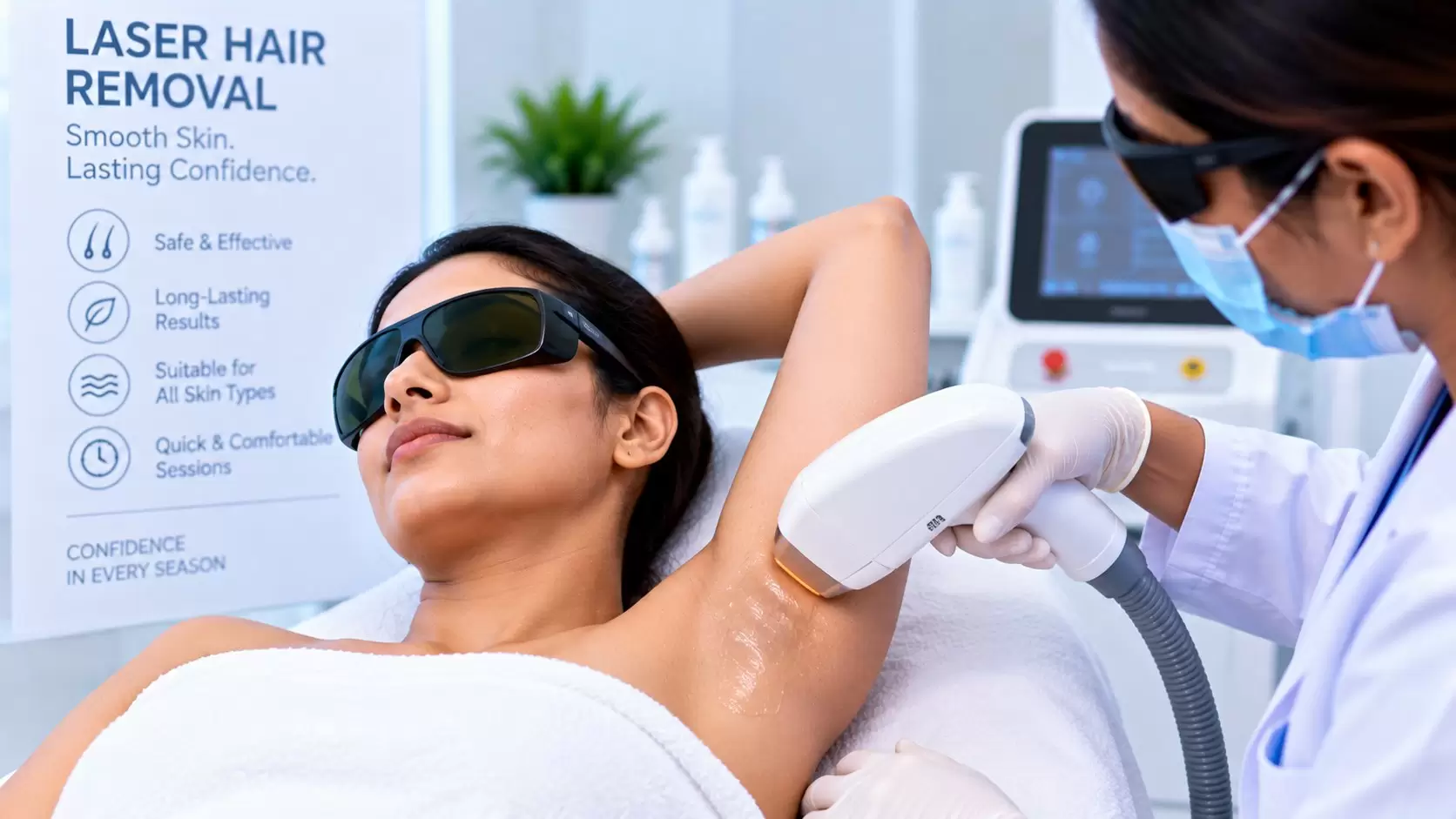
The treatment area is assessed for skin tone, hair colour and hair thickness. The area may be trimmed or shaved according to clinic instructions. Protective eyewear is used, and device parameters are selected for the patient and treatment area.
The handpiece delivers pulses across the planned area, often with a cooling system designed to improve comfort and protect the epidermis.
Does laser hair removal hurt?
Sensation varies with the device, area, hair density, energy and individual sensitivity. Patients commonly describe brief heat, snapping or stinging sensations during pulses.
Cooling systems can reduce discomfort. Very coarse, dense hair may initially feel more noticeable because there is more pigment available to absorb energy.
What happens to the hair after treatment?
Treated hairs do not necessarily vanish immediately. Over the following days or weeks, affected hairs can loosen and shed. This can sometimes look like continued growth before the hair separates from the follicle.
Hair should not be forcibly plucked from the area during a treatment course unless the treating clinic specifically advises otherwise.
How many sessions will you need?
There is no universal number. The course depends on treatment area, hair density and thickness, hair colour, skin type, hormonal influences, device and response.
Some patients require maintenance sessions after the initial course, particularly in hormonally influenced areas.
What results can you realistically expect?
Successful treatment usually means progressively fewer hairs, slower regrowth and finer remaining hair. Response is evaluated across a course rather than immediately after one session.
Results can vary significantly between body areas and individuals. Complete permanent elimination of every hair should not be promised.
Does laser work on facial hair caused by PCOS?
Laser can reduce suitable pigmented facial hair, but it does not treat the underlying hormonal driver. In conditions such as polycystic ovary syndrome, new or recurrent hair growth may continue because hormonal stimulation persists.
Patients with sudden or significant excess facial hair may benefit from medical assessment alongside cosmetic hair reduction.
Which hairs respond poorly?
Grey and white hairs lack the pigment required for conventional laser targeting and therefore respond poorly. Very fine or lightly pigmented hairs may also respond less predictably.
Assessment before treatment helps determine whether enough suitable target hair is present to justify a laser course.
What are the common short-term side effects?
Temporary redness and swelling around hair follicles are common treatment responses. The area can also feel warm or sensitive for a short period.
Less common complications include burns, blistering and changes in pigmentation. Correct device selection, appropriate parameters, cooling, sun precautions and trained treatment technique help reduce risk.
Can laser hair removal be used on Indian skin?
Yes, laser hair reduction is routinely performed on Indian skin, but parameters must account for epidermal melanin. The aim is to heat the hair target while protecting surrounding skin.
Recent tanning or significant sun exposure can alter skin pigment and may affect treatment safety, so disclose this before a session.
How should you prepare for a session?
Follow the clinic’s instructions about shaving and sun exposure. Avoid removing the target hair from the root by waxing, threading or plucking during the treatment course unless your clinician has advised otherwise, because the laser needs an appropriate hair target.
Tell the clinician about medicines, recent procedures, skin conditions and any history of unusual reactions to light or previous laser treatment.
Frequently asked questions
How does laser hair removal work?
Light energy is absorbed by pigment in suitable hairs and converted to heat, which can damage structures involved in future hair growth.
Why do I need multiple laser sessions?
Hair follicles cycle through different growth phases and are not all equally responsive at the same time, so repeated sessions are required.
Is laser hair removal permanent?
It is better described as long-term or permanent hair reduction. Significant lasting reduction is possible, but complete lifelong elimination of every hair cannot be guaranteed.
Does laser work on grey or white hair?
Grey and white hairs generally respond poorly because they contain little or no melanin for conventional hair-removal lasers to target.
Is laser hair removal suitable for Indian skin?
Yes, but device choice and treatment settings must account for skin pigmentation to reduce the risk of burns and pigment changes.
Laser hair removal in OMR, Chennai
Considering laser hair reduction? Start with your skin and hair type.
Book a consultation at Ram Skin Clinic in Thoraipakkam, Chennai.
#48, Second Floor, Flat E, Best Towers,Okkiampet, Thoraipakkam, OMR,
Chennai – 600097. Above Domino’s Pizza.