
Electrocautery
in Chennai.
Electrocautery uses controlled heat generated by electrical current to treat selected skin lesions or achieve haemostasis.
At Ram Skin Clinic, suitability is decided only after a dermatologist examines the lesion and considers the diagnosis, location, expected cosmetic outcome and alternatives.
What is electrocautery?
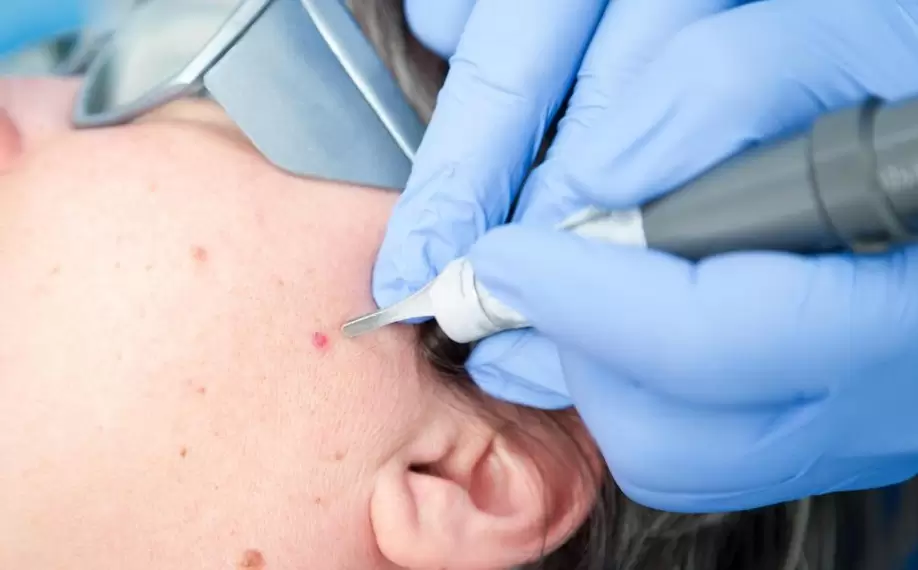
Electrocautery is a procedure in which an electrically heated instrument is applied to tissue in a controlled manner. The electrical current heats the treatment tip; it does not necessarily pass through the patient’s tissue in the same way as some electrosurgical techniques.
In dermatology, heat-based procedures may be considered for selected benign lesions and for controlling minor bleeding during procedures. The correct technique depends on the lesion, and not every growth or bump should be cauterised without assessment.
When might it be considered?
Some superficial or protruding lesions may be suitable after clinical assessment.
Controlled cautery may be used to help stop minor bleeding during certain dermatology procedures.
Lesion type, depth, skin tone, location and tendency to scar or pigment influence the choice of procedure.
A dermatologist may recommend dermoscopy, biopsy or another assessment rather than immediate removal.
Electrocautery vs radiofrequency cautery
The terms are sometimes used loosely, but they are not identical technologies. Electrocautery relies on a heated tip, whereas radiofrequency/electrosurgical devices use high-frequency electrical energy in a different way. The appropriate option depends on the indication and equipment being used.
For information about the clinic’s separate RF procedure, see Radiofrequency Cautery in Chennai.
What to expect
The dermatologist first examines the area and explains whether cautery is appropriate. Depending on the lesion and procedure, local anaesthesia may be used. Treatment time varies with the number, size and location of lesions. Afterward, a small crust or superficial wound may form while the skin heals.
Temporary redness, tenderness, crusting and pigment alteration can occur. Scarring, infection or persistent colour change are possible but less common. People with a tendency to form keloids or prominent scars should tell the dermatologist before treatment.
Aftercare
Frequently asked questions
Discomfort depends on the site and extent of treatment. Local anaesthesia may be used when appropriate.
Any procedure that disrupts skin can potentially leave a scar or pigment change. Risk varies with lesion depth, location, skin characteristics and aftercare.
No. Pigmented or diagnostically uncertain lesions require assessment before removal, and some may need biopsy or another technique.
This depends on the diagnosis, number of lesions and response to treatment. The dermatologist can estimate this after examination.
Considering electrocautery?
Book a dermatology consultation at Ram Skin Clinic in OMR to confirm the diagnosis and whether electrocautery or another procedure is appropriate.
Ram Skin Clinic, #48, Second Floor, Flat E, Best Towers, Okkiampet, Thoraipakkam, OMR, Chennai – 600097.
Medical information on this page is general and does not replace an in-person diagnosis. Treatment choice depends on examination and individual clinical factors.