
Scabies Treatment
in Chennai.
Scabies is a contagious skin infestation caused by the mite Sarcoptes scabiei. It commonly causes intense itching, often worse at night, and can spread through prolonged close skin contact. It is not a sign of poor personal hygiene.
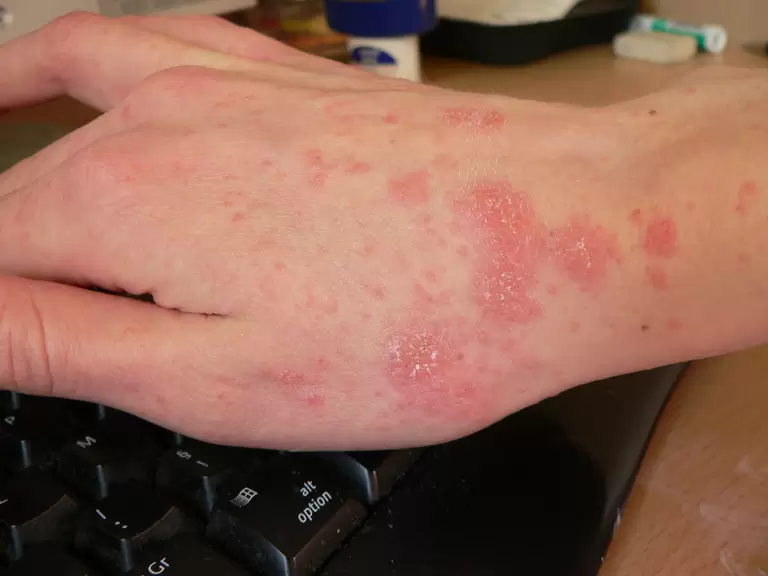
What causes scabies?
Scabies occurs when microscopic mites burrow into the superficial layer of the skin. Transmission most commonly follows prolonged direct skin-to-skin contact. It can spread among household members, sexual partners and people living in crowded or close-contact environments.
Brief casual contact is less likely to transmit typical scabies. Clothing, towels and bedding can sometimes contribute, particularly when recently used by an affected person.
Common signs and symptoms
Itching is often worse at night and may persist for a period even after mites have been successfully treated.
Scattered papules can occur on the wrists, finger webs, waist, buttocks, genital region and other characteristic sites.
Fine, short, wavy lines may sometimes be visible where mites have travelled in the superficial skin.
Infants, older adults and immunocompromised people can have atypical or more extensive involvement.
How is scabies diagnosed?
A dermatologist often diagnoses scabies from the history, distribution of the rash and examination of characteristic lesions. Dermoscopy or microscopic examination of skin scrapings may be useful when the diagnosis is uncertain.
Other itchy conditions such as eczema, insect bites, contact dermatitis and some infections can resemble scabies, so persistent unexplained itching should not automatically be self-treated repeatedly.
Treatment and household control
Scabies is treated with prescribed anti-scabies medicines selected according to age, pregnancy status, medical history and clinical circumstances. Correct application and timing are important. Close household or sexual contacts may need treatment at the same time even if they have not yet developed symptoms, according to medical advice.
Recently used clothing, towels and bedding should be managed according to the treatment instructions. Reinfestation can occur if affected close contacts are untreated.
Itching after treatment
Itching does not always stop immediately when treatment has worked. Post-scabetic itch can persist for several weeks because the skin remains inflamed. However, new burrows, new typical lesions or continuing symptoms may warrant reassessment to distinguish persistent inflammation, incorrect treatment, reinfestation or another diagnosis.
Frequently asked questions
No. Anyone can develop scabies. Transmission relates mainly to close contact with an affected person, not personal cleanliness.
Yes. It commonly spreads through prolonged close skin-to-skin contact, which is why management of close contacts is important.
Inflammation can persist after the mites have been eliminated. Continued or worsening symptoms should be reviewed rather than automatically repeating treatment.
Close household contacts are commonly treated simultaneously to reduce reinfestation, based on clinician guidance and the circumstances of the case.
Related information
If the cause of a rash is uncertain, see our Skin Infection Treatment and Eczema Treatment pages for other common conditions that may enter the differential diagnosis.
Persistent itching, especially at night?
Book a dermatology consultation at Ram Skin Clinic in OMR for assessment of a possible scabies infection and guidance on treatment, close contacts and preventing reinfestation.
Medical information on this page is general and does not replace an in-person diagnosis. Treatment choice depends on examination and individual clinical factors.