
Hair Thinning in Women
Female Pattern Hair Loss
Female pattern hair loss is a common form of progressive, non-scarring hair thinning. A widening central part and reduced density over the top of the scalp are typical signs.
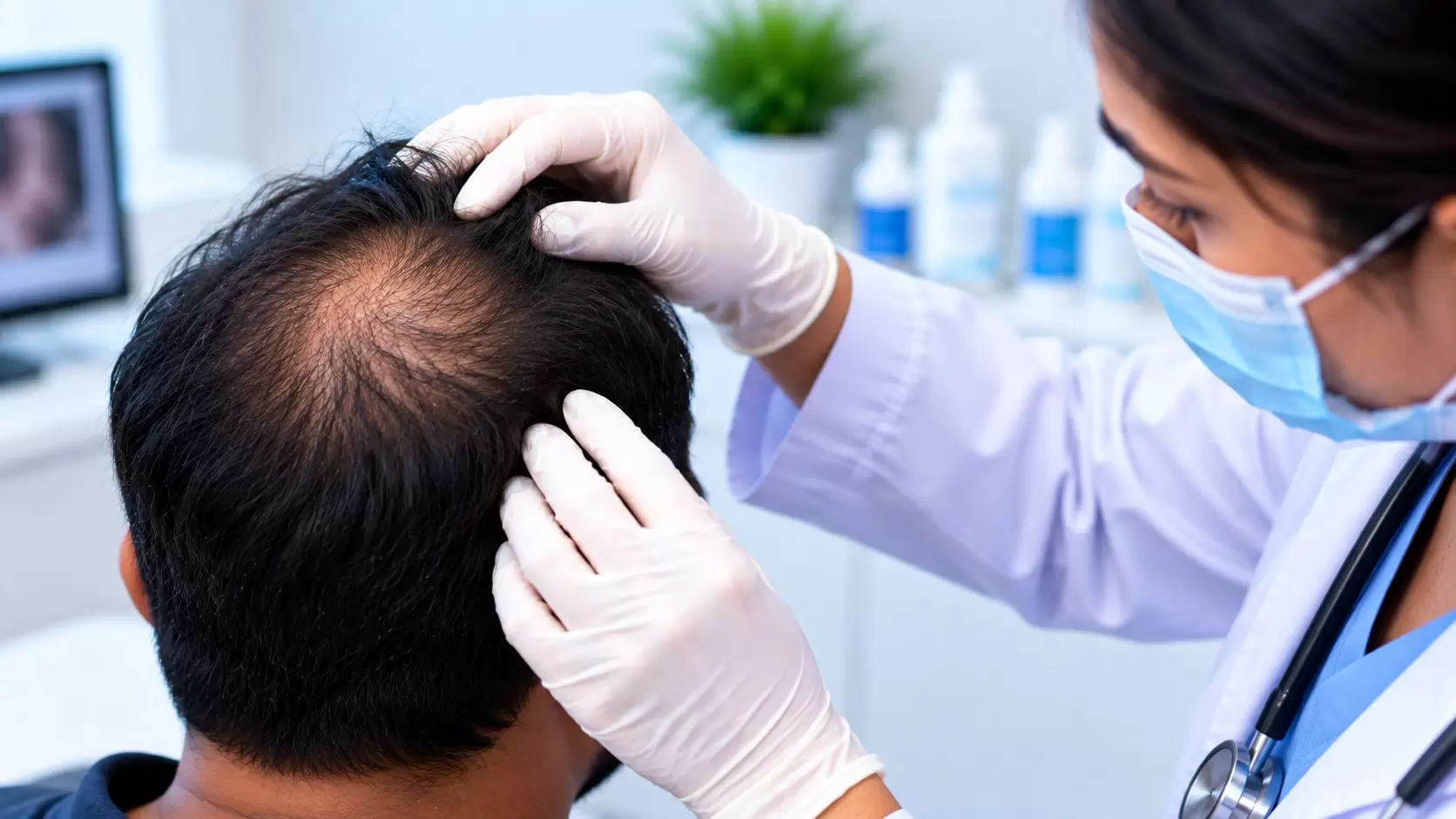
What is female pattern hair loss?
Female pattern hair loss is a form of androgenetic alopecia in women. Susceptible follicles gradually become smaller, so the hairs they produce become finer, shorter and less visible over successive growth cycles.
Unlike some inflammatory or scarring disorders, the scalp usually looks otherwise normal. The change is often gradual enough that reduced volume or a wider part is noticed before obvious bald areas develop.
What does female pattern hair loss look like?
Widening central part
The part line may progressively widen, making more scalp visible through the hair.
Reduced crown density
Hair over the top and crown can become thinner while the sides and back remain relatively denser.
Finer hairs
Follicle miniaturisation produces hairs with smaller diameters, reducing overall volume.
Gradual progression
Changes typically develop over months to years rather than as sudden smooth bald patches.
What causes female pattern hair loss?
Genetic susceptibility is important, and hormonal influences can contribute. However, female pattern hair loss is biologically complex and should not automatically be interpreted as evidence that a woman has excessive testosterone or another hormone disorder.
The likelihood increases with age, but younger women can also develop it. For a broader overview, read Common Causes of Hair Loss.
Is it the same as male pattern hair loss?
Both involve progressive follicle miniaturisation, but the visible patterns often differ. Men frequently develop temple recession and vertex loss, whereas women more commonly have diffuse thinning over the crown with widening of the central part and relative preservation of the frontal hairline.
Read Male Pattern Hair Loss for the typical male presentation.
Can hormones cause hair thinning in women?
Hormonal factors can influence hair growth, but the presence of female pattern hair loss alone does not prove a hormone abnormality. Many affected women have no obvious signs of androgen excess.
When thinning occurs together with irregular periods, increased facial or body hair, significant acne or other relevant symptoms, a dermatologist may recommend further assessment for androgen excess or conditions such as polycystic ovary syndrome.
Hair loss after childbirth vs female pattern hair loss
Postpartum shedding is commonly a form of telogen effluvium. It usually causes more diffuse shedding after pregnancy rather than the characteristic progressive pattern of follicle miniaturisation.
In some women, postpartum shedding can make previously subtle pattern thinning more noticeable. Persistent changes should therefore be assessed rather than assumed to be temporary.
Could iron or thyroid problems look similar?
Iron deficiency and thyroid disease can contribute to diffuse shedding or thinning. They can also coexist with female pattern hair loss.
Blood tests are selected according to symptoms, diet, menstrual history, examination and other clinical clues. There is no single universal blood-test panel required for every woman with thinning hair.
How is female pattern hair loss diagnosed?
A dermatologist examines the distribution of thinning, scalp condition and variation in hair diameter. Dermoscopy can help identify follicle miniaturisation and distinguish pattern loss from some other causes.
The history may include duration, shedding, family history, pregnancy, menstrual pattern, weight changes, diet, medicines and signs of systemic illness. Additional tests are ordered when clinically indicated.
Treatment options for female pattern hair loss
Topical minoxidil is an established treatment for female pattern hair loss. It can help prolong the growth phase and improve density in some women, but meaningful change takes months and ongoing use is generally required to maintain benefit.
Depending on the patient, dermatologists may consider other prescription or procedural approaches. Choice is influenced by age, pregnancy potential, medical history, degree of thinning and whether another condition is contributing.
What should you know about minoxidil?
Minoxidil does not produce instant regrowth. Some people notice temporary increased shedding after starting treatment as follicles shift through the hair cycle, and visible improvement generally requires consistent use for several months.
Scalp irritation and unwanted facial hair growth can occur. A dermatologist can help with formulation, application and expectations.
Can hair density improve?
Miniaturising follicles can sometimes produce thicker hairs with effective treatment. Results vary with the extent and duration of loss, treatment adherence and individual response.
The goal is often both preservation and improvement: slowing further miniaturisation can be clinically valuable even when complete restoration of previous density is not realistic.
When should you see a dermatologist?
Arrange an assessment for progressive widening of the part, reduced ponytail volume, persistent shedding or any hair loss that concerns you. Seek earlier evaluation if loss is sudden or patchy, or if the scalp is painful, inflamed, scaly or showing signs of scarring.
For diagnosis and an individual treatment plan, visit Hair Loss Treatment in Chennai.
Frequently asked questions
What does female pattern hair loss look like?
It commonly causes gradual thinning over the top and crown with widening of the central part. The frontal hairline is often relatively preserved.
What causes female pattern hair loss?
Genetic susceptibility and hormonal influences can contribute, although the biology is complex and varies between women.
Can it start before menopause?
Yes. Female pattern hair loss can begin before menopause, although it becomes more common with age.
Can female pattern hair loss be treated?
Yes. Topical minoxidil is an established option, and other treatments may be considered after assessment.
Do all women with thinning hair need blood tests?
No. Testing should be selected when the history or examination suggests iron deficiency, thyroid disease, androgen excess or another medical contributor.
Visit us in OMR
Noticing a wider part or reduced hair density? Get it assessed.
Book a dermatologist consultation at Ram Skin Clinic in Thoraipakkam, Chennai.
#48, Second Floor, Flat E, Best Towers,Okkiampet, Thoraipakkam, OMR,
Chennai – 600097. Above Domino’s Pizza.