
Understanding Hair Loss
Common Causes of Hair Loss
Hair loss is not one diagnosis. Genetics, changes in the hair-growth cycle, autoimmune disease, scalp inflammation, medicines, hormones and nutritional problems can produce different patterns of thinning or shedding.
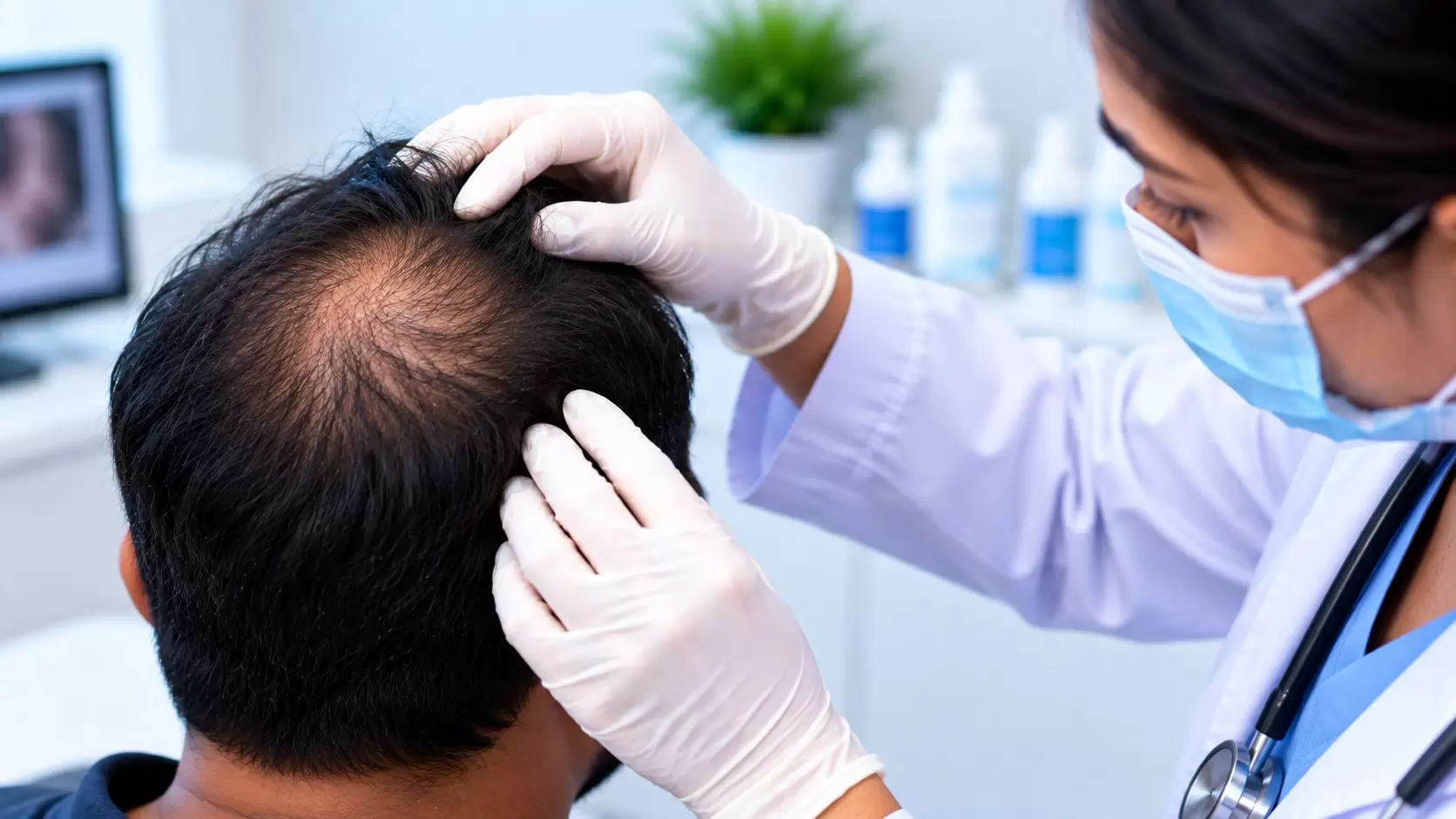
Hair loss can happen in different ways
Some conditions cause gradual thinning, others produce sudden shedding, and some create distinct bald patches. Hair loss can also be scarring or non-scarring, an important distinction because scarring disorders can permanently damage follicles.
A dermatologist considers the pattern, speed of change, scalp findings, medical history, medicines and other symptoms rather than assuming all hair fall has the same cause.
Common causes of hair loss
Pattern hair loss
Androgenetic alopecia is hereditary and causes progressive miniaturisation of susceptible hair follicles in both men and women.
Telogen effluvium
Illness, surgery, major stress, childbirth, rapid weight loss and other physiological changes can shift more hairs into the resting phase and cause increased shedding.
Alopecia areata
This autoimmune condition commonly causes smooth, well-defined patches of hair loss and can sometimes affect larger areas or body hair.
Scalp disease
Inflammation, infection and scarring disorders of the scalp can interfere with healthy hair growth and require diagnosis of the underlying condition.
Androgenetic alopecia: hereditary pattern hair loss
Androgenetic alopecia is the most common cause of hair loss. Genetics and androgen sensitivity of susceptible follicles play central roles.
Men commonly develop recession at the temples and thinning over the crown. Women more often develop widening of the central part and reduced density over the top of the scalp, although patterns vary.
Our next supporting articles examine male pattern hair loss and female pattern hair loss separately.
Telogen effluvium: increased shedding
Telogen effluvium occurs when a larger-than-usual number of follicles enter the resting phase of the hair cycle. Increased shedding often becomes noticeable two to several months after a trigger.
Potential triggers include fever or significant illness, surgery, childbirth, major psychological stress, rapid weight loss, nutritional problems and some medicines. When the trigger resolves, shedding often improves, although recovery takes time because hair grows slowly.
Alopecia areata: autoimmune hair loss
Alopecia areata occurs when the immune system attacks hair follicles. The classic presentation is one or more smooth, round or oval bald patches without scarring.
It can affect scalp hair, eyebrows, eyelashes, beard hair or other body sites. Some people develop more extensive loss, so sudden patchy hair loss should be assessed.
Can stress cause hair loss?
Yes. A substantial physical or emotional stressor can trigger telogen effluvium, and shedding may not begin until several weeks or months later.
Everyday stress does not automatically explain persistent hair loss. Progressive thinning or prolonged shedding still deserves evaluation for other causes.
Can nutrition affect hair growth?
Hair follicles require adequate nutrition. Iron deficiency, inadequate protein intake and selected other nutritional deficiencies can contribute to shedding in susceptible people. Restrictive dieting and rapid weight loss can also trigger telogen effluvium.
Thyroid and hormonal causes
Both hypothyroidism and hyperthyroidism can be associated with diffuse thinning or shedding. Hormonal changes around pregnancy and childbirth can also alter the hair cycle.
In women, hair thinning accompanied by irregular periods, acne or increased facial or body hair may prompt assessment for androgen excess when clinically appropriate.
Medicines and medical treatments
Some medicines can contribute to shedding, while chemotherapy and certain other cancer treatments can cause more dramatic hair loss by disrupting actively growing follicles.
Do not stop a prescribed medicine solely because hair loss begins. Discuss the timing and possible alternatives with the prescribing clinician.
Traction and hair-care practices
Repeated pulling from tight hairstyles, braids, extensions or similar practices can cause traction alopecia. Early traction-related loss can improve if tension stops, but longstanding inflammation and scarring can permanently damage follicles.
Frequent chemical or heat damage can also break the hair shaft, which may look like hair loss even when the follicle itself is still producing hair.
Scalp inflammation and scarring alopecia
Some inflammatory disorders destroy hair follicles and replace them with scar tissue. Symptoms such as scalp pain, burning, redness, scale around follicles or smooth shiny areas without follicular openings warrant prompt assessment because treatment aims to protect remaining follicles.
How is the cause of hair loss diagnosed?
Assessment can include examination of the scalp and hair pattern, a hair-pull test, dermoscopy and review of recent illness, stress, weight change, diet, family history and medications. Blood tests may be selected when the history suggests a deficiency, thyroid disease or another systemic cause.
Occasionally a scalp biopsy is needed when a scarring disorder or uncertain inflammatory condition is suspected.
When should you see a dermatologist?
Seek assessment for sudden hair loss, distinct bald patches, progressive thinning, persistent heavy shedding, scalp pain or inflammation, loss of eyebrows or other body hair, or any sign of scarring.
For diagnosis and an individual treatment plan, visit Hair Loss Treatment in Chennai.
Frequently asked questions
What is the most common cause of hair loss?
Hereditary pattern hair loss, called androgenetic alopecia, is the most common cause of hair loss.
Can stress cause hair loss?
Significant physical or emotional stress can trigger telogen effluvium, with increased shedding often appearing a few months later.
Can nutritional deficiencies cause hair loss?
Yes. Iron deficiency, inadequate protein intake and selected other deficiencies can contribute to shedding in some people.
Can thyroid problems cause hair loss?
Yes. Both underactive and overactive thyroid disease can be associated with diffuse thinning or shedding.
When should I see a dermatologist for hair loss?
Seek assessment for sudden or patchy loss, scalp pain or inflammation, scarring, eyebrow or body-hair loss, or progressive thinning that concerns you.
Visit us in OMR
Not sure what’s causing your hair loss? Get it assessed.
Book a dermatologist consultation at Ram Skin Clinic in Thoraipakkam, Chennai.
#48, Second Floor, Flat E, Best Towers,Okkiampet, Thoraipakkam, OMR,
Chennai – 600097. Above Domino’s Pizza.